
Last updated November 17, 2026








Free written scope consultation - allowances, timeline, and change-order rules on paper before a single trade is scheduled
General Contractor Troubleshooting: Common Problems and How to Fix Them
The most expensive general contractor problem most homeowners face isn’t a burst pipe or a failed inspection. It’s a verbal change order that doubled the project cost and can’t be disputed because nothing was written down. We’ve watched that exact scene play out more times than we’d like in Boulder City, and it almost always starts the same way: a friendly handshake, a promise of “we’ll work it out at the end,” and a homeowner who trusts the process right up until the invoice arrives. This guide works backward from the moments problems actually surface, at the invoice, the inspection, and the morning after the crew leaves, so you know what to look for before you sign and what to do if you’re already in it.
Quick Answer
Most contractor problems trace to one of three failures: an unwritten scope, an unverified subcontractor, or a warranty that sounds stronger than it is. Fixing them means getting every change in writing before work begins, confirming who is actually on your job and who is liable for their work, and reading the warranty language line by line. If you already have a problem, document it in writing the same day and reference your contract’s change-order and dispute clauses.
Styles & brands we work with
- Kitchen remodeling
- Bathroom remodeling
- Home additions & ADU
- Roofing
- Windows & doors
- Driveway & pavers
- Fence
Table of Contents
- How to tell a legitimate change order from scope creep
- What to do when a subcontractor files a mechanic’s lien in Nevada
- The three inspection failures that delay Boulder City projects
- How to document mid-project concerns in writing
- What a 365-day workmanship warranty actually covers
- What to do when the final invoice doesn’t match the bid
- The pre-signing checklist that prevents most of these problems
How Do You Tell a Legitimate Change Order From Scope Creep?
A legitimate change order is a written, signed amendment that states the added work, the added cost, and the new completion date before the work happens. Scope creep is the same request handled verbally, priced after the fact, and folded into a final invoice with no paper trail. The difference is not the request itself; homeowners change their minds, and that’s fine. The difference is whether the change was priced and agreed in writing first.
Here’s the contract language to look for before you sign anything:
- A defined change-order procedure. The contract should say that no change is performed or billed without a written change order signed by both parties.
- A stated markup on changes. Reputable contractors disclose how change-order pricing is calculated, not just the number they arrive at.
- A written price before work starts. This is a promise that should apply to the base scope and every change that follows it. At Elmstead Remodeling, a written price is given before any work starts, every time, on every project.
- A schedule impact clause. Changes affect timelines; the contract should say how.
Scope creep usually hides in vague phrases: “necessary repairs as discovered,” “materials as needed,” “minor adjustments to be determined on site.” Any of those mean the price can grow after the crew arrives. In Boulder City, where older homes often have surprises behind the walls, that language matters more than it does in new construction.
What Happens When a Subcontractor Files a Mechanic’s Lien in Nevada?
A mechanic’s lien is a legal claim against your property filed by someone who wasn’t paid for work or materials on it, even if you paid your general contractor in full. In Nevada, a subcontractor or supplier who goes unpaid can file a lien against your home, which can cloud the title until it’s resolved. The protection is documentation gathered before the work starts, not after a lien appears.
Follow these steps if a lien notice arrives:
- Don’t panic and don’t pay twice. A lien notice is not the same as a filed lien, and paying the subcontractor directly without legal advice can leave you exposed.
- Pull your payment records. Canceled checks, bank transfers, and signed draws show what you paid your contractor.
- Request a lien release from your contractor. Most contracts require the contractor to provide conditional lien releases at each draw and a final unconditional release at completion.
- Ask for a preliminary notice file. Nevada law requires subcontractors to serve a preliminary notice in many cases; the contractor should have tracked these.
- Contact a construction attorney if the lien is actually filed. Nevada has strict timelines for challenging a lien, and they run fast.
Prevention beats cleanup. Before signing, ask your contractor for a list of subcontractors and suppliers, and confirm in writing that the contractor will provide lien releases with each payment. A written price and a written payment schedule go together here; one protects your budget, the other protects your title.
Which Inspection Failures Most Often Delay Boulder City Projects?
Three inspection failures account for most of the delays we see on Boulder City jobs: framing and shear-wall nailing that doesn’t match the approved plans, electrical rough-in that doesn’t meet the current code cycle, and final-life-safety items on additions and remodels, including egress window sizing and smoke and carbon-monoxide placement. Each one is catchable before the inspection if the contractor is checking against the approved drawings instead of habit.
Boulder City has its own building department and its own review rhythm, so a crew that works mostly in Las Vegas or Henderson can underestimate the local timeline. Here’s how a well-run project anticipates failures:
- Pre-inspection walkthroughs. The contractor should walk the rough-in with the plans in hand before calling for inspection, not after a correction notice.
- Plan-set familiarity. Shear-wall schedules and hold-down details should be referenced on site, not assumed.
- Egress sizing on older homes. Many Boulder City homes predate current egress requirements; any bedroom remodel needs window sizing confirmed early.
- Panel capacity checks. Older electrical panels in Boulder City homes often can’t support added circuits without an upgrade, and that’s a permit-and-inspection item, not an on-the-fly fix.
Every project we run includes pulling permits and passing inspections, and we schedule pre-inspection walkthroughs so a correction notice doesn’t cost you a week. That’s part of what you’re paying a licensed general contractor in Boulder City for.
How Do You Document a Mid-Project Concern Without Damaging the Relationship?
Put it in writing the same day, keep the tone factual, and describe what you observed rather than what you think of the crew. A short email that says “I noticed the new tile in the hall bath sits a quarter-inch proud of the adjacent floor; can we look at it together tomorrow morning?” gets a faster, better response than a text sent at 10 p.m. that says the work is sloppy. Contractors respond to specificity because it gives them something to fix.
Here’s a simple approach we recommend to every homeowner:
- Photograph the issue with something in frame for scale, and note the date and location.
- Send a short written note through the communication channel named in your contract (email is best).
- Ask for a written response and a proposed fix. This creates a record without accusing anyone.
- Escalate in writing if the response disappoints. Reference the specific contract section and the promised remedy.
- Keep a running log of every conversation, visit, and change through the end of the project.
We ask before we move or touch anything in a home, and we send a photo of the clean-up before the crew leaves, so the written record exists on both sides. Those small habits are also, conveniently, the best protection a homeowner has when a disagreement does come up.
What Does a 365-Day Workmanship Warranty Actually Cover?
A 365-day workmanship warranty covers the labor and installation of the work for a full year after completion, meaning if a joint opens, a tile pops, a cabinet door sags, or a fixture fails because it was installed wrong, the contractor fixes it at no additional labor charge. It does not cover the materials themselves; those are covered by the product’s manufacturer warranty, which is why named-brand materials matter. When you see the brands on the invoice, you can call the manufacturer’s warranty line yourself and confirm coverage.
Here’s the difference between that and a standard one-year builder’s warranty:
- Standard one-year warranty. Often a single sentence in the contract, sometimes paired with a list of exclusions that narrows it almost to nothing. Labor may be covered only in the first 30 or 90 days.
- 365-Day Done Right Promise. Covers every completed project for the full year, and says what happens when something isn’t done right: the contractor makes it right. The language is written into the contract, not just the sales pitch.
- Manufacturer warranties. Cabinets from KraftMaid and Wellborn, countertops from Cambria and Silestone, fixtures from Kohler, Moen, and Grohe, exterior products from James Hardie and GAF all carry their own warranties that travel with the finished project. Those warranties are separate from the workmanship warranty and worth reading.
Ask for the warranty in writing before you sign and read the exclusions. If a contractor keeps pointing to a brochure instead of the contract, that’s a sign.
What Do You Do When the Final Invoice Doesn’t Match the Bid?
Compare the final invoice to the signed contract and every change order, line by line, before you pay anything. If a line has no corresponding change order, it’s not owed; you agreed to a price, and the contractor’s failure to document a change doesn’t move the number. Most disputes at this stage are paperwork problems, not fraud, and most can be resolved with a polite email listing each discrepancy and asking for a revised invoice.
Work through it in this order:
- Assemble the documents. The signed contract, all change orders, the payment schedule, and the final invoice.
- Send a written summary of the discrepancies with the amounts and the change-order number each line references.
- Ask for a corrected invoice before any further payment.
- Withhold only the disputed amount, not the whole invoice, unless your contract says otherwise.
- Escalate to the Nevada State Contractors Board if the discrepancy can’t be resolved directly; that’s what the licensing and complaint process is for.
Our no-hassle upfront pricing is designed to make this section boring: you get a written price before any work starts, and change orders only exist when you’ve signed one. Fewer surprises at invoice time means fewer disputes.
The Pre-Signing Checklist That Prevents Most of These Problems
Run through this list before you sign, and you’ll avoid the majority of the problems in this guide:
- Written scope, written price. Every line item, before any work starts.
- Change-order procedure in the contract. Signed by both parties, priced before work.
- Subcontractor list and lien-release schedule.
- Warranty in writing, with exclusions and the term spelled out.
- Permits pulled by the contractor, inspected and signed off.
- Protected-home plan: drop cloths, shoe covers, quiet hours during naps and school pickup, pet-safe products where there’s a choice.
- Live phone contact, not a voicemail box, during the project.
Our background-checked, uniformed technicians show up with drop cloths and shoe covers on every visit, and that’s not a sales line; it’s part of the written scope. Our technicians have up to 21 years of experience, and calls are answered by a live person 24/7, so a question at 7 p.m. on a Friday actually gets answered. If you’re pricing a bigger job, start with the Elmstead Remodeling Boulder City home page and see how we structure a project.
Common Mistakes to Avoid
- Accepting a verbal change order. “We’ll just roll it into the invoice” is how a $20,000 project becomes a $30,000 one. Insist on the signed, priced change order before work starts.
- Paying in full before the final inspection. Hold back a reasonable retainage until the Boulder City building department signs off on the final inspection.
- Missing the preliminary notice period. Nevada lets subcontractors and suppliers file notice of potential liens on your property. If one arrives, read it that week, not that month.
- Assuming “one-year warranty” means the workmanship. Many one-year warranties only cover the labor for 30 or 90 days, and the materials warranty is separate. Read both.
- Letting the crew start before the permits are pulled. Unpermitted work is the fastest way to fail an inspection and the slowest to fix.
- Moving a family’s daily life around a crew schedule that was never written down. If the crew’s arrival window, quiet hours, and clean-up plan aren’t in the contract, they don’t exist.
- Ignoring the brands. If the bid doesn’t name the manufacturer, you don’t know what’s being installed, and you can’t confirm the warranty that comes with it. Named products like James Hardie siding or Cambria countertops let you check the warranty yourself.
See the difference
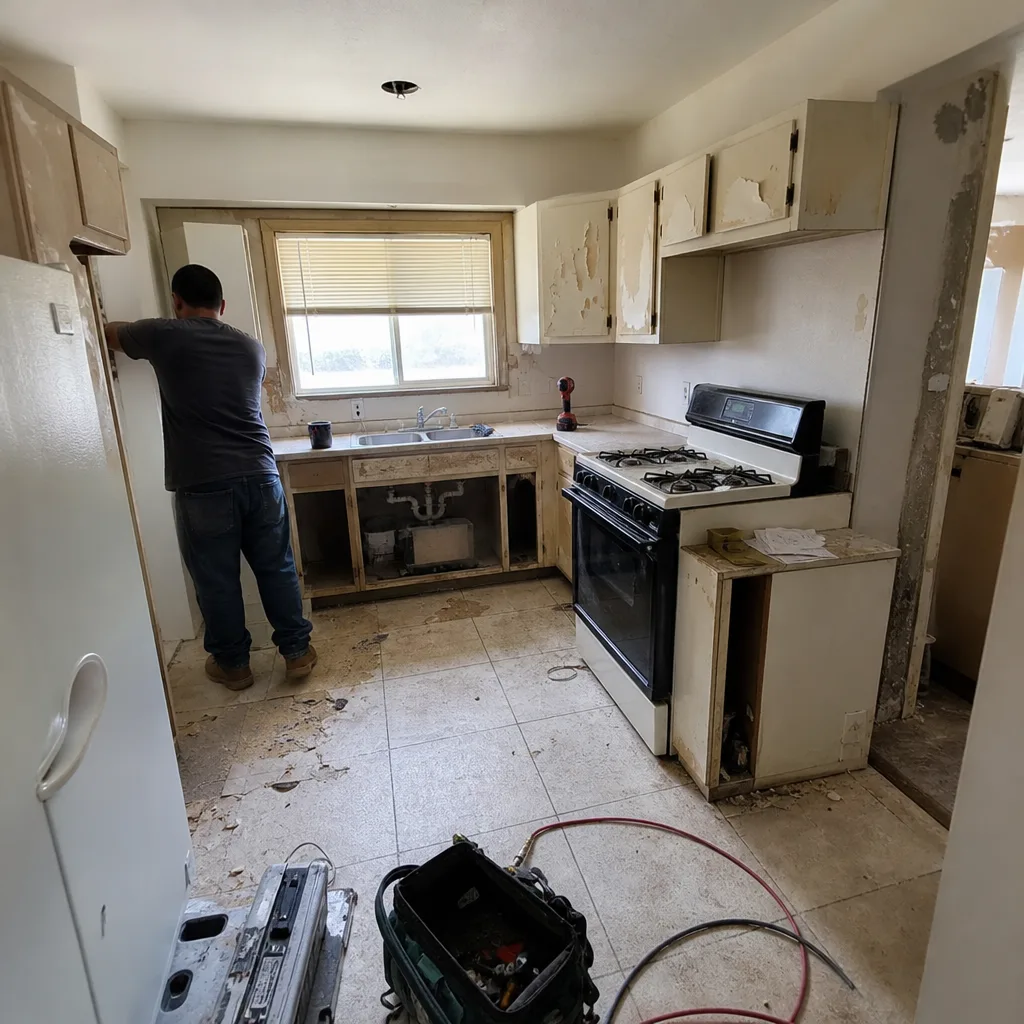 Before
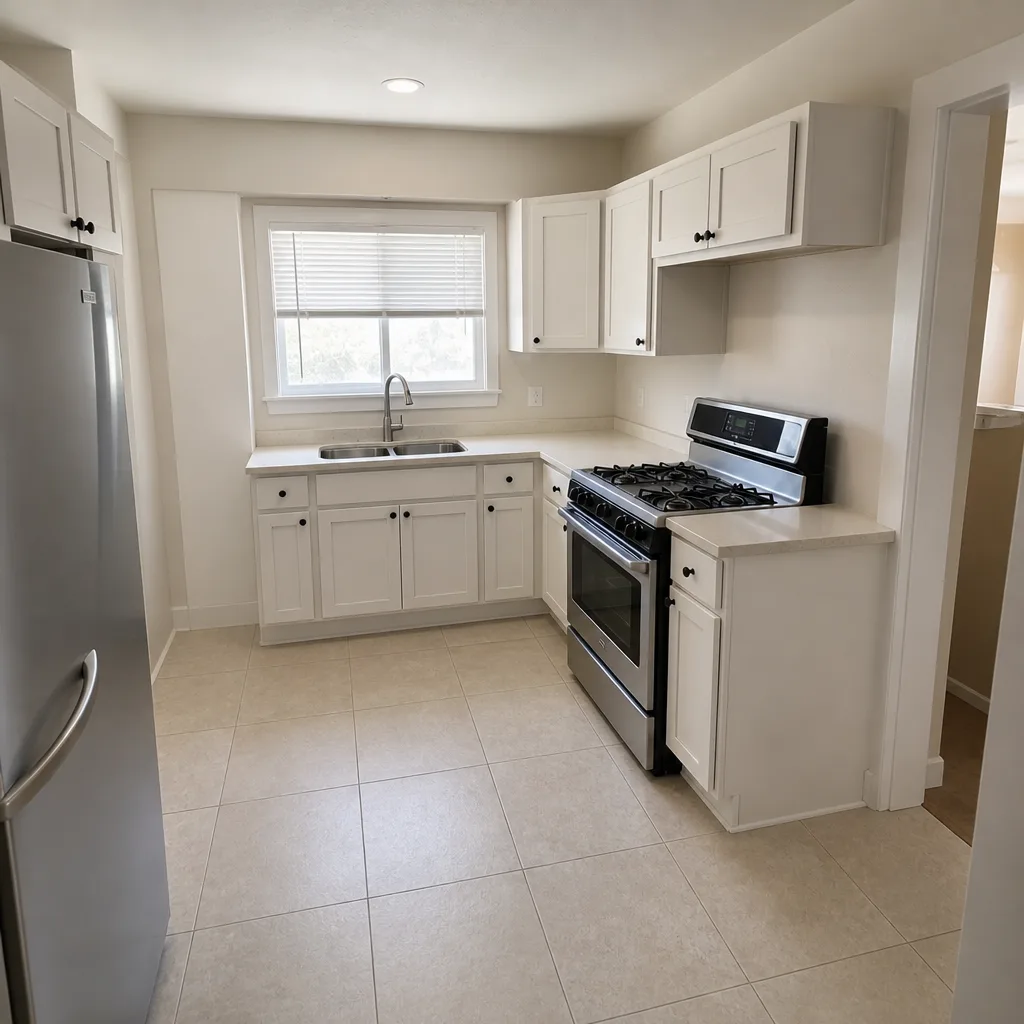 After
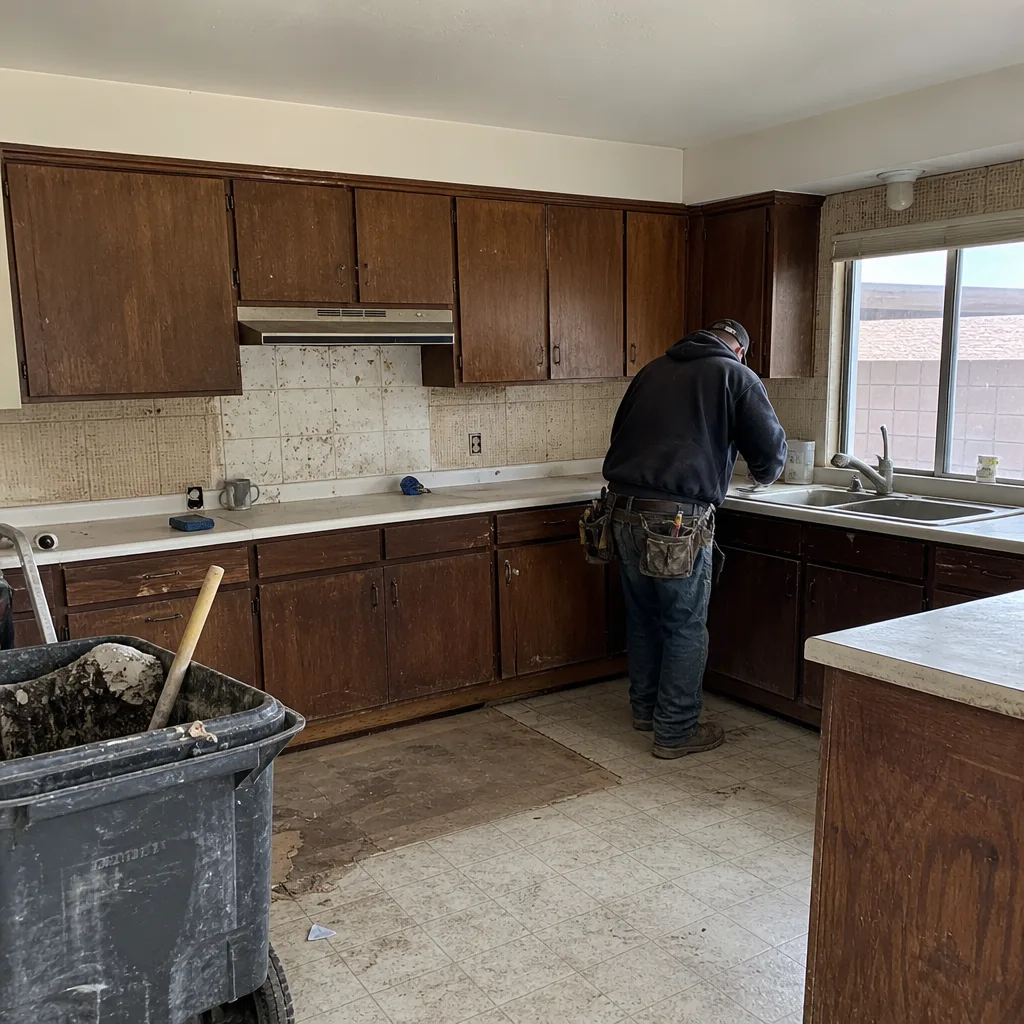 Before
 After
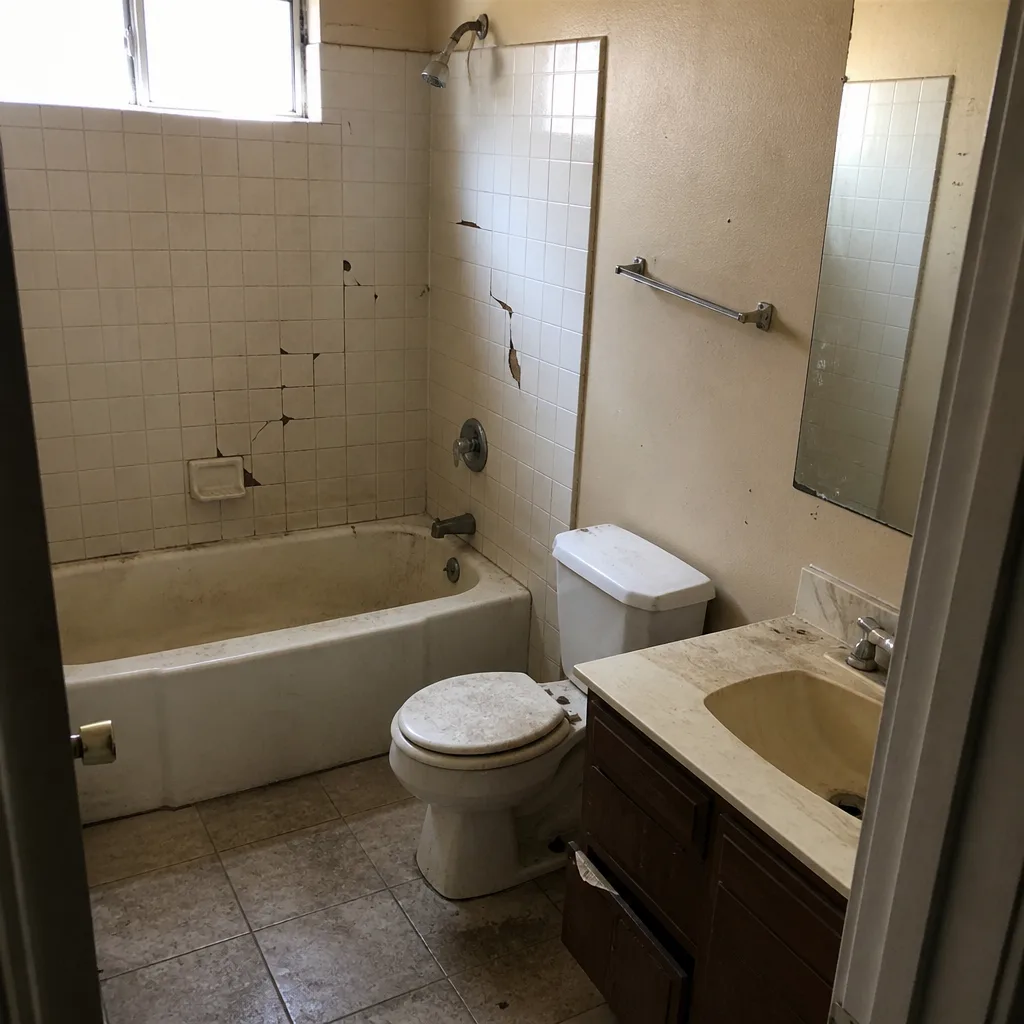 Before
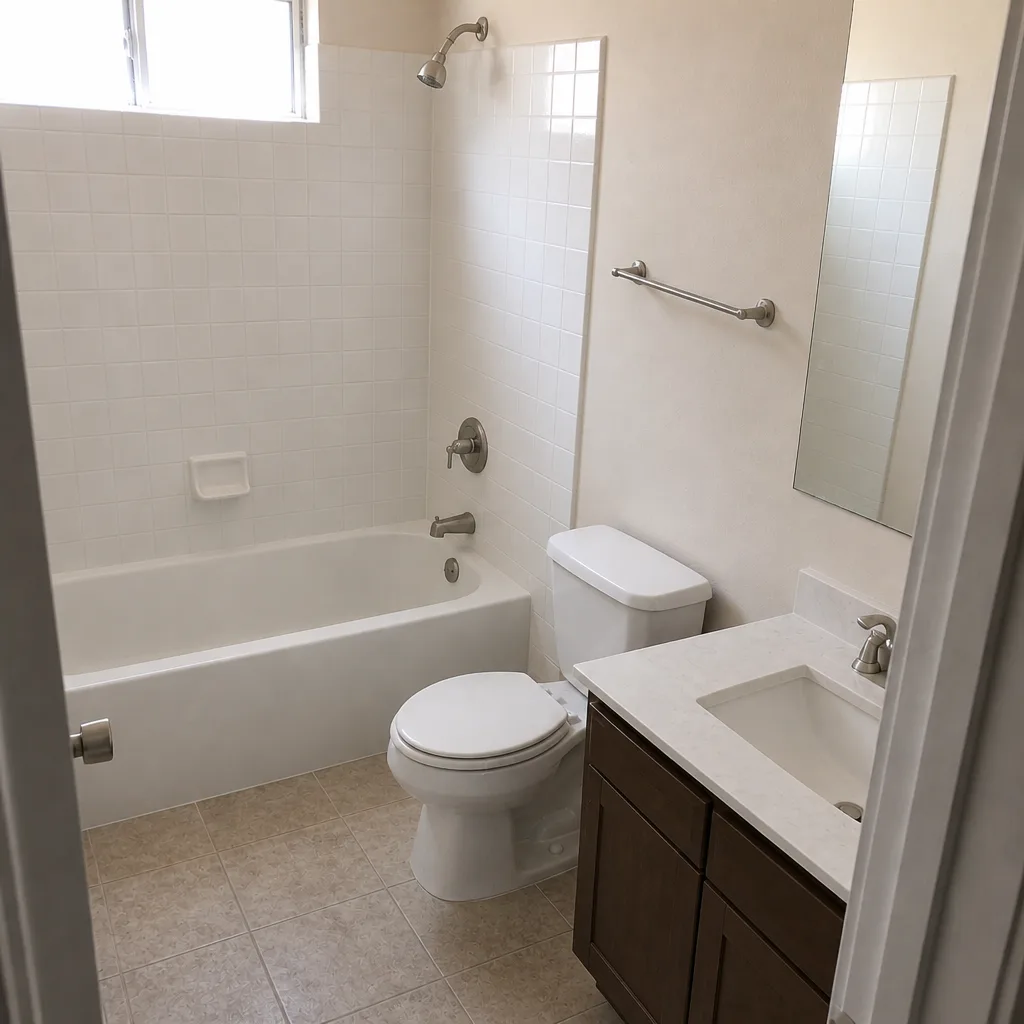 After
When to Call a Professional
Call a licensed general contractor when the work touches structure, plumbing, electrical, or gas; when it requires a permit; when the scope is bigger than a weekend and the failure modes could endanger your family; or when you’ve inherited a project from a contractor who walked off. Electrical panel changes, gas lines, structural openings, and any project that alters a load-bearing wall belong in professional hands, full stop. If you’re mid-project and stuck, a written, itemized estimate from a licensed contractor is the fastest way to find out what’s actually needed. Elmstead Remodeling Boulder City offers free estimates in Boulder City; call (855) 552-7882 and we’ll walk the space with you, put a written price in your hand before any work starts, and tell you what the previous crew got wrong without a lecture.
Frequently Asked Questions

No. Work requiring a permit must be inspected and approved, and starting before the permit is issued is a code violation the building department can redline. Unpermitted work can also complicate your homeowner’s insurance and future sale, and the fix usually costs more than the permit would have. If a crew offers to “get started while the paperwork clears,” ask them to wait; a licensed contractor will.
A change order is a signed, priced amendment to the contract. A change directive is an instruction to proceed with work that hasn’t been fully priced yet, and it’s the riskier of the two. Reputable contracts limit change directives to emergencies only, with pricing within a set number of days. Ask what your contract says before you sign, and get the change order before the work whenever the timeline allows. Call (855) 552-7882 if you want a free read on a contract you’ve been given.
Timelines vary by scope, but a straightforward bath or kitchen remodel in Boulder City typically takes a few weeks for plan review, and additions or structural work take longer because they go through more review steps. A contractor who quotes a timeline without accounting for review time is guessing. Get the timeline in writing and ask how the permit stage fits into it. Call (855) 552-7882 to schedule a free estimate and ask specifically what the permit timeline looks like for your project.
Not without legal advice. A lien is a claim on your property, and paying the subcontractor directly can still leave you exposed if their claim was miscalculated or if you already paid your contractor. Get the lien documents, your payment records, and your contract in one place, then speak with a construction attorney. Call (855) 552-7882 for a free estimate on future work if you’ve resolved a lien and want a clean project to move forward with.
Take a photo the same day, email it to your contractor’s project contact, and ask for the clean-up to be completed before the next visit. In our experience, most clean-up issues are simple misses rather than patterns, and a written note fixes them quickly. Every project we run includes a photo of the clean-up before the crew leaves, so there’s always a record. Call (855) 552-7882 for a free estimate on your next project.
No. It covers labor and installation for a full year, but materials are covered by the manufacturer’s warranty, and damage from misuse, neglect, or unrelated work is excluded. The best protection is a warranty that states in writing what it covers and what it doesn’t, plus named materials you can look up yourself. Call (855) 552-7882 to schedule a free estimate and ask for the warranty language in the contract before you sign.
The Bottom Line
Most general contractor problems aren’t mysteries. They start the day the project does, when the scope goes verbal, the change order goes unwritten, or the warranty goes unread. Get every price in writing before work starts, keep the subcontractor and lien paperwork together, document concerns the day you see them, and read the warranty instead of the brochure. That’s the short version of how to keep a good project from turning into a painful one. And when a job touches structure, gas, or electrical, a licensed professional is the right call, not a brave weekend. Written price, named brands, protected home, and a workmanship promise you can read: that’s the standard we hold, and it’s how families in Boulder City keep their homes in better shape than the crew found them. Call (855) 552-7882 to schedule your free estimate on your next project. If it’s a bath or kitchen you’re pricing, our bathroom remodeling in Boulder City and kitchen remodeling in Boulder City pages show the dollar ranges and what’s in the scope before you pick up the phone. If your next project is bigger than a single room, start with our whole-home work and the general contractor in Boulder City page you’ve already seen; both pair with the written price and the 365-Day Done Right Promise.
Written by the team at Elmstead Remodeling Boulder City.