Last updated November 17, 2026







Free written scope consultation - allowances, timeline, and change-order rules on paper before a single trade is scheduled
DIY vs Professional Kitchen Remodeling: What’s Safe to Do Yourself
Painting your own cabinets is low-risk. Relocating a 20-amp circuit for a new range location without a permit is not – and in Clark County, an unpermitted electrical change can surface as a required correction during a future home sale, long after the paint has dried. That gap between “looks easy on YouTube” and “creates a problem you’ll answer for years later” is where the real DIY-versus-pro line sits. This guide draws that line at the trade and permit boundary, not at how hard a task appears. You’ll learn which kitchen tasks are genuinely safe to handle yourself in a Boulder City home, which ones look doable but carry hidden downstream costs, and how to split a project with a contractor without wrecking your warranty.
Quick Answer
In a kitchen remodel, painting, hardware swaps, backsplash tile on an existing substrate, and appliance swaps on existing circuits are genuinely safe for a careful homeowner to do. Cabinet installation, countertop templating, drain and gas-line relocation, and any work that triggers a Clark County permit belong to licensed trades. The dividing line isn’t skill – it’s whether a mistake stays contained or compounds through the whole project and into your home’s resale record.
Styles & brands we work with
- Kitchen remodeling
- Bathroom remodeling
- Home additions & ADU
- Roofing
- Windows & doors
- Driveway & pavers
- Fence
Table of Contents
- Tasks That Are Genuinely Safe to DIY
- Tasks That Look DIY-Able but Carry Real Risk
- What Triggers a Permit in a Clark County Kitchen Remodel
- The Cost Math of Partial DIY
- How to Structure the Conversation With Your Contractor
- Boulder City Context: Climate, Older Homes, and What We See
- Common Mistakes to Avoid
- When to Call a Professional
Tasks That Are Genuinely Safe to DIY
Some kitchen work is forgiving. If you get it wrong, you sand it back, repaint, or rehang a handle. Nothing behind the wall changes, no inspector gets involved, and the next owner never knows. Here’s where we tell Boulder City homeowners to save their money and do it themselves.
- Painting cabinets and walls. The single highest-return DIY task in any kitchen. A proper degloss, a bonding primer, and two thin coats of a quality cabinet enamel will hold up for years. The prep is 80% of the job – skip the deglossing and the paint peels at the drawer edges within a season.
- Hardware swaps. New pulls and knobs change the whole feel of a kitchen for under a few hundred dollars. The only real risk is drilling new holes in the wrong spot, so measure twice and use a paper template taped to the door.
- Backsplash tile on an existing substrate. If the drywall or backer board is sound and flat, tiling a backsplash is a patient homeowner’s job. Use a notched trowel, keep your thinset consistent, and plan your layout from the center of the visible run so cut edges land in corners.
- Appliance installation on existing circuits. Swapping a like-for-like dishwasher or replacing a range where the circuit, voltage, and hookup already match is straightforward. The moment you move the appliance’s location, this stops being a DIY task.
These four tasks alone can trim a meaningful chunk off a kitchen budget. If you’re planning a larger remodel and want to see how the full picture fits together, our Kitchen Remodeling in Boulder City page walks through what a complete project involves.
Tasks That Look DIY-Able but Carry Real Risk
Here’s the part most homeowners underestimate. These three tasks share a trait: a small error at the start compounds quietly through everything that follows, and you don’t discover it until the end.
Cabinet installation
Cabinets have to be level, plumb, and square to each other across the entire run. A wall that’s out of plumb by a quarter inch at the first cabinet becomes a half-inch gap at the last one, and now your countertop template is wrong, your filler strips don’t cover, and your doors don’t line up. We’ve corrected more than a few Boulder City kitchens where homeowner-installed uppers had to come down and get rehung. The cabinets themselves were fine. The layout underneath wasn’t.
Countertop templating
Stone and quartz countertops are cut from a digital template taken on site, after the cabinets are set. If you order countertops before the cabinet run is verified, or you measure yourself, you own the error. Cambria and Silestone slabs are not returnable once cut. A templating mistake is a several-thousand-dollar mistake.
Drain and supply relocation
Moving a sink means moving the drain line, the venting, and the supply lines. The drain has to hold the correct slope for the whole run, and if it doesn’t, you get slow draining and eventually a smell you can’t find. This is the task most likely to be attempted and most likely to require opening a finished wall a month later.
What Triggers a Permit in a Clark County Kitchen Remodel
Permit rules vary by jurisdiction, and Boulder City has its own requirements separate from unincorporated Clark County. What follows is the general shape of what triggers a permit in kitchen work – always confirm specifics with the permitting office before you touch anything.
Broadly, these items require a permit and inspection:
- Any new or relocated electrical circuit, including adding a 20-amp circuit for a new appliance location
- Relocating or adding plumbing supply or drain lines
- Gas line work of any kind – a licensed plumber handles this, without exception
- Removing or altering a load-bearing wall
- Relocating a range hood that vents through the exterior wall
Cosmetic work – paint, tile on existing substrate, hardware, swapping an appliance on an existing circuit – does not typically require a permit. Why this matters beyond safety: unpermitted work becomes part of your home’s record. When you sell, a buyer’s inspector finds the new circuit and asks for the permit. If there isn’t one, you either pull it retroactively, which can mean opening drywall to show the work, or you negotiate the price down. The correction is financial, not just physical – and it surfaces at the worst possible moment.
The Cost Math of Partial DIY
Doing some of the work yourself saves money – but not always the way homeowners expect, and not always in the direction of savings. The trade sequence in a kitchen remodel is a chain, and pulling one link out reshapes the rest.
Demo is usually worth doing yourself, with a caveat. Taking out old cabinets, tearing up flooring, and hauling away debris is real labor your contractor would otherwise bill. If you’re capable and careful, taking this on can reduce the labor line. The caveat: demo done too aggressively is one of the most common sources of hidden damage – a pry bar through a water line, a chisel into a joist, drywall torn back past where the new cabinets will cover. The savings evaporate the moment a plumber needs to come fix something.
Painting and hardware are worth doing yourself, almost always. You’ll save the labor and you control the finish to your taste. No sequencing problems. No inspection. No risk to anything behind the wall.
Cabinet installation is rarely worth doing yourself. It looks like a weekend project. The level and square errors don’t reveal themselves until the countertop template. A professional installer resets the run, and now you’ve paid for labor twice, delayed the countertop order by two weeks, and added a round of re-planning to the schedule.
Electrical relocation is never worth doing yourself. It’s permitted work, it’s inspected, and the person doing it needs to be licensed. Attempting it saves nothing and costs you the permit correction down the road. The General Contractor in Boulder City approach handles the trade coordination and permit pulls so the sequence never breaks.
How to Structure the Conversation With Your Contractor
The cleanest way to do partial DIY is to write the scope division down before anyone moves a single box. Here’s the conversation we have with Boulder City families who want to handle some phases themselves.
- List every phase of the project and mark who handles it: you, us, or a licensed trade we bring in. Get this on paper.
- Agree on the sequencing – specifically, when your work has to be finished so the professional phase can start. Demo has to be done by a certain date. Painting has to be scheduled around the cabinet install, not in the middle of it.
- Ask how your DIY work affects the warranty. Most warranties cover the contractor’s work, not yours. If you install the cabinets and we install the countertops, the countertop warranty covers the countertop. The cabinet warranty covers our work, not yours. This isn’t a technicality – it’s the difference between a covered fix and an uncovered one.
- Ask what happens if your work isn’t ready on the agreed date. A good contractor has a plan for this. A bad one shows up, finds the wall torn open, and walks.
- Get the price in writing before any work starts, including the trade coordination, the permit pulls, and the inspection schedule. A written price before work begins is not negotiable at Elmstead – it’s stamped on every project, and it’s the same on a partial-scope job as a full one.
If you want to see how a full kitchen project is put together before you decide how much to take on, Elmstead Remodeling Boulder City home is a reasonable place to start.
Boulder City Context: Climate, Older Homes, and What We See
Boulder City has a distinctive housing stock. Much of it predates the 1980s, which means materials that were standard at the time – galvanized supply lines, older wiring, and in some cases original cabinetry built into wall framing. A remodel here often uncovers work the homeowner didn’t plan for, and that changes what’s realistic to DIY.
The desert climate matters too. Cabinets in a Boulder City kitchen expand and contract through the summer heat and the rare winter cold snap. They’re not a stress-free surface to hang. A cabinet run that’s installed without proper shim and fastener placement against a wall that shifts less than a quarter-inch over the course of a season will develop gaps and door alignment problems over time. This is a real factor we account for in every kitchen we build here, and it’s a reason cabinet installation is a job for someone with a level, a shim bag, and planning.
We also see a lot of older kitchens where the plumbing and electrical weren’t touched in the last remodel – and where a homeowner finds out during demo that the drain is a different diameter than expected, or the circuit is already at capacity. That’s when the DIY demo stops saving money. It’s also where a bathroom remodel in the same house often follows, because the trades are already on site. If that’s your situation, our Bathroom Remodeling in Boulder City page covers how we sequence both projects when they overlap.
Common Mistakes to Avoid
- Ordering countertops before the cabinets are verified. Stone slab templating happens after the cabinet run is set and checked. A template taken before the run is confirmed shifts the whole counter. On a Cambria or Silestone slab, that’s not a returnable item.
- Painting cabinets without deglossing. Boulder City kitchens in older homes have decades of kitchen grease baked into the lacquer. Bonding primer over a deglossed surface holds. Skip the degloss and the paint peels within two seasons.
- Moving an electrical circuit without a permit. A relocated 20-amp circuit is permitted work in Clark County. Unpermitted electrical becomes a required correction on a future home sale. The cost of the correction always exceeds the cost of the permit.
- Doing demo past the new cabinet line. The one piece of prep that saves you money if you get it right and costs you money if you don’t: know where the new cabinets will sit and don’t tear back past that line.
- Tiling a backsplash over a compromised substrate. A soft or crumbly backer board shows up as cracked grout lines within a year. If the wall is not sound, stop and address the substrate first.
- Skipping the scope agreement. A handshake agreement with your contractor that you’re doing the demo and they’re starting on the 15th is not a scope division. It’s a misunderstanding waiting to happen. Write it down, including the date your work must be done.
- Assuming your DIY work keeps the warranty intact. If any component the contractor installed is affected by a fault in your work, the contractor’s warranty does not cover it. Ask exactly what’s covered, and by whom, before you start.
See the difference
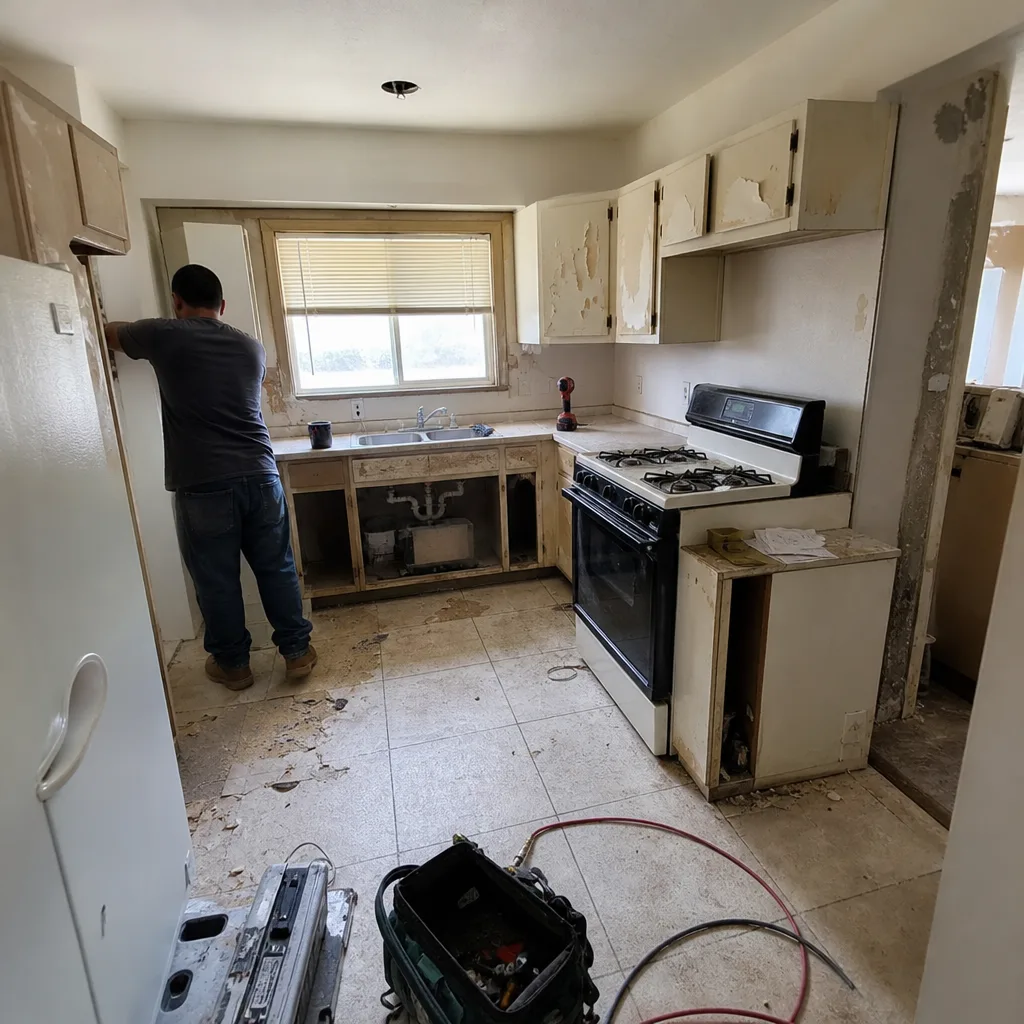 Before
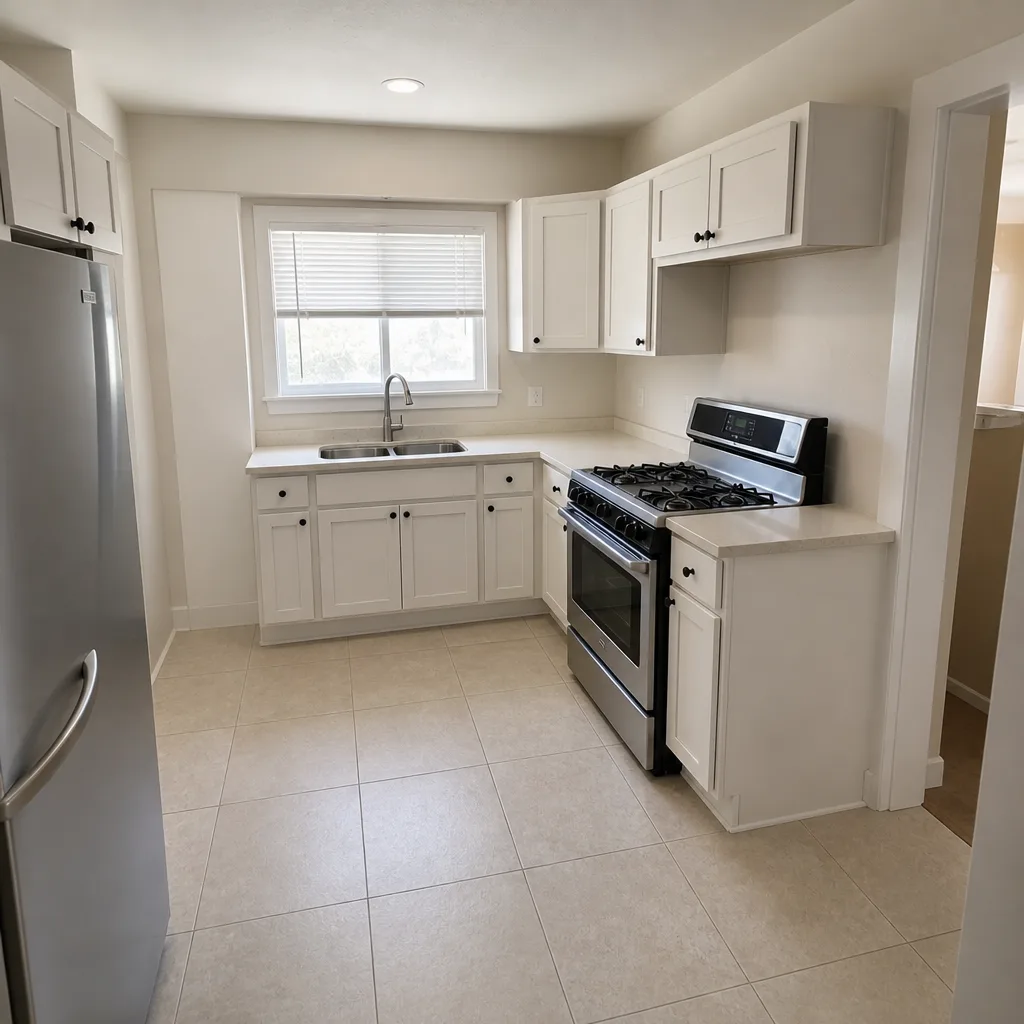 After
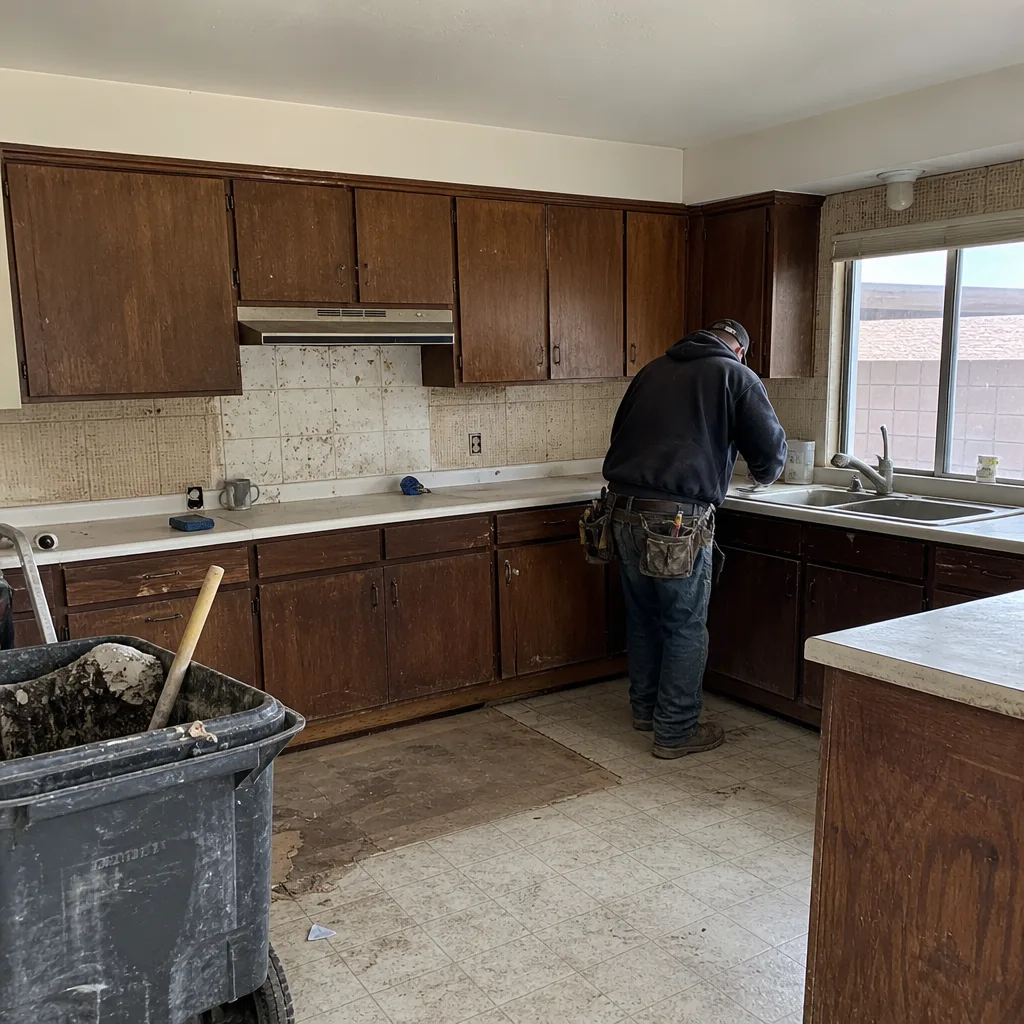 Before
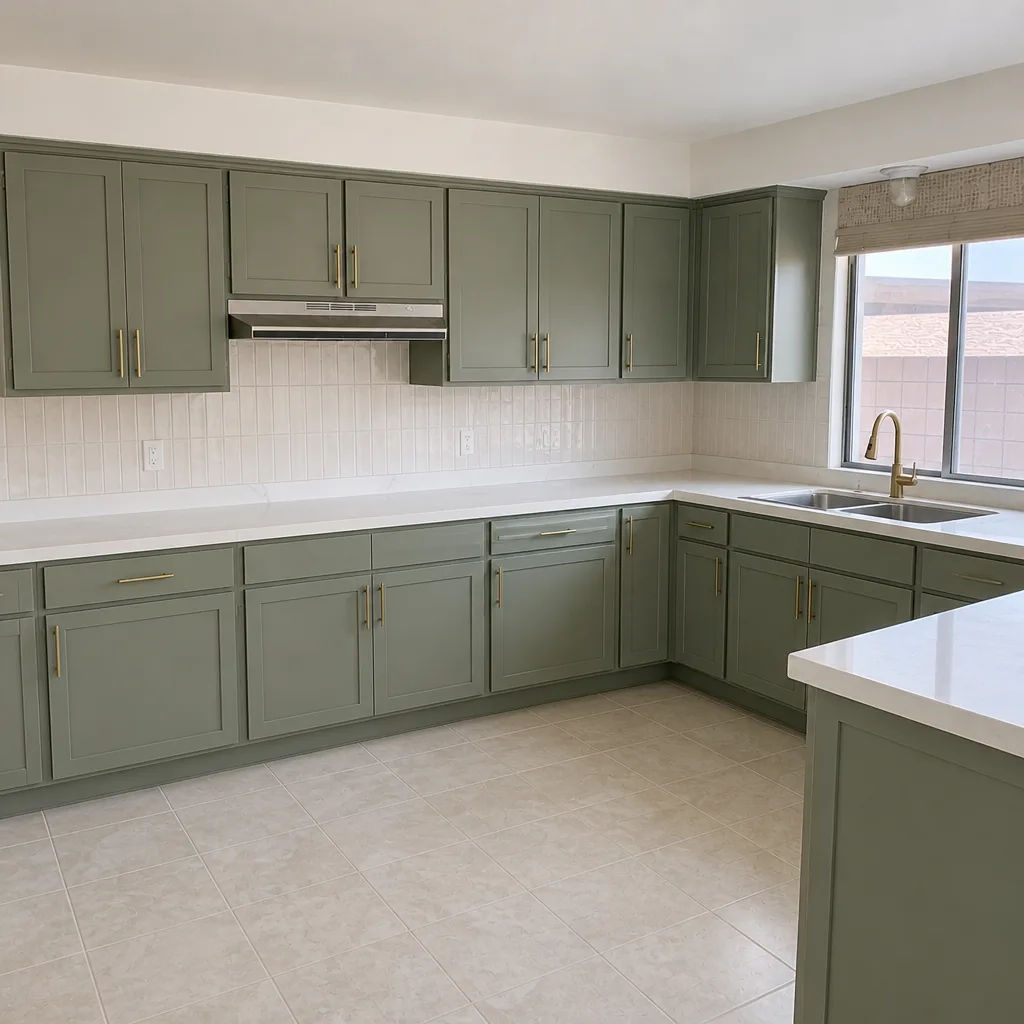 After
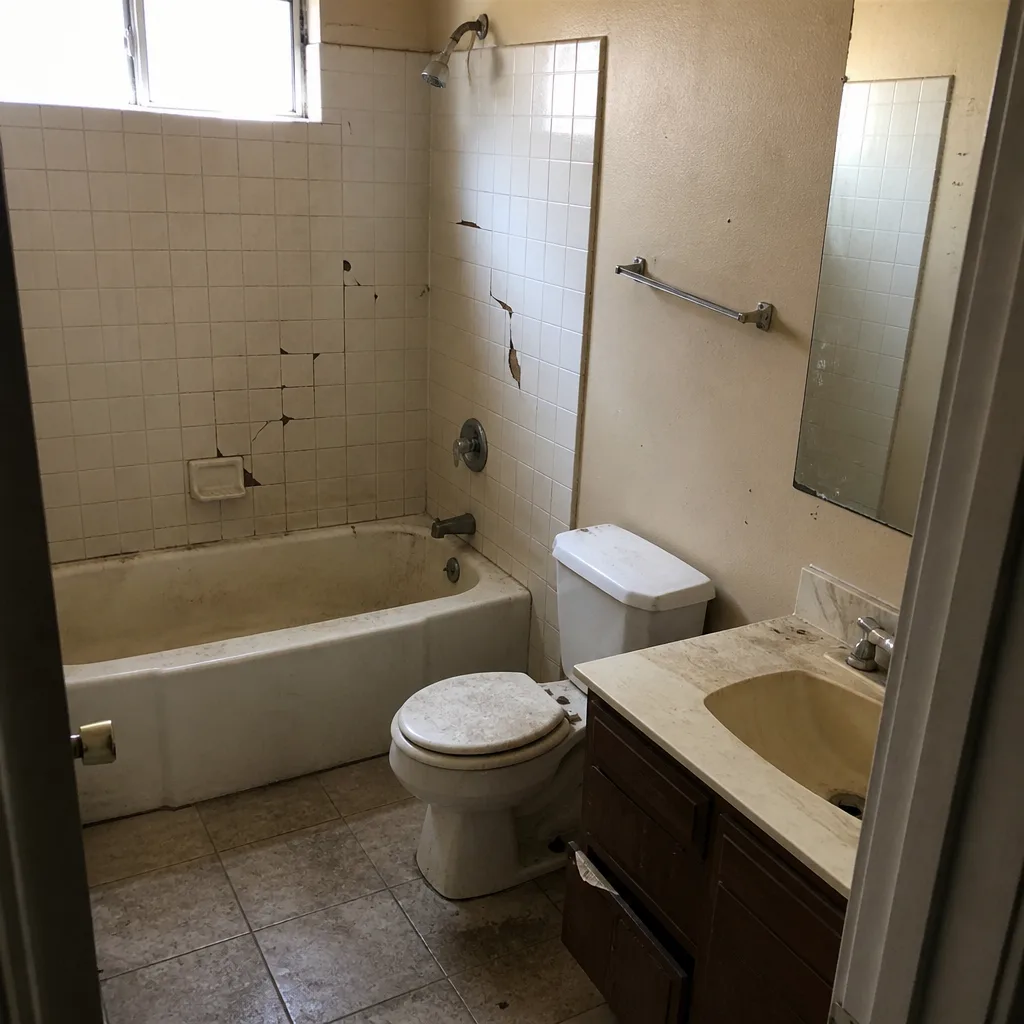 Before
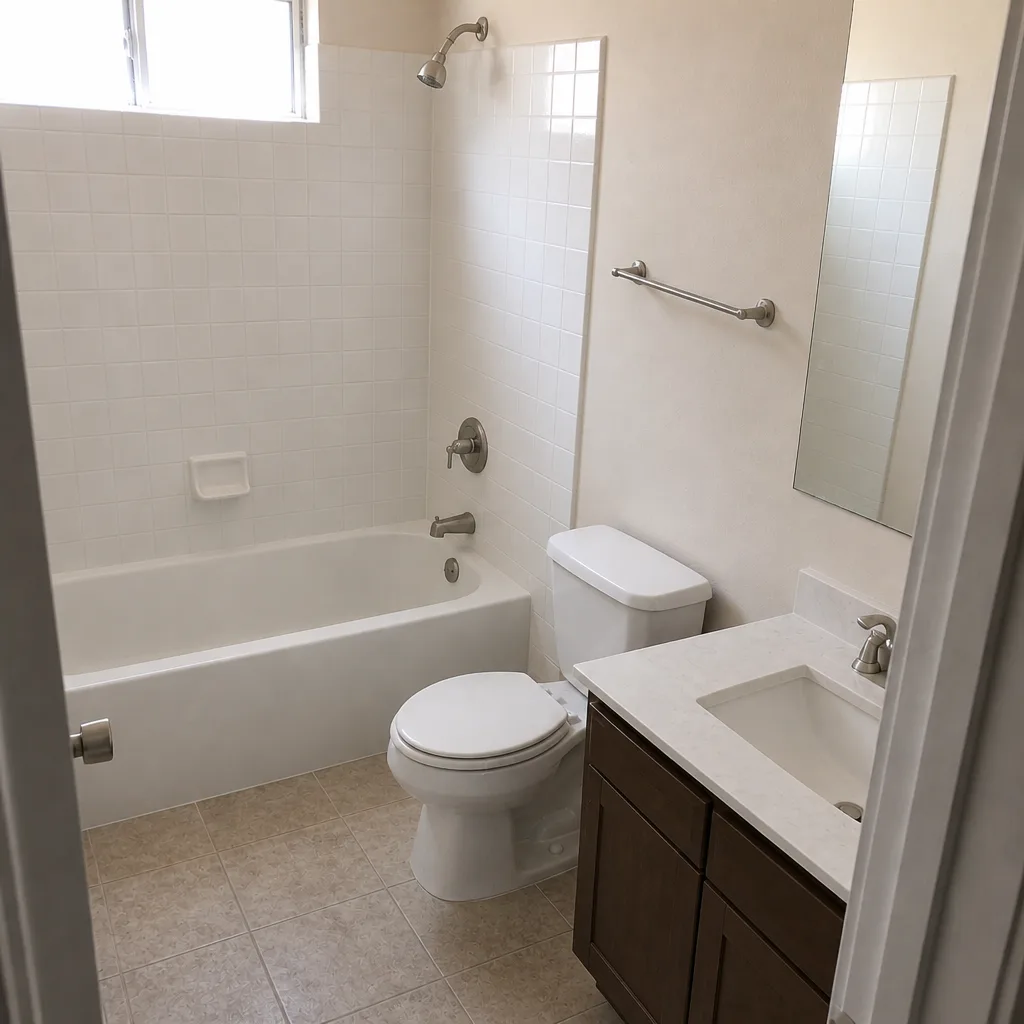 After
When to Call a Professional
Call a licensed professional – and in some cases a licensed trade specifically – when any of these apply: you’re relocating a circuit, moving a drain or supply line, touching a gas connection, opening a load-bearing wall, or installing cabinets that have to land level across a whole run. We also recommend calling us if the home is older and you’re not sure what’s behind the wall – what looks like a simple tile job sometimes uncovers a plumbing issue that changes the scope. And any electrical work that involves a panel, a new dedicated circuit, or a subpanel should be handled by a licensed electrician, full stop.
Elmstead Remodeling Boulder City offers free estimates in Boulder City – call (855) 552-7882. We’ll walk the kitchen with you, tell you exactly which phases are safe to take on yourself, and give you a written price on the rest before any work begins.
Frequently Asked Questions

Yes, demo is one of the safest DIY phases in a kitchen remodel – as long as you know where the new cabinets will land and don’t tear back past that line. The savings are real, but so is the risk of hitting a water line or wiring during over-enthusiastic demo. Watch for older homes in Boulder City where a small demo mistake turns into a plumbing repair. Call (855) 552-7882 if you want us to walk you through the safe demo boundary for your specific kitchen.
Not for cosmetic work – paint, tile on an existing substrate, hardware, and appliance swaps on existing circuits. But any electrical circuit relocation, plumbing relocation, gas work, load-bearing wall change, or new exterior penetration for a range hood requires a permit and inspection. Boulder City’s requirements are separate from unincorporated Clark County, so confirm with the permitting office before you start. For a project that includes permitted work, call (855) 552-7882 and we’ll handle the permit pulls and inspections.
We don’t recommend it. It looks like a weekend project, but a cabinet run has to be level and plumb across the whole span, and a small error at the first cabinet compounds through the last one. It surfaces at countertop templating, when the template comes out wrong and the countertop has to be re-ordered. If you want to save on a professional install, do the demo and the painting instead. Call (855) 552-7882 for a written price on cabinet installation.
Not writing down where the DIY work ends and the professional work begins, including the date the DIY phase must be finished. The second biggest is assuming the contractor’s warranty covers their own DIY work. It doesn’t. Get the scope division in writing before any work starts. To talk through a partial-scope project with us, call (855) 552-7882.
For most homeowners, that’s painting, hardware, backsplash tile, and appliance swaps. That can trim a meaningful amount from the labor line. Demo is also doable if you’re careful and know the safe boundary. Everything else – cabinets, countertops, electrical, plumbing, gas – belongs to a licensed trade. A written scope division lets you keep the savings and protect the warranty. Call (855) 552-7882 for a free estimate and a clear breakdown of what you can keep.
It depends on the component. Most contractor warranties cover the contractor’s work, not yours – so if the countertop is ours and the cabinet install is yours, the countertop warranty covers the counter. It doesn’t cover the cabinets. Ask your contractor exactly what is covered, by whom, and for how long, before any work starts. Elmstead’s 365-Day Done Right Promise covers every completed project – call (855) 552-7882 and we’ll write out exactly what’s covered on your job.
The Bottom Line
The DIY-versus-professional question isn’t about skill. It’s about consequences. Painting, hardware, backsplash on sound substrate, and appliance swaps on existing circuits are safe to do yourself – small errors, contained cost, no permit. Cabinet installation, countertop templating, drain relocation, gas work, and anything that moves a circuit belong to a licensed trade. The permit boundary is real: unpermitted electrical in Clark County becomes a correction on a future home sale, long after the project is done. If you split the work, write down the scope division and the dates before anyone starts. Elmstead Remodeling Boulder City delivers a written price before any work starts, named-brand materials including KraftMaid and Cambria, background-checked and uniformed technicians, and the 365-Day Done Right Promise on every project.
Contact Us

If you’re planning a kitchen remodel in Boulder City and want a straight answer on which phases to keep and which to hand off, call Elmstead Remodeling Boulder City at (855) 552-7882 for a free estimate. We’ll walk through the scope with you, put the price in writing, and tell you plainly where the DIY line is for your kitchen.
Written by the team at Elmstead Remodeling Boulder City.