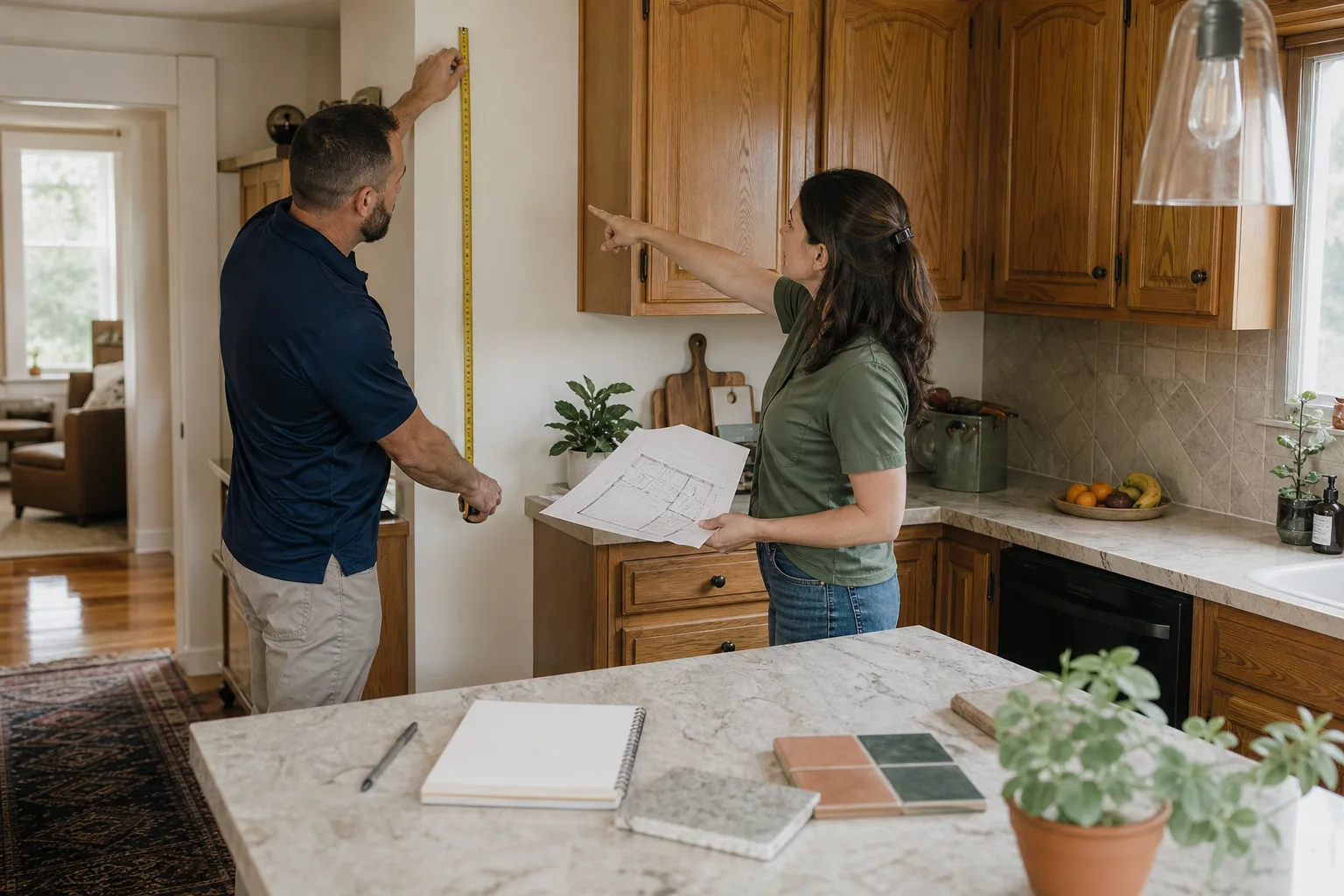
Free written scope consultation - allowances, timeline, and change-order rules on paper before a single trade is scheduled
Styles & brands we work with
- Kitchen remodeling
- Bathroom remodeling
- Home additions & ADU
- Roofing
- Windows & doors
- Driveway & pavers
- Fence
See the difference
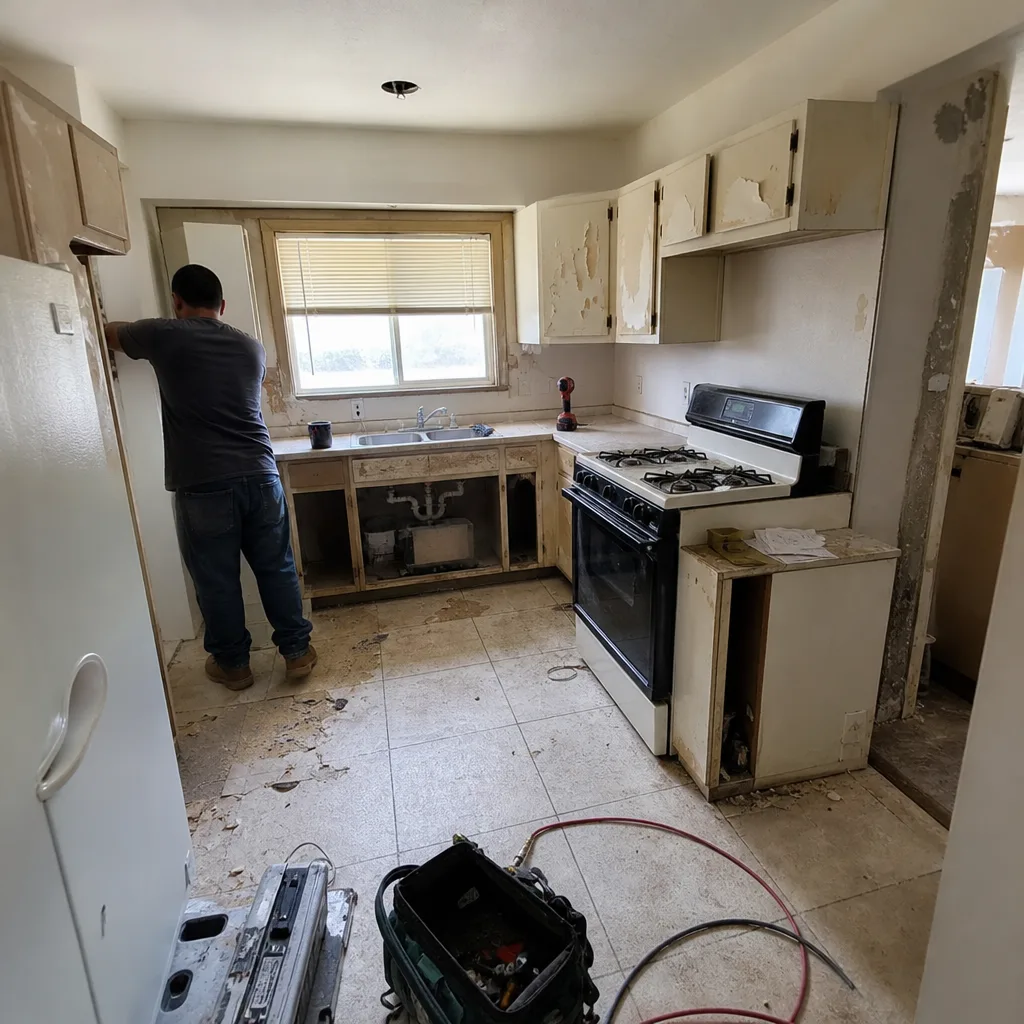 Before
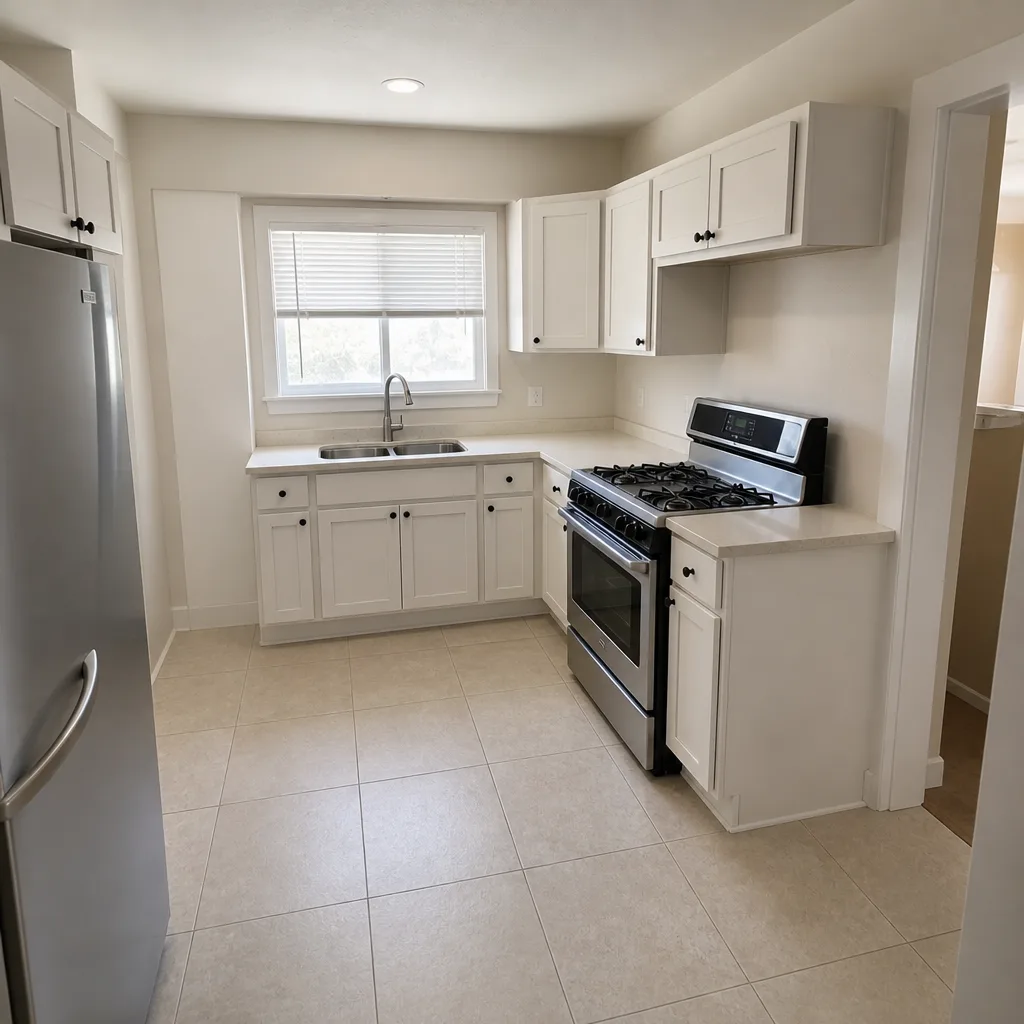 After
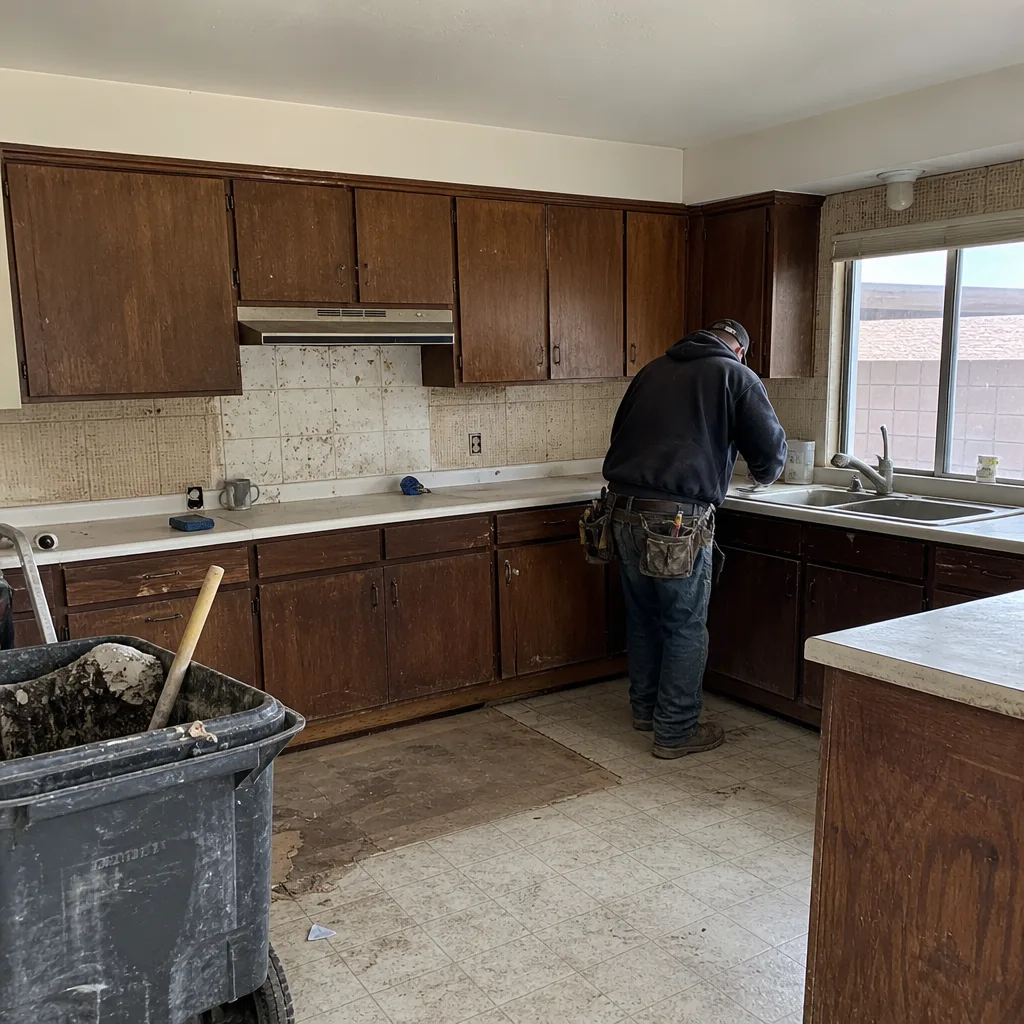 Before
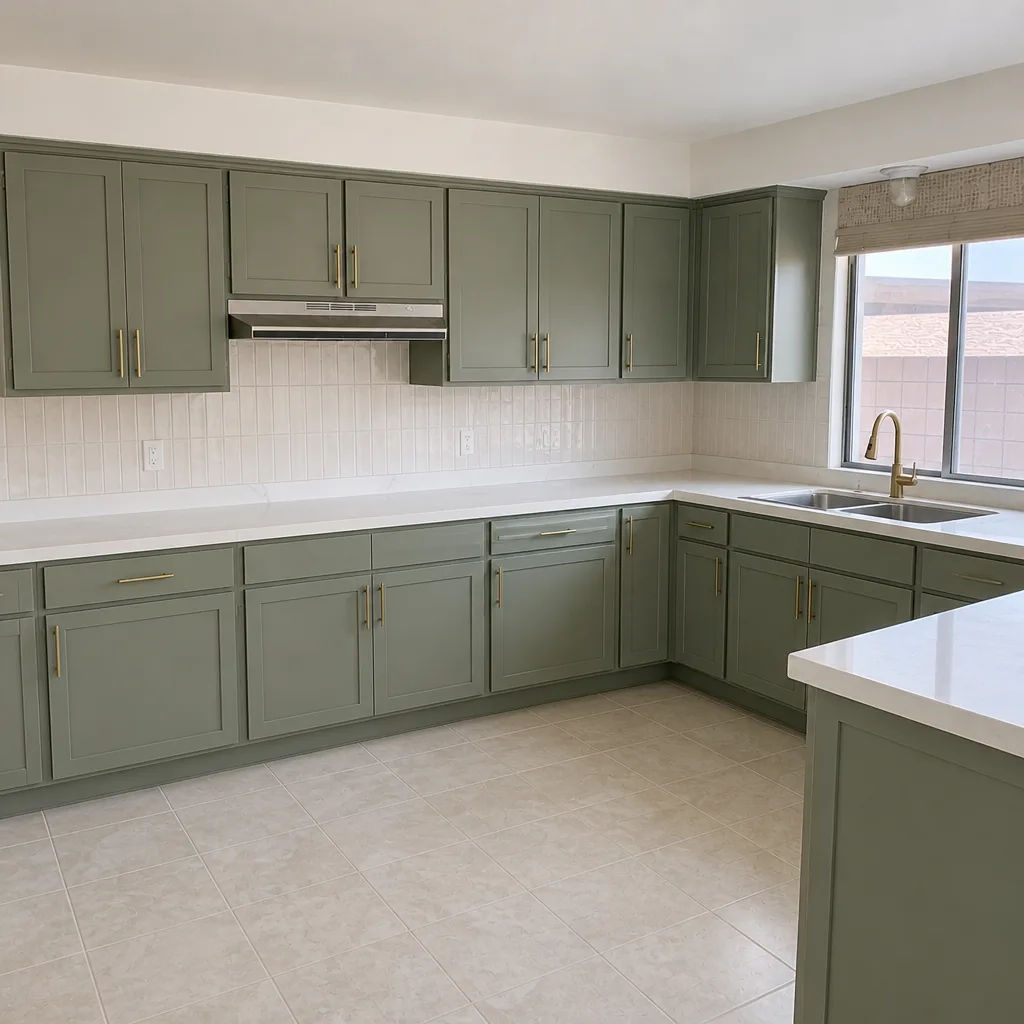 After
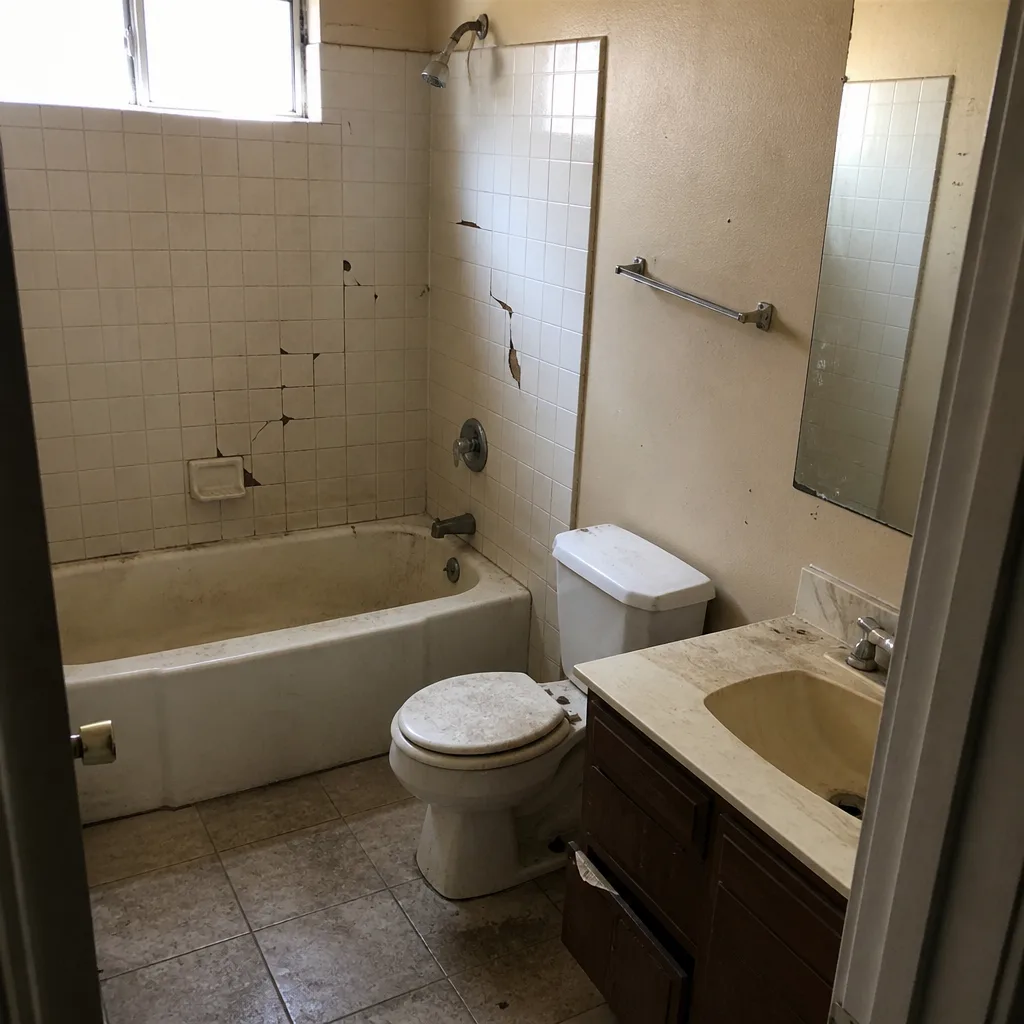 Before
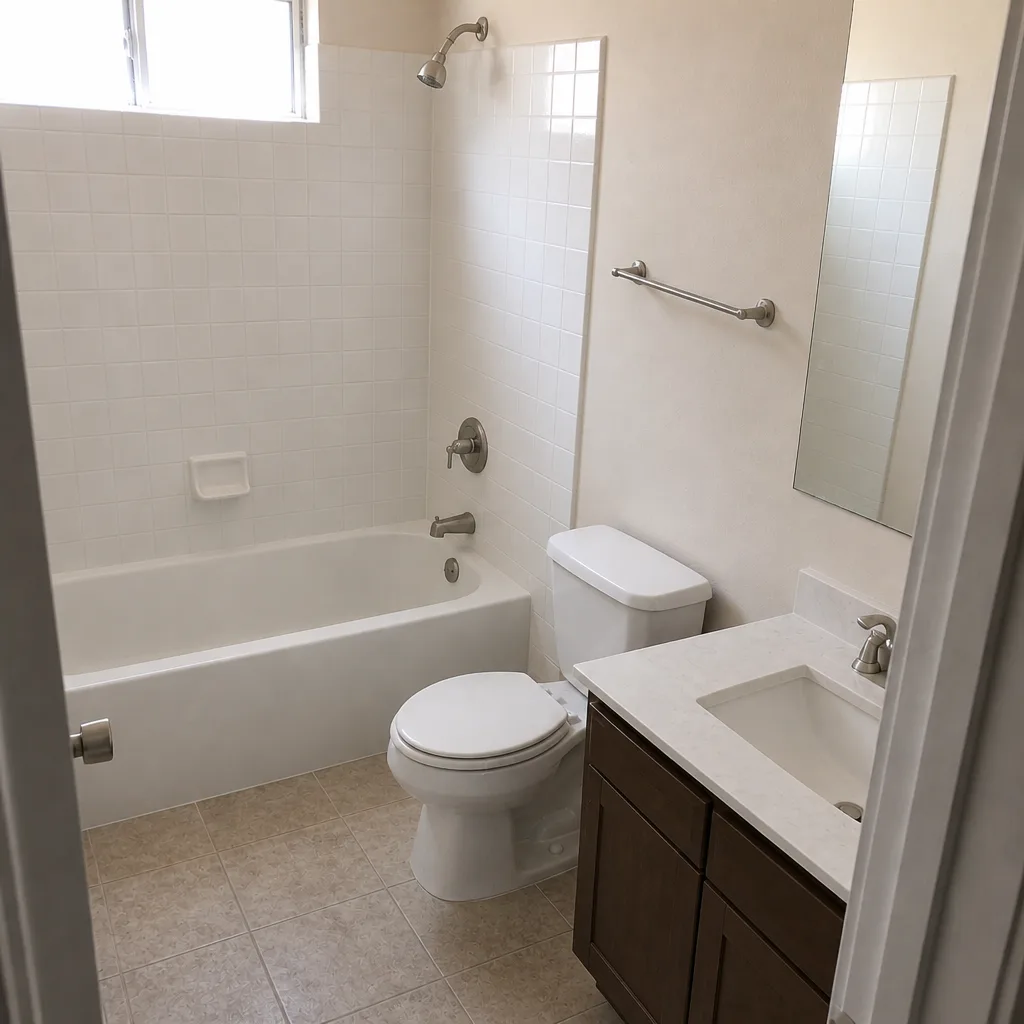 After
Tile vs Vinyl Plank Kitchen Flooring in Boulder City, NV: Pick Porcelain Tile Unless You Have a Specific Reason Not To
For most kitchens in Boulder City, porcelain tile is the lower-maintenance long-term floor and luxury vinyl plank is the riskier bet. That isn’t a style opinion. It comes down to heat: Boulder City runs more than 110 days above 100°F a year, LVP expands roughly 1/8 inch per 10-foot run for every 20°F of temperature rise, and a south-facing kitchen with original single-pane windows can swing 25°F or more between the sunny wall and the shaded one. Choose tile unless you’re set on a specific wood look, need a softer surface underfoot, or you’re flooring a room that stays evenly cooled. Call us at (855) 552-7882 if you’d rather talk through your actual kitchen than a general rule.
Why Heat, Not Looks, Decides This in Boulder City
Walk into any of the 1930s stucco bungalows near the historic district on a July afternoon and you’ll feel it: the south kitchen wall radiates warmth while the interior wall two feet away stays cool. Those homes were built for dam workers with minimal insulation, original concrete foundations, and windows that were never meant to hold desert sun. A floor in that room doesn’t get one steady temperature. It gets a gradient.
Luxury vinyl plank handles a gradient by moving. The planks expand toward the warm side of the room, and if the floor is floated rather than glued, the whole field shifts slightly. Multiply that across 110-plus 100°F days, a few thousand expansion cycles over a decade, and the seams are the first thing to show it: cupping at the ends, gapping along a long run, edges lifting near a sunny sliding door.
Porcelain tile doesn’t care. The tile body and the thin-set under it move at rates so low that the joint grout absorbs them without complaint. The spec sheet number is roughly 0.0000045 inches per inch per °F for porcelain, versus something closer to 0.00004 for a rigid-core vinyl plank. Ten times the movement, all of it happening in a room that’s already working hard to stay cool.
The arithmetic on a 12-foot kitchen run
- A 12-foot LVP run across a 20°F swing: about 1/8 to 3/16 inch of expansion to account for.
- Same room, same swing, porcelain tile: movement is small enough that standard grout joints handle it.
- In a kitchen with single-pane original windows, that 20°F swing happens most afternoons, not once a season.
Side-by-Side: What Each Floor Actually Does Here
| Factor | Porcelain Tile | Luxury Vinyl Plank |
|---|---|---|
| Thermal movement over 20°F | Negligible | ~1/8 inch per 10 ft run |
| Behavior on 1930s concrete slab | Bonds directly, no floating | Needs flat, stable substrate |
| Baking near a south-facing window | Unaffected | Adhesive softens, edges lift |
| Typical install range | Higher upfront | Lower upfront |
| Underfoot in summer | Stays cool | Warmer, softer |
| Repair a damaged area | Spot-regrout or swap one tile | Often seam-by-seam or plank-by-plank |
Tile wins this table in Boulder City. The vinyl plank isn’t a bad product; it just gets asked to do something in a high-desert kitchen that it isn’t built for.

The Subfloor Reality in Dam-Era Homes
Here’s the piece most flooring comparisons skip. The Boulder Dam-era core of Boulder City sits on original concrete foundations, often with caliche-hard ground beneath and slab-on-grade construction above. Porcelain tile over a stable, flat concrete base means a thin-set installation, which is the way tile wants to be laid. Floating LVP over that same 90-year-old slab means working with whatever the slab has become since the 1930s: low spots from settling, a crack line or two, high points where a repair was patched. Every one of those gets leveled before the plank goes down. Prep often outruns the cost of the plank itself.
That’s the trade nobody explains upfront: the “cheaper” floor can cost more in prep. A pour of Quikrete floor leveler to bring a settled slab into flat takes a bag or six and a day of curing. Tile set over a flat-enough slab just needs the surface cleaned and primed.
Edges, Thresholds, and Small-Footprint Kitchens
Dam-era kitchens are small. Doors land close to walls, thresholds are tight, and there’s often no room for a bulky transition strip. This is where the tile installation does something clever: Schluter trim profiles sit flush with the tile face and finish the edge at the doorway, the wall junction, or the step into the next room, without a raised lip your toe catches and without rebuilding the subfloor. Slim stainless and brushed-brass Schluter edges are the pieces we reach for in these rooms because they solve a geometry problem, not just a finish problem. Cabinets from KraftMaid and Wellborn can be planned to sit clean over the new floor plane once the tile layout is set.
Countertops Belong in the Same Argument
If the floor is going to be heat-stable, the counter above it should be too. A stone counter absorbs the same afternoon sun a floor does, and pairing a porcelain floor with a Cambria or Silestone quartz countertop creates a thermally neutral kitchen system: no adhesive underfoot to degrade, no laminate surface trying to peel at the sunward corner, no seam in the floor field that opens up when the room hits 95°F inside. That’s a room-level decision, not a flooring decision, and it’s part of why floor and counter often get quoted together. Our Kitchen Remodeling team plans them against the same sight lines and the same solar exposure.
Common Scenarios We See in Boulder City
South-facing kitchen, original windows, no shade: Porcelain tile, every time. The ultraviolet load on that room is not the kind vinyl is built for.
Kitchen with a covered patio door and afternoon shade: Vinyl plank can make sense. The temperature is more stable and the softer surface earns extra points if someone in the house stands on that floor for an hour cooking.
Infill ranch or a later custom home with a modern slab: Both floors work. Vinyl plank is a reasonable choice if the budget is the deciding vote, provided the slab passes a flatness check first.
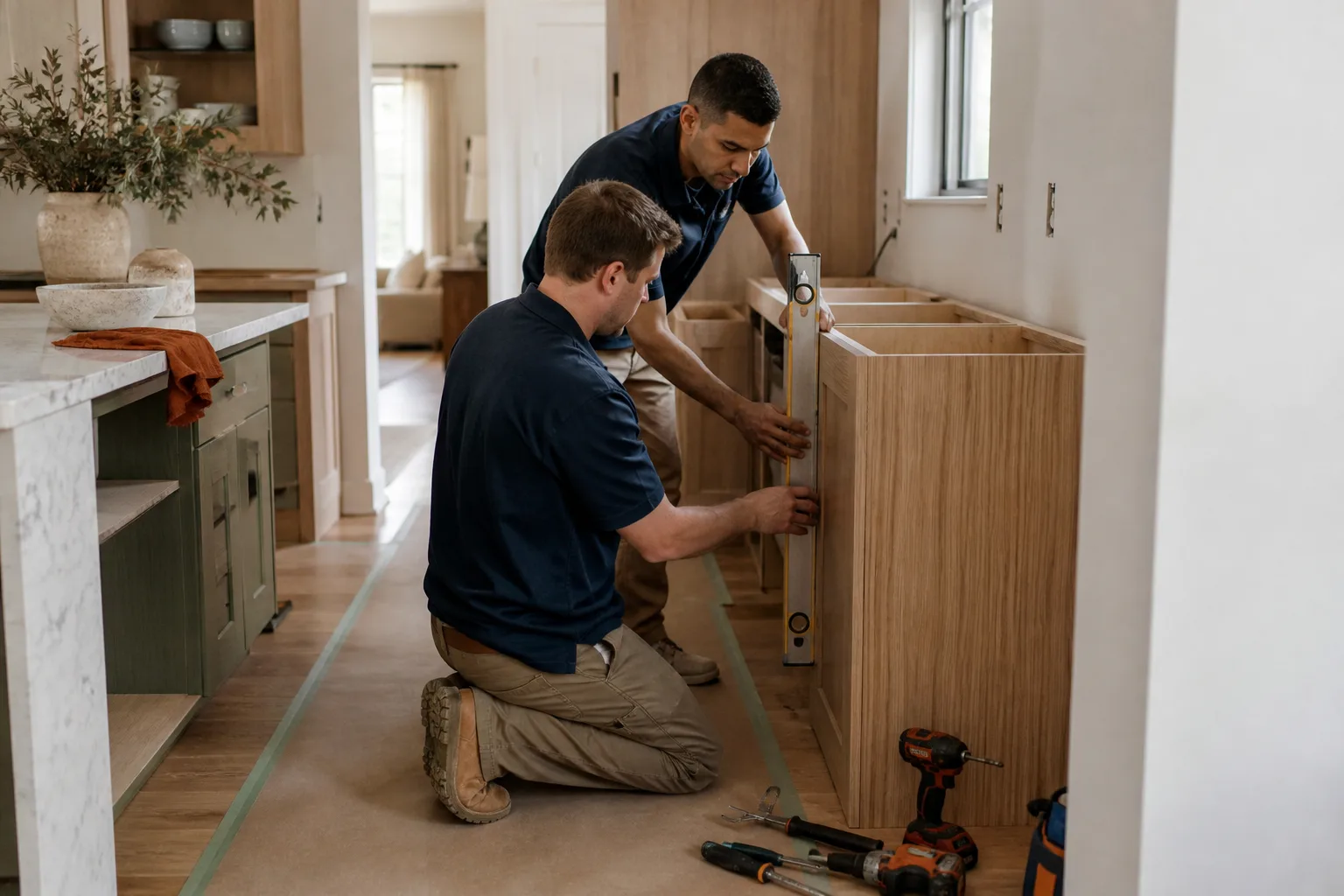
Adding an island or reworking cabinetry: Floor plan comes first. Tile is set to the eventual cabinet footprint; a plank floor is cut back to the cabinet installation line so the planks can float free.
You Get the Written Price Before Any Work Starts
Flooring pricing in Boulder City, NV varies enough that a single number would mislead you. So here are the honest ranges for the room-level projects involved, and every project we take on starts with a written price you hold before a tool is pulled from the truck. That includes a line-item breakdown of tile, thin-set, trim, and removal, and the same for any vinyl planking considered:
- Small kitchen remodel (including a floor replacement): $9,000-$20,000
- Full kitchen remodel with flooring and cabinetry: $14,000-$45,000
- Countertop installation (Cambria or Silestone, a typical size): $2,000-$6,500
- Backsplash installation, if the wall and floor are being finished together: $800-$2,500
Those ranges reflect Boulder City pricing. They get tighter once we see your subfloor condition, which is the one variable we can’t guess at until we’re standing in the room.
Why Families Here Choose Elmstead Remodeling Boulder City
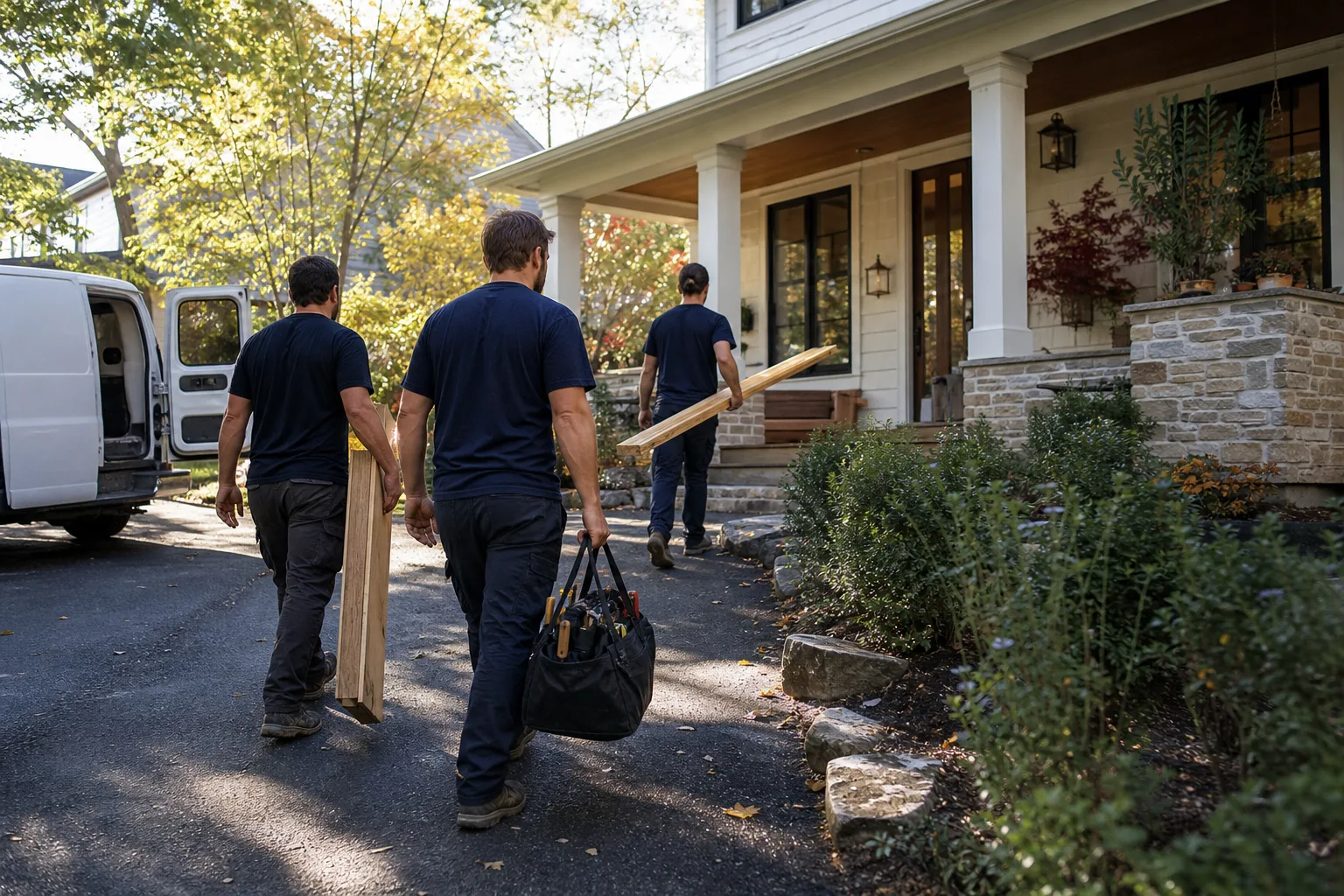
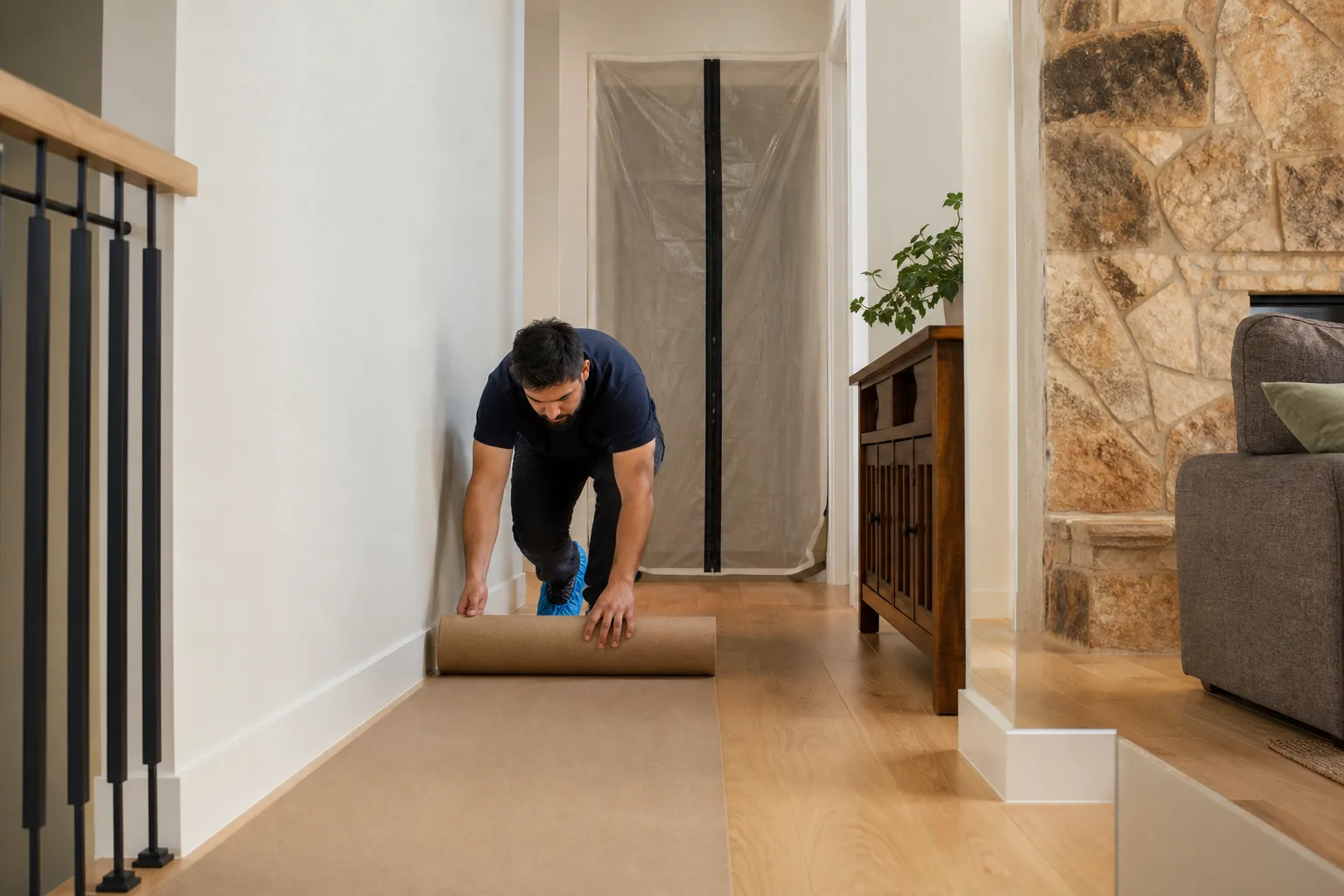
Our crews are background-checked and uniformed, so you know who is walking through the door, and they put shoe covers on at the threshold and drop cloths down before anything moves. During nap and school pickup hours we run quiet tools wherever we can. When there is a pet-safe product choice, we’ll name it before we use it. A live person answers the phone 24/7, not a voicemail box, and our technicians bring up to 21 years of experience with them onto every job.
And every floor we install, tile or plank, is stamped with the 365-Day Done Right Promise: if it isn’t done right after the job is complete, we make it right. A floor that underperforms in the desert shouldn’t be your risk to absorb. If your finished floor lifts at a seam or a tile comes loose within that first year, you call and we fix it, in writing.
For broader project planning beyond the floor, the home page and our bathroom remodeling work in Boulder City follow the same process. If your project runs into an adjacent flooring scope, we’ll quote it in the same written price rather than a separate handshake.
FAQs
Porcelain tile is the better long-term choice for most Boulder City kitchens because the region’s 100°F-plus summers and intense UV cause vinyl plank to expand and its adhesive to soften. Vinyl plank only wins if your kitchen stays evenly cooled and you want the softer surface underfoot.
A kitchen floor replacement in Boulder City typically falls inside our $9,000-$20,000 small-kitchen range, or $14,000-$45,000 for a full kitchen remodel that includes the floor. Tile’s prep on an older concrete slab can add cost; floating plank adds cost on a slab that isn’t flat. Call (855) 552-7882 for a written price specific to your room.
Yes. LVP expands roughly 1/8 inch per 10-foot run for every 20°F of temperature rise, and a south-facing kitchen with original windows can swing more than that in a single afternoon. Over years of those cycles, the seams cup and gap. Porcelain tile’s movement over the same swing is small enough that standard grout handles it.
Yes, in most cases. A stable, flat, original concrete foundation is the ideal base for porcelain tile, and it often needs less prep than floating vinyl plank over the same 90-year-old substrate. We’ll confirm flatness on site before quoting the thin-set work. Call (855) 552-7882 for a no-pressure assessment in Boulder City, with a written price before any work starts.
If you’d rather have it looked at than read about it, Elmstead Remodeling Boulder City offers a no-pressure assessment in Boulder City – call (855) 552-7882 for a free estimate.
Written by the team at Elmstead Remodeling Boulder City, serving Boulder City, NV.