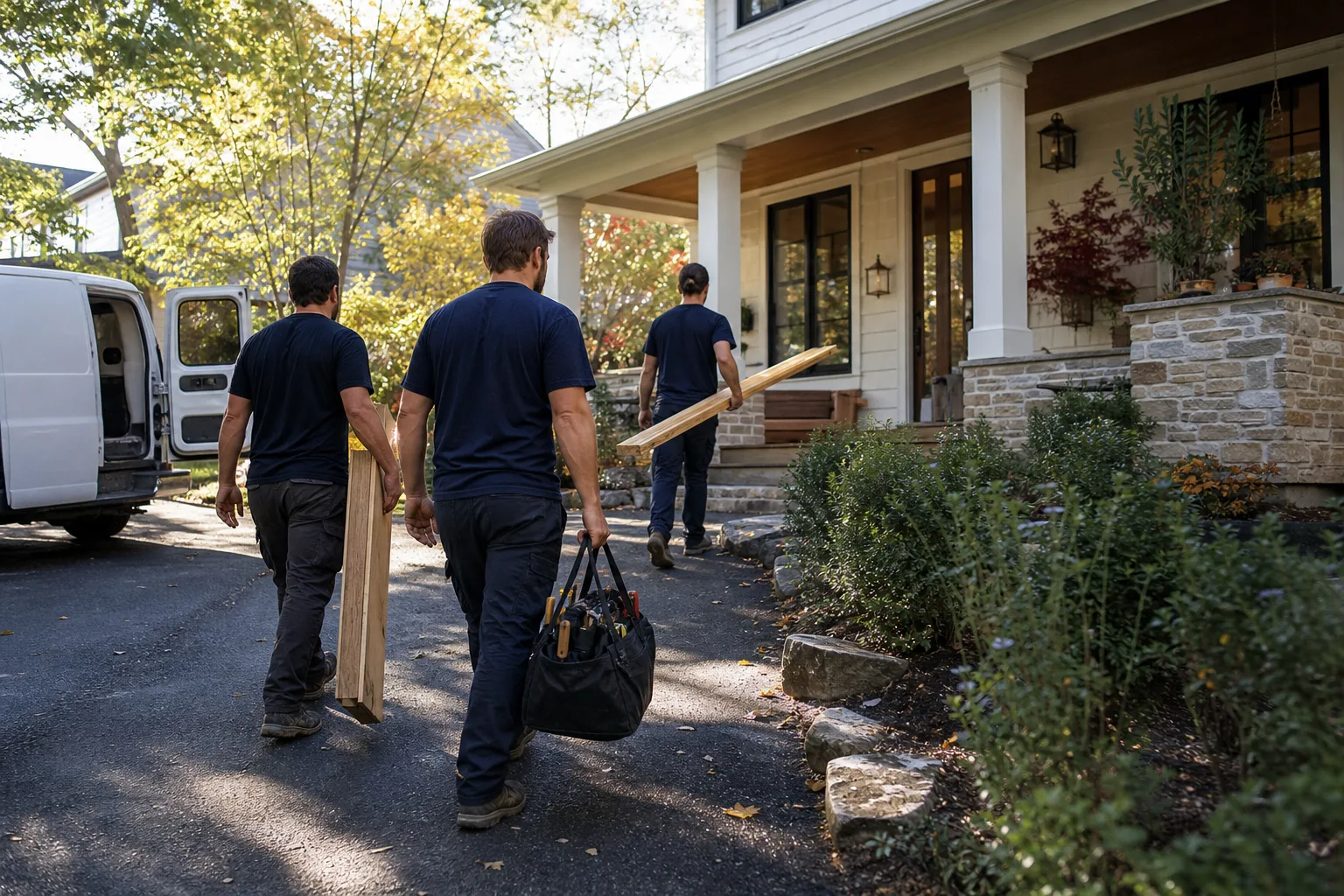
Last updated November 17, 2026








Free written scope consultation - allowances, timeline, and change-order rules on paper before a single trade is scheduled
The Complete General Contractor Guide for Boulder City Homeowners
Boulder City is one of only two cities in Nevada that still bans casino gambling. That same unhurried, rule-following culture shows up at the building department, where permit windows can run longer than most Las Vegas neighbors expect. If you’re planning a remodel here, that matters more than any glossy brochure. This guide covers how Boulder City permit coordination actually works, why summer heat above 110°F reshapes a project schedule, how to tell a licensed general contractor from a handyman under Nevada law, and how to read a written scope of work before you sign anything.
Quick Answer
Hiring a general contractor in Boulder City means hiring someone who understands the city’s own building department, its city-owned electric utility, and a desert climate that forces construction sequencing around extreme summer heat. A written scope of work, a fixed price before work starts, and a contractor who pulls permits under Nevada law protect you more than any bid that looks cheapest on paper.
Styles & brands we work with
- Kitchen remodeling
- Bathroom remodeling
- Home additions & ADU
- Roofing
- Windows & doors
- Driveway & pavers
- Fence
Table of Contents
- How Do Permits Work in Boulder City?
- Why Does Boulder City Electric Change Your Project Timeline?
- Why Does Summer Heat Above 110°F Reshape Your Schedule?
- Clark County vs. Boulder City: Which Rules Apply to Your Parcel?
- How Do You Read a Written Scope of Work?
- Licensed Contractor vs. Handyman: Why It Matters for Insurance
- How Do You Choose the Right Contractor?
How Do Permits Work in Boulder City?
Nearly every structural, electrical, plumbing, or mechanical change inside Boulder City requires a permit pulled from the city’s own building department, and inspections are scheduled through that same office. Plan for a longer front end than you would in unincorporated Clark County. Folks in the historic district around Nevada Way routinely wait longer than they expect, partly because change-of-use questions and exterior alterations get a closer look in a town that cares about its look.
Here’s the practical sequence most Boulder City projects follow:
- Pre-application review. Your contractor submits plans and addresses zoning or historic-district questions before the formal permit application goes in.
- Plan check. The city reviews structural, electrical, and life-safety details. Expect at least one round of comments on anything touching load-bearing walls or new square footage.
- Permit issuance and fee payment. Fees are based on project valuation, so the written scope directly drives your permit cost.
- Rough-in inspections. Framing, electrical, plumbing, and mechanical rough-ins are inspected before drywall closes the walls.
- Final inspection. Every trade signs off, and the project closes out with the city.
What we’ve learned the hard way: build 15 to 30 extra days into your planning calendar for a Boulder City permit, and more if the property sits in a historic overlay. A contractor who works here regularly knows what the plan reviewer will flag before the first submittal. If you want the full picture on how we run projects end to end, our General Contractor in Boulder City page walks through it.
Why Does Boulder City Electric Change Your Project Timeline?
Boulder City runs its own municipal electric utility, Boulder City Electric, rather than relying on NV Energy the way most of the Las Vegas Valley does. That single fact reshapes any project that touches your electrical service panel, meter, or a service upgrade. In an NV Energy area, your contractor coordinates one set of utility requirements. In Boulder City, the coordination runs through a different office with its own inspection and disconnect/reconnect scheduling.
What this looks like in practice:
- Panel upgrades need two approvals. You’ll need city electrical permits and utility side coordination for the meter and service entrance, and the sequence matters.
- Scheduled disconnects are slower. A temporary power cutoff for a service change is scheduled with the city utility, not a valley-wide utility, so lead times behave differently.
- Older homes often trip this up. Homes built during the dam-era boom of the 1930s sometimes have service panels and wiring that won’t support a modern kitchen’s appliance load. That means an upgrade is baked into the project before the cabinets go in.
A kitchen or bathroom remodel that adds a double oven, induction cooktop, or tankless water heater will almost always trigger an electrical service conversation. We plan for it up front rather than discovering it mid-demo. Our Kitchen Remodeling in Boulder City page covers the appliance-load math in more detail.
Why Does Summer Heat Above 110°F Reshape Your Schedule?
Boulder City regularly sees daytime highs above 110°F from June through early September. That’s not a comfort issue, it’s a material issue. Concrete poured at those temperatures cures too fast, risking cracks and weak slabs. Drywall joint compound skins over before it can be sanded. Stucco and exterior paint fail to bond when the surface is too hot. Adhesives for tile and flooring lose their working time.
The fix isn’t to skip summer work, it’s to sequence around it:
- Concrete gets poured at dawn. Breakfast-time pours, with shade curing and moisture control through the afternoon, hold up far better than midday work.
- Interior work moves indoors in July and August. Once the shell and roof are on, drywall and finish work proceed inside where crews aren’t fighting the sun.
- Exterior painting and stucco get scheduled for shoulder months. March, April, October, and November are the sweet spots for exterior surfaces.
- Material deliveries shift earlier. Cabinet and countertop installations happen before noon when possible, since adhesives and sealants behave better in cooler morning temperatures.
We use quiet tools during family rest hours where possible, and summer schedules are where that flexibility earns its keep. If a crew is working indoors in air-conditioning while kids nap, nobody is losing a morning to the heat. If your project will run through summer, ask how the contractor plans to handle concrete curing and exterior drying times. That single question tells you a lot about local experience.
Clark County vs. Boulder City: Which Rules Apply to Your Parcel?
This is where homeowners get confused, and understandably so. Boulder City is an incorporated city inside Clark County, which means the city runs its own building department and issues its own permits. Unincorporated Clark County land, by contrast, falls under Clark County’s building and fire codes and separate inspection calendars.
Here’s how to sort out which applies to you:
- Almost every residential parcel in Boulder City city limits pulls permits and schedules inspections through the Boulder City building department. That includes the neighborhoods around Nevada Way, the historic district, and the newer residential pockets on the town’s edges.
- Outlying parcels on unincorporated county land around Boulder City run through Clark County jurisdiction instead. Boundaries aren’t always obvious from the street.
- Your parcel number is the answer. A contractor can check the Assessor’s parcel record to confirm which jurisdiction governs your address before a single permit form is filed.
Why does this matter for you? Because inspections, fee schedules, and plan-check timelines differ between the two. Filing with the wrong authority wastes weeks. In our experience, one of the first things a Boulder City contractor confirms is which jurisdiction owns your address, and any contractor who doesn’t ask that question up front is worth a second look.
How Do You Read a Written Scope of Work?
A written scope of work is the single most important document in your project. It defines what gets built, what materials get used, and what the price actually covers. The difference between a good scope and a thin one is usually thousands of dollars and months of friction. A fixed, written price before any work starts is the standard you should hold every bid to, not an estimate that grows after the crew arrives.
A Boulder City scope of work should always include these line items:
- Permit responsibility. Who pulls the permit, who pays the fees, and who schedules each inspection.
- Utility coordination. Whether Boulder City Electric involvement for a service change or panel upgrade is included or billed separately.
- Material brands and model numbers. Named products rather than “builder-grade” placeholders, so you can research the warranty yourself.
- Protection and cleanup. Drop cloths, shoe covers, dust barriers, and a photo of the cleaned-up space before the crew leaves.
- Schedule and quiet hours. Start times, working hours, and how the contractor handles family rest periods.
- Warranty terms. The workmanship commitment in writing, with the length spelled out.
- Change-order process. How a mid-project change gets priced and approved before work proceeds.
Read every line and ask what’s excluded. “Install tile” is thin. “Install 12×24 porcelain tile from [named brand] over Schluter waterproofing, per plan” tells you what you’re buying. The brands you can research independently, like Kohler fixtures or Cambria countertops, come with manufacturer warranties that travel with the finished project.
Licensed Contractor vs. Handyman: Why It Matters for Insurance
Nevada contractor law draws a hard line between a licensed general contractor and a handyman. A licensed contractor holds a state license through the Nevada State Contractors Board and is bonded, insured, and legally able to pull permits and take on projects above the state’s threshold for handyman work. A handyman can handle small repairs but cannot legally perform work that requires a permit or exceeds the limit set for unlicensed work.
Why the insurance question is the one that actually bites:
- Homeowners insurance may deny a claim if damage traces back to unpermitted or unlicensed work. A water line installed by an unlicensed handyman that fails and floods a kitchen is a common example.
- Worker injury on your property without proper insurance can land on your homeowner’s policy, not the handyman’s.
- Permits and inspections create a paper trail that helps if you ever sell the home. Buyers and their agents ask for permit records, and missing records stall closings.
Anyone you hire for remodel-scale work should be able to show you a state contractor’s license and proof of insurance before you sign anything. Our Bathroom Remodeling in Boulder City page walks through how that verification works for a smaller project.
How Do You Choose the Right Contractor?
The best contractor for a Boulder City project is the one who asks about your family before they ask about your budget. Sounds soft, but it isn’t. A crew that knows where the toddler naps and where the dog sleeps plans differently. They schedule louder work around quiet hours. They choose low-VOC and pet-safe products where there’s a choice. They lay drop cloths on the floors and shoe covers at the door as a habit, not as an add-on.
The questions worth asking every bidder:
- Who pulls the permit, and what’s the permit timeline for Boulder City specifically? The answer tells you if they’ve actually worked here.
- What does the written scope include, line by line? Ask for the fixed price in writing before you commit.
- How will you handle Boulder City Electric coordination if we need a panel upgrade? Vague answers are a red flag.
- What does cleanup look like after each day, and after the job? Ask whether a photo of the clean-up is part of the handoff.
- What does the workmanship warranty actually cover, and for how long? Get the term in writing.
- Who answers the phone if we have a question on a Saturday? A live person beats a voicemail box every time.
We’re the Boulder City home base for families with children and pets, so we treat these as part of the job, not a footnote. Our technicians have up to 21 years of experience, and every project runs under a 365-Day Done Right Promise: if it’s not done right, we make it right. That commitment is stamped on the project, not buried in a brochure. If you want to see how we think about the whole-home picture, our Elmstead Remodeling Boulder City home page and Bathroom Remodeling in Boulder City and Kitchen Remodeling in Boulder City pages lay out the details. The careful stance includes a safety note worth stating plainly: any project touching a service panel, gas line, or high structural load should be handled by a trained, licensed professional, and no homeowner should attempt that work on their own.
Common Mistakes to Avoid
- Assuming Boulder City permits work like Las Vegas permits. They don’t. The city runs its own building department and inspection calendar, and a schedule built on valley assumptions runs weeks behind.
- Skipping the electrical service conversation on an older home. Homes from the 1930s dam-era construction often need a service upgrade to support a modern kitchen. Discovering that mid-demo adds cost and delay.
- Scheduling concrete or exterior work for July or August. Above 110°F, curing and drying behaviors fail. Morning pours and shoulder-month scheduling protect the finished result.
- Accepting a verbal bid. A price that isn’t in writing can grow after the crew arrives. Insist on a written scope and a fixed price before work starts.
- Hiring a handyman for permit-level work. Under Nevada law a handyman can’t legally perform work requiring a permit, and unpermitted work can jeopardize your insurance claim.
- Forgetting to confirm jurisdiction by parcel number. Unincorporated land near Boulder City falls under Clark County, and filing with the wrong authority wastes weeks.
- Letting the contract skip cleanup and protection. Floors protected with drop cloths, shoe covers at the door, and a photo of the clean-up are the details that separate a careful crew from a fast one.
See the difference
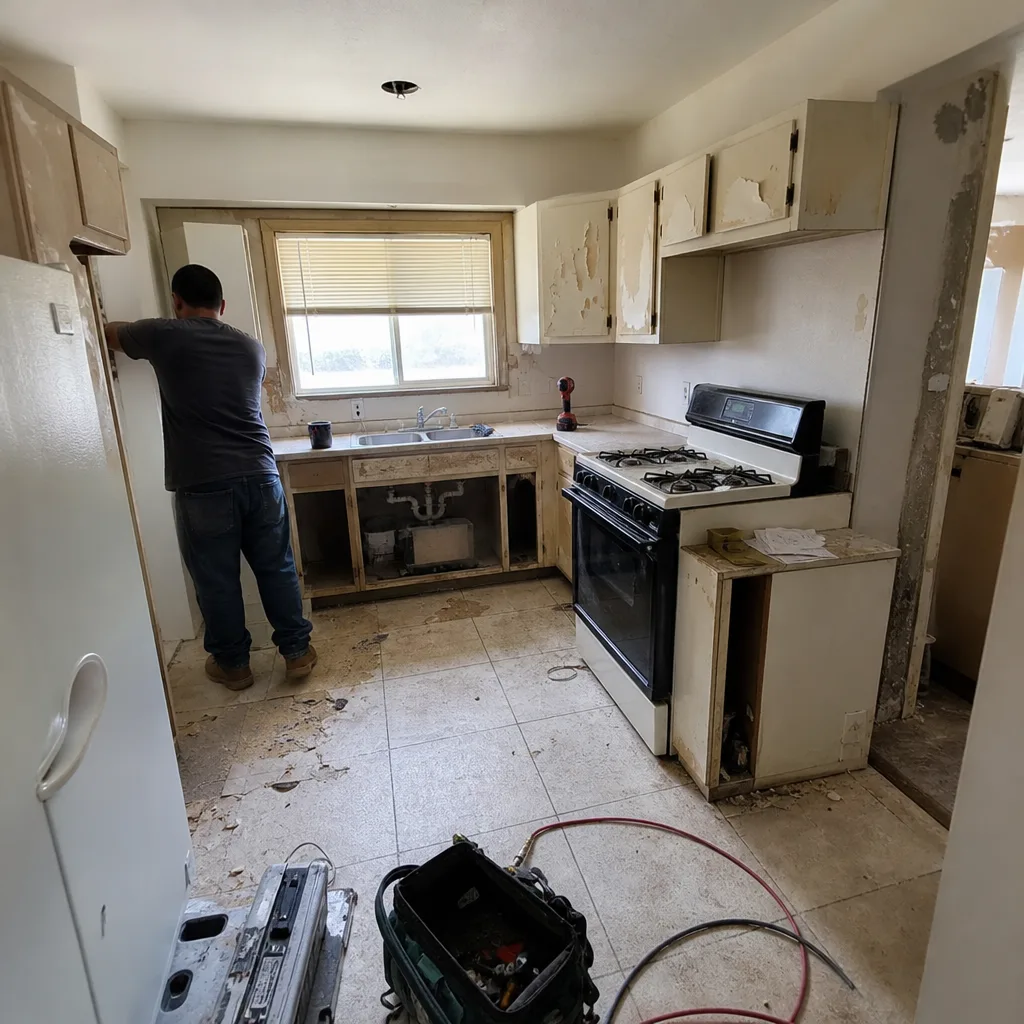 Before
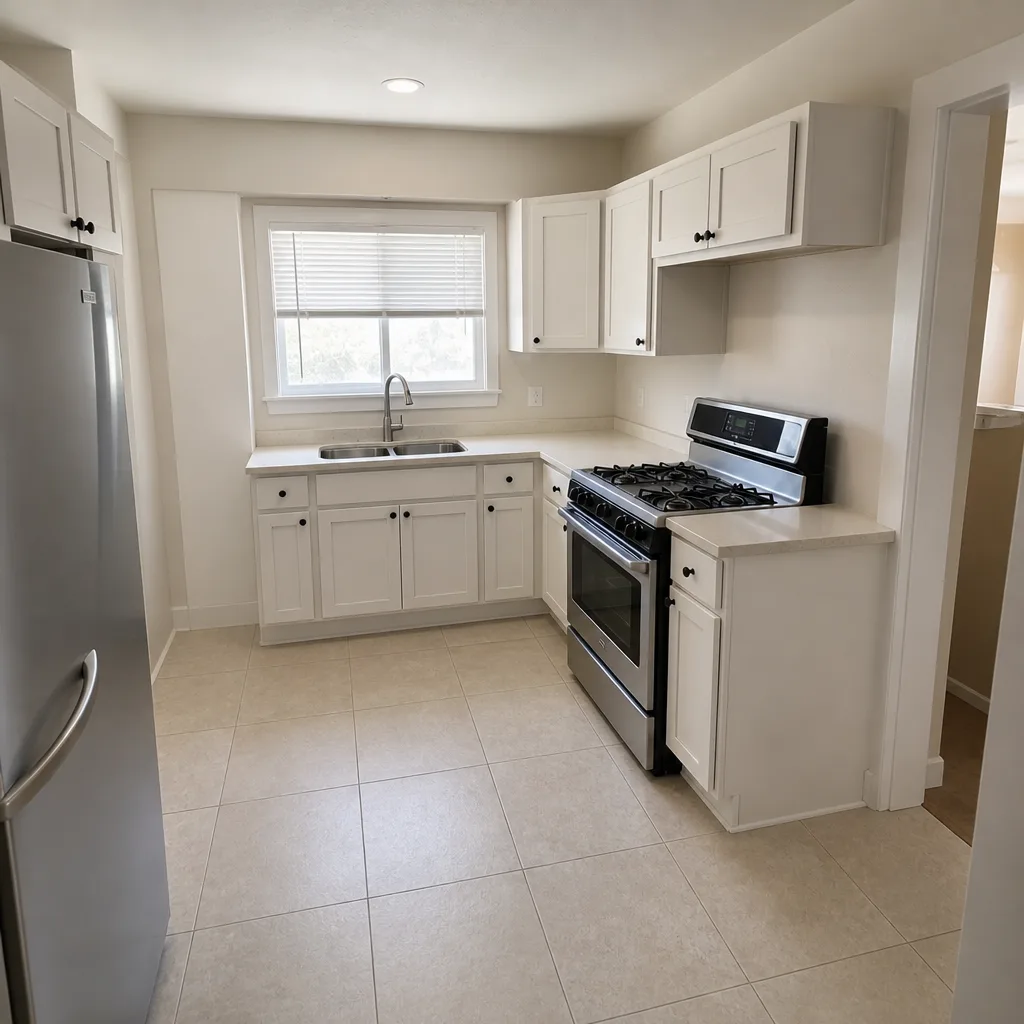 After
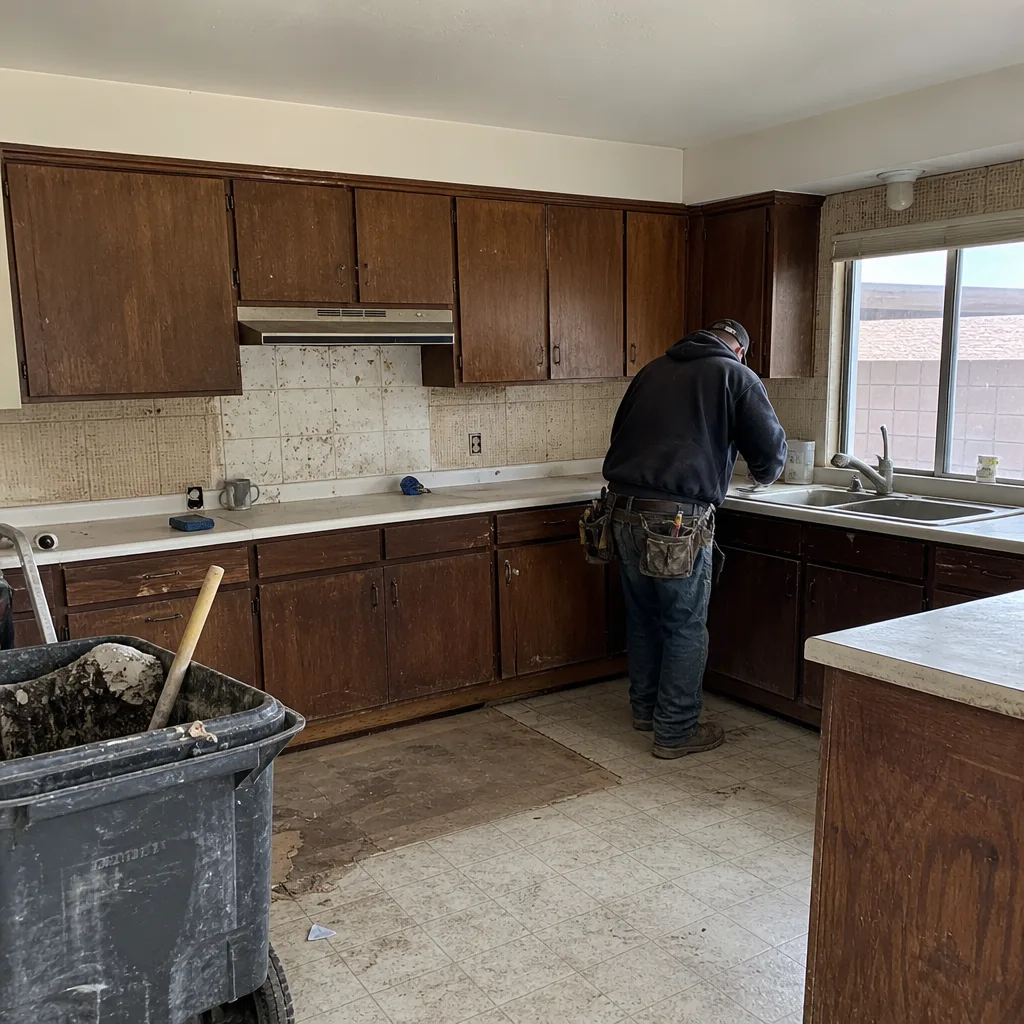 Before
 After
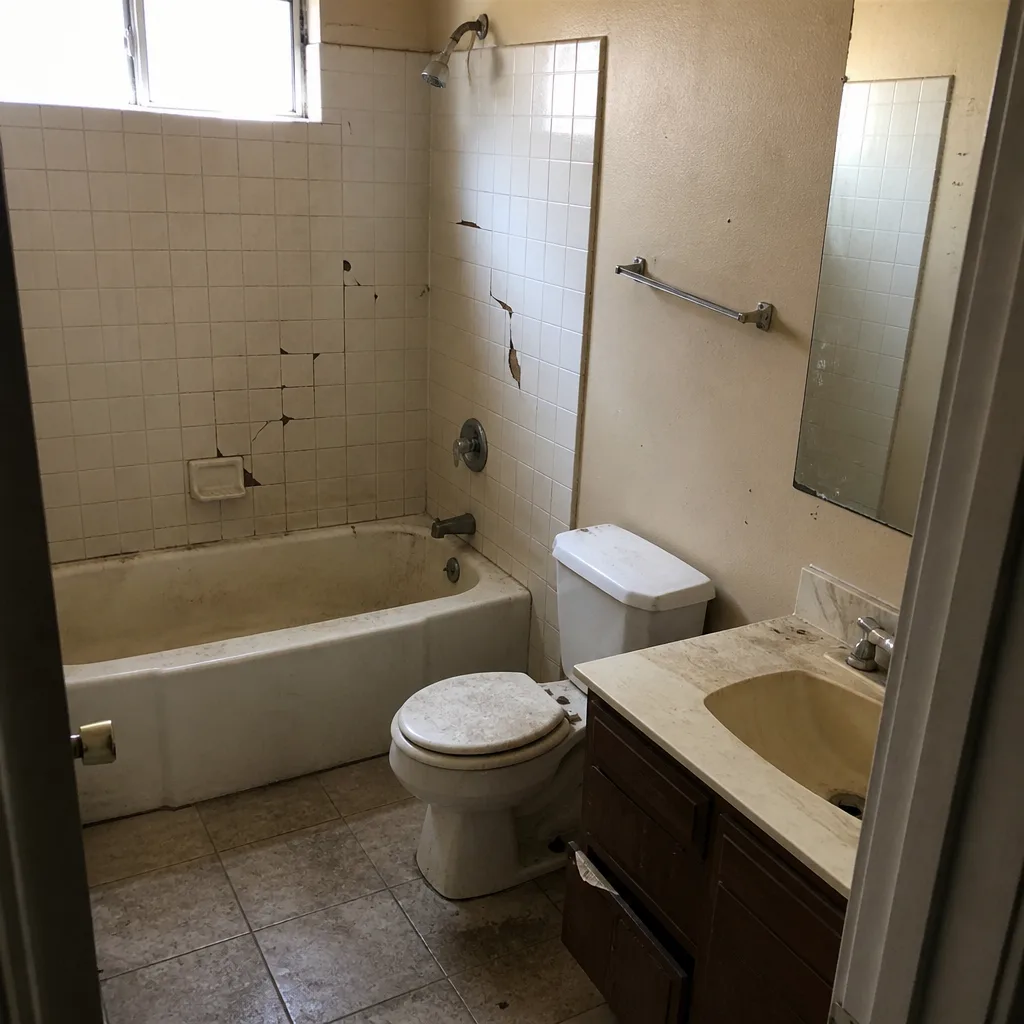 Before
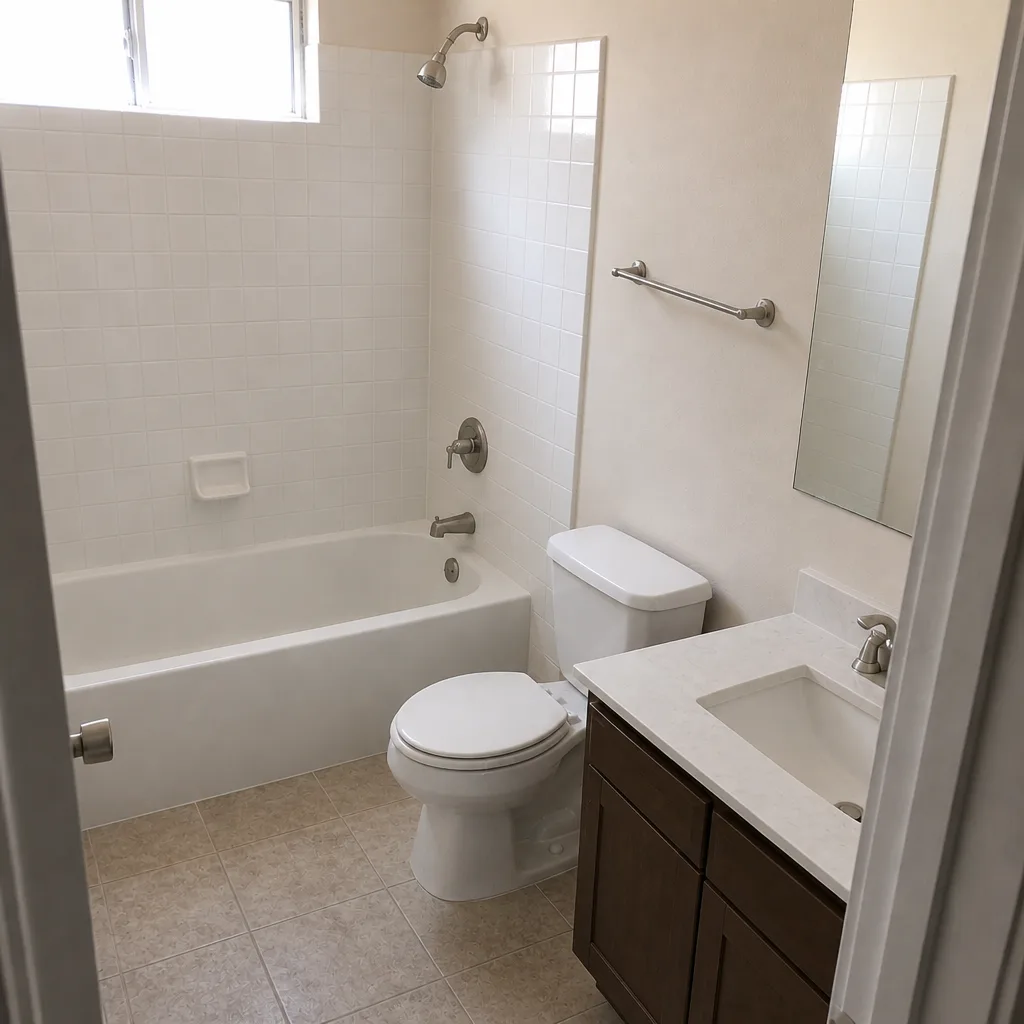 After
When to Call a Professional
Call a licensed general contractor when a project touches anything structural, requires a permit, or would let a small job turn into a large one if it went wrong. That includes a bathroom or kitchen remodel, an addition, a service panel upgrade, a wall removal, or any water line moved inside a wall. It also includes the moment your insurance company asks for a paper trail: a licensed contractor with permits and inspections produces the records your claim needs. If you’re uncertain whether your project clears the threshold for permit-level work, call and ask. Elmstead Remodeling Boulder City offers free estimates in Boulder City. Call (855) 552-7882 to schedule one.
Frequently Asked Questions
A Boulder City bathroom remodel typically lands in the $18,000 to $35,000 range for a mid-quality full renovation, and a kitchen remodel commonly runs $45,000 to $85,000 depending on cabinet brand and countertop choice. Final costs depend on whether a service panel upgrade is needed, which is common in older homes. Call (855) 552-7882 for an exact written figure. Estimates are free.
Yes for any structural, electrical, plumbing, or mechanical work inside city limits. Boulder City runs its own building department, so permits and inspections go through the city rather than Clark County, and plan-check timelines can take longer than valley residents expect. Call (855) 552-7882 and we’ll confirm the jurisdiction for your address and walk through the permit path.
No on a fixed-price scope. The written price is set before any work starts, and mid-project changes are priced and approved in writing under a change-order process. Hidden change orders after the crew arrives are a symptom of a thin original scope. Call (855) 552-7882 for a written estimate before you commit to anything.
Plan on 15 to 30 extra days for the permit front end, because Boulder City’s plan review moves slower than the county’s. A bathroom typically takes four to six weeks once permits are issued, and a kitchen runs six to ten weeks. Summer scheduling adds a few days because concrete and exterior work shift to morning hours. Call (855) 552-7882 for a project-specific schedule.
It can, because the city’s municipal utility runs its own disconnect and reconnect scheduling separate from NV Energy. Coordinate the electrical permit through the city and the utility side separately, and expect a scheduling gap that a knowledgeable contractor plans for. Call (855) 552-7882 if your project will touch the service panel.
Under Nevada contractor law, a handyman cannot legally perform work that requires a permit or exceeds the state’s unlicensed work threshold, while a licensed general contractor holds a state license through the Nevada State Contractors Board and can pull permits. The difference matters most when insurance is involved, since unpermitted work can complicate a claim. Call (855) 552-7882 for a project evaluation.
The Bottom Line
Boulder City rewards the homeowner who plans for local realities. Confirm your parcel’s jurisdiction first, build permit time into your calendar, and take the electrical service question seriously if your home predates the 1950s. Schedule concrete and exterior work around the summer heat rather than through it. Read your written scope line by line and refuse to sign a verbal bid. And choose a contractor who treats your family’s daily life as part of the job: drop cloths on the floors, shoe covers at the door, quiet tools during rest hours, and a written price before anything starts. That is the standard that protects the house you live in, not just the project drawing.
Call Elmstead Remodeling Boulder City at (855) 552-7882 to schedule your free estimate. We’ll confirm your jurisdiction, talk through permit timing for your address, and give you a written price before any work starts.
Written by the team at Elmstead Remodeling Boulder City.