
Last updated November 17, 2026








Free written scope consultation - allowances, timeline, and change-order rules on paper before a single trade is scheduled
Kitchen Remodeling Maintenance Schedule: What to Do and When
Most semi-custom cabinet warranties require the hardware to be checked and tightened once a year to stay valid. The task takes about twenty minutes with a screwdriver, and almost no remodeling contractor writes it into the homeowner’s handoff packet. That single omission explains the gap between a kitchen that still looks new at year five and one that looks tired at year three. It was never the materials. It was the schedule nobody gave you. This guide builds that schedule around the products actually installed in your kitchen, with real intervals, named materials, and the records a warranty claim will ask for. We work on kitchens across Boulder City, and the homes here have a few maintenance realities that generic guides skip entirely.
Quick Answer
A kitchen needs roughly 5 minutes of attention monthly, 45 minutes quarterly, and about 2 hours once a year. Monthly work covers cleaning quartz with the right product, wiping soft-close hinges, and a quick look under the sink. Quarterly covers hinge adjustment, grout inspection near the sink, and hardware checks. Annual work covers recaulking the sink-to-counter joint, tightening hardware screws, checking supply connections, and descaling faucet aerators. Document every task with a date and a photo so any future warranty claim is easy to support.
Styles & brands we work with
- Kitchen remodeling
- Bathroom remodeling
- Home additions & ADU
- Roofing
- Windows & doors
- Driveway & pavers
- Fence
Table of Contents
- Monthly Kitchen Maintenance: The Five-Minute List
- Quartz Countertop Care: Products That Are Safe and Products That Void the Warranty
- Quarterly Maintenance: Soft-Close Hinges, Grout, and Under-Sink Moisture
- Annual Kitchen Maintenance: The Two-Hour Reset
- Boulder City Hard Water: Descaling Faucets on a Realistic Schedule
- How to Document Maintenance So It Supports a Warranty Claim
- Common Mistakes to Avoid
- Frequently Asked Questions
Monthly Kitchen Maintenance: The Five-Minute List
Once a month, walk through the kitchen with a damp cloth and your eyes open. This is not deep cleaning. It’s a quick inspection that catches small problems while they’re still small. Most kitchen repairs we’re asked to make after a remodel could have been prevented by a five-minute look once a month.
Here’s the list, in order:
- Countertop surfaces. Clean quartz daily with a pH-neutral cleaner or mild dish soap and water. Cambria and Silestone both publish care guides worth reading once, because the products that void their warranty are specific and often surprising.
- Cabinet doors and drawers. Wipe the faces and note any that don’t close flush.
- Under-sink cabinet. Look at the cabinet floor for any dark discoloration. Boulder City’s dry air doesn’t prevent slow leaks; it just dries the surface water and leaves the stain behind. Run your hand along the cabinet floor, since a small drip may dry between uses.
- Faucet base. Check the caulk line where the faucet meets the counter. A crack in the caulk is a small gap that lets water into the cabinet below.
- Sink edge. Feel the joint between the sink and the counter. Any give or crack in the caulk is a re-caulk job, not a wipe-up job.
Five minutes. That’s the entire monthly routine. If you do nothing else in a month, do this.
Quartz Countertop Care: Products That Are Safe and Products That Void the Warranty
Quartz is not porous the way granite is, which is why nearly every kitchen we build in Boulder City gets a quartz top. It still has a surface finish, and that finish is what a manufacturer warrants. Abrasive cleaners dull it. Acidic cleaners etch the resin binder that holds the quartz crystals together. Both can void the surface warranty on a Cambria or Silestone slab, and both are common household products.
Here’s what we tell every homeowner after installation:
- Safe: pH-neutral stone cleaners, mild dish soap and warm water, glass cleaner without ammonia on a soft cloth, and a microfiber cloth for daily wiping.
- Not safe: bleach, ammonia, vinegar, lemon juice, bar keepers’ friend on quartz, anything labeled “scrubbing” or “abrasive,” and any cream cleanser that feels gritty between your fingers.
- Buy one soft cutting board. Quartz resists scratches, but it isn’t a cutting surface. Slicing directly on the slab leaves fine marks in the finish, and manufacturers inspect the surface texture before honoring a claim.
- Wipe up wine, tomato sauce, and coffee promptly. These are acidic. A quick wipe costs nothing. A long soak can leave a faint etch that you can’t remove without refinishing the surface.
- Hot pans go on a trivet. Quartz resin can discolor under a pan taken directly from the stove. The discoloration is permanent.
If you’re choosing a countertop for a kitchen remodel in Boulder City, ask for a copy of the care and warranty guide for the exact product you pick. We hand these over with the manufacturer’s paperwork on every kitchen project.
Quarterly Maintenance: Soft-Close Hinges, Grout, and Under-Sink Moisture
Every three months, spend about 45 minutes on the set of tasks that prevent the slow wear that shows up as sagging doors and musty cabinets. This is the most-skipped tier, and it’s the one that matters most for the cabinet warranty.
Start with the soft-close hinges:
- Open each door and look at the hinge plate. Most soft-close hinges from KraftMaid and Wellborn have three small screws on the door-side plate.
- Gently tighten each screw clockwise with a Phillips-head screwdriver. Don’t over-torque. Snug is enough.
- Note any hinge where the door sagged or closed unevenly before you tightened. That hinge is telling you something, and you may need a small adjustment to the hinge arm rather than the screws.
- Wipe the hinge with a dry cloth and check for cabinet-maker dust, which is common after a new install.
Next, inspect the grout in the wet zones: backsplash behind the sink, grout lines near the dishwasher, and any tile at the base of the backsplash. Grout crack or missing grout lets water behind the tile, and in a Boulder City kitchen that’s a slow, quiet problem because the water evaporates before it shows.
Finish with the under-sink moisture check from your monthly list, plus one extra step: run the dishwasher and check for water under the sink while it’s running. A drip that only shows up during the cycle is easy to miss otherwise.
Annual Kitchen Maintenance: The Two-Hour Reset
Once a year, block two hours and work through this list. This is where the tasks that protect the big-ticket items get handled, and where a homeowner who does nothing else all year gets the most value.
- Re-caulk the sink-to-counter joint. Slice out the old caulk with a plastic scraper, clean the joint, and lay a fresh bead of 100% silicone. This is the single most common source of water damage behind a sink, and it’s a low-cost annual habit.
- Tighten hardware screws on every cabinet door and drawer. The manufacturer warranty on most semi-custom cabinet lines requires annual hardware tightening to stay in force. Make a note on your phone or in a small notebook when you do it.
- Re-torque the faucet supply connections. Turn off the shut-off valves, hand-clean the compression fittings, and check for any weeping after you turn the water back on. We don’t recommend disassembling a fixture yourself. This is a quick visual and moisture check you can do; if anything drips or feels loose, that’s a job to hand to a professional.
- Descale every faucet aerator. Unscrew the aerator, soak it in a descaling solution, rinse, and reinstall. In Boulder City this matters more than most places, and we cover the interval below.
- Pull the refrigerator out. Vacuum the coils and check for water on the floor. This is often overlooked and one of the most common hidden leaks in a kitchen.
- Check the dishwasher door seal and the drain hose connection. Look for cracking or a loose clamp.
Add two annual tasks for your appliances specifically:
- Dishwasher: run a cleaning cycle with a dishwasher cleaner once a year. Mineral buildup from local water shortens the life of the pump.
- Range hood: soak the filter in degreaser and clean the fan blades. A clogged filter strains the motor and cuts airflow.
Boulder City Hard Water: Descaling Faucets on a Realistic Schedule
Boulder City water runs hard, and the local supply draws heavily from Colorado River water depending on the season and the supply source. What that means in the kitchen is straightforward: mineral scale builds up on faucet aerators, on the inside of faucet spouts, and on espresso-machine and coffee-maker heating elements. The scale is calcium carbonate, and it looks like a white crust.
Here’s the schedule that works in Boulder City kitchens:
- Aerators: unscrew and descale every 3 to 4 months. If you have a Grohe or Moen aerator and notice uneven water flow or a sputtering stream before that, descale sooner. The aerator is the first place scale shows.
- Faucet spout: wipe monthly, and do a deeper descale with a white vinegar soak every 6 months. The vinegar works on the outside; don’t soak the entire fixture, and never soak a fixture whose manufacturer care guide says not to. Moen and Grohe both publish care guides, and we recommend reading the one for the exact model.
- Sink strainers and basket drains: descale every 6 months. A basket that feels gritty is scale.
- Coffee and espresso equipment: descale on the machine’s manufacturer schedule, not the bottle’s. Boulder City water shortens that interval, often by a third.
- Dishwasher: run a descaler every 3 months if you have hard water. A quick monthly rinse cycle with a cup of white vinegar also helps.
If you installed a water softener or whole-home filtration, your schedule gets longer between descalings. Mention it when we install a faucet so we can note it in your care guide.
How to Document Maintenance So It Supports a Warranty Claim
Manufacturers don’t ask for an essay. They ask for a dated record of the maintenance you performed, and they often ask for photos. Here’s the format that works.
- Keep a one-page log. Date, task, product used, and any issue noticed. A notes app works. A small notebook in a kitchen drawer works better because it’s where the maintenance happens.
- Take a photo. A photo of the completed task dated the same day is the strongest evidence. For a warranty claim on cabinets, a photo of the tightened hardware and a photo of the door closing flush is worth more than the log entry alone.
- Keep the product purchase records. The care guide that came with your quartz or faucet often specifies the cleaning products the manufacturer approves. Keep that guide and the receipts for the cleaners you bought. Cambria, Silestone, Moen, and Grohe all ship a care guide with their products, and the manufacturer will ask for it in a claim.
- Note the date and name of the confirming product. If you had a technician check a drip, write down who came and what they found. Manufacturer warranty claims on fixtures typically require documented evidence of professional inspection if the fixture leaked.
- Keep a copy of the purchase and warranty documents. We hand over the manufacturer’s warranty paperwork for every named-brand product in your kitchen at project close. Store it somewhere you’ll find it later.
What manufacturers don’t care about: how the kitchen looks in photos, how often you cleaned it, or how much you love it. They want a simple, evidenced, dated record of the specific maintenance their warranty required.
Common Mistakes to Avoid
- Cleaning quartz with an abrasive cleaner. It dulls the surface and can void the Cambria or Silestone warranty. Use pH-neutral cleaner only.
- Skipping the annual hardware tightening. Most semi-custom cabinet warranties require it. Without the check, a hinge that loosens into a crack is a claim denial waiting to happen.
- Ignoring a slow drip under the sink. Boulder City’s dry air dries the surface quickly, so the stain often hides until the cabinet floor warps. Check with your hand, not just your eyes.
- Re-caulking the sink with the wrong product. Ordinary caulk isn’t meant for a wet joint. 100% silicone is, and it lasts.
- Soaking an entire faucet in vinegar. It’s fine for a removable aerator, but the finish on a Grohe or Moen faucet can be damaged by a long soak. The manufacturer’s care guide says exactly what to avoid.
- Descaling on the bottle’s schedule instead of the water’s. Boulder City water shortens the interval on coffee makers, aerators, and dishwasher descaling. Use the machine’s manual as a floor, not a target.
- Losing the warranty paperwork. It’s the record every claim asks for. Keep it with your maintenance log.
See the difference
 Before
 After
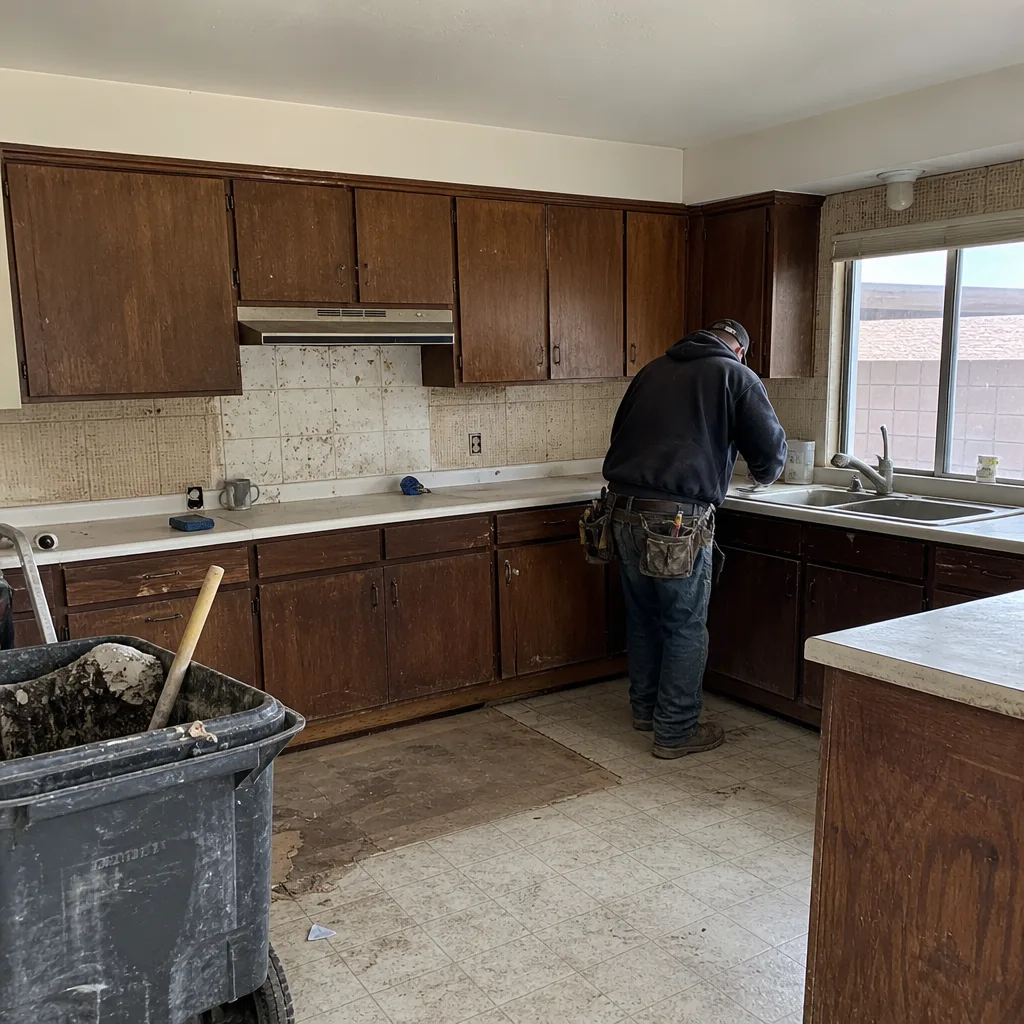 Before
 After
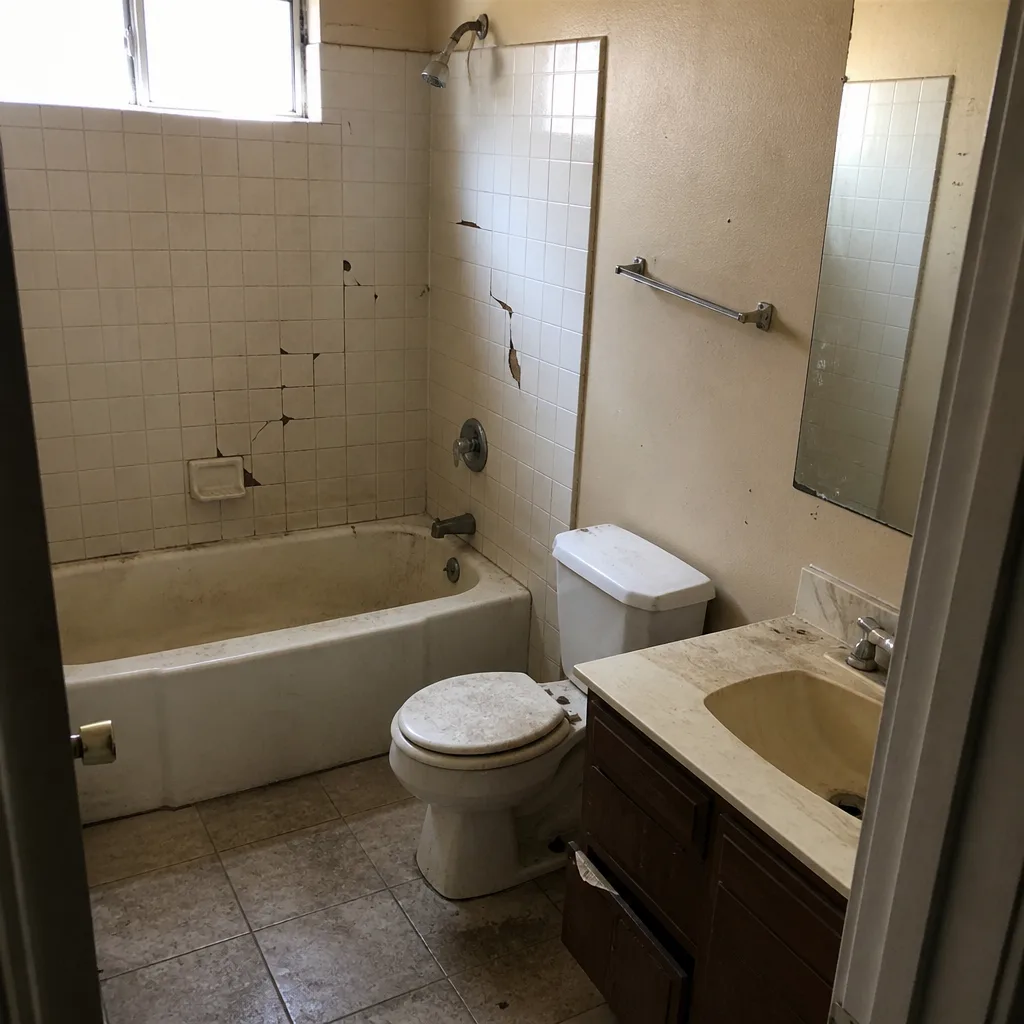 Before
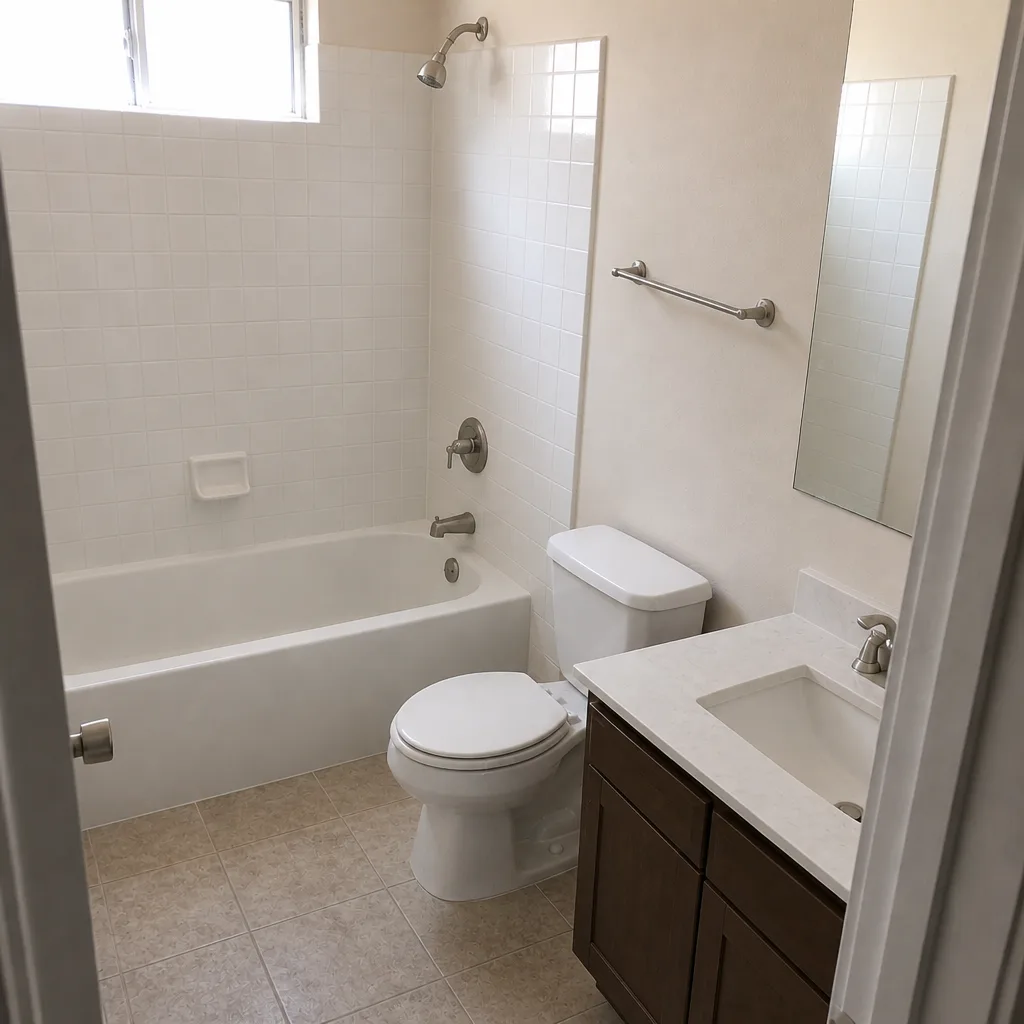 After
When to Call a Professional
Some maintenance is a homeowner’s job. Some isn’t, and knowing the line matters. Call a professional if you find water where it shouldn’t be: behind the sink, under the dishwasher, or at the base of the cabinet. A drip that dries in dry air is still a leak, and the fix is usually small if you catch it early. Call if a faucet supply connection feels loose after a check, if a cabinet hinge has pulled out of the door, or if the caulk at the sink-to-counter joint needs to be replaced and you’d rather not do it yourself. Also call if you’re seeing mineral scale you can’t descale on your own, or if a fixture starts leaking at the base. Elmstead Remodeling Boulder City offers free estimates in Boulder City. Call (855) 552-7882 to schedule yours.
For projects beyond maintenance, including a full Kitchen Remodeling in Boulder City, we give a written price before any work starts, every time. If your kitchen has a leaking fixture that needs repair and a shower to update while the scope is open, our Bathroom Remodeling in Boulder City team handles that as a separate, fully scoped project. And if the maintenance schedule is really a prelude to a larger whole-home project, our General Contractor in Boulder City service is the right starting point.
Frequently Asked Questions

Clean quartz daily with a mild pH-neutral cleaner or dish soap and water, and do a deeper wipe weekly. Avoid bleach, vinegar, lemon juice, and abrasive cleansers, which can etch the surface or void the Cambria or Silestone warranty. Call (855) 552-7882 if you’d like a copy of the care guide for the exact quartz in your kitchen.
Most semi-custom cabinet manufacturers, including KraftMaid and Wellborn, require annual hardware tightening to keep the warranty in force. Use a Phillips-head screwdriver and snug each hinge screw once a year. Log the date and take a photo, since a warranty claim will ask for it. Call (855) 552-7882 for a free estimate if a hinge has already pulled loose.
Descale faucet aerators every 3 to 4 months in Boulder City, because local water runs hard and scale builds up quickly. If you have a Moen or Grohe faucet and notice uneven water flow sooner, descale sooner. Call us for a free estimate if the aerator won’t come loose or the fixture is leaking.
Re-caulking the sink-to-counter joint is a reasonable homeowner task if you use 100% silicone caulk and clean the joint thoroughly first. If water has already reached the cabinet below, call a professional to check for damage before you seal it. Call (855) 552-7882 for a free estimate.
Keep a dated maintenance log with the product used, photos of each completed task, and the manufacturer care guide and purchase receipts for your named-brand products. Cambria, Silestone, Moen, and Grohe all request this kind of record. Call (855) 552-7882 if you need help finding the manufacturer’s warranty paperwork from your kitchen project.
We don’t charge separately for a maintenance inspection as part of a free estimate. Call (855) 552-7882 to schedule your free estimate, and we’ll give you a written price before any work starts. For a full kitchen or a repair beyond maintenance, contact us and we’ll walk through the scope.
The Bottom Line
A kitchen stays looking new when the maintenance schedule matches the materials installed. Monthly work is five minutes. Quarterly work is 45 minutes. Annual work is about two hours, and it’s where the big-ticket protection lives: re-caulking the sink joint, tightening hardware screws, checking supply connections, and descaling every aerator. Boulder City’s hard water means the descaling intervals run shorter than the manufacturer’s bottle suggests. Keep a dated log and dated photos, and the warranty paperwork you keep alongside it will make any future claim straightforward. Our technicians have up to 21 years of experience, and we’ll hand you the manufacturer’s care guides at the close of every project. Call (855) 552-7882 for a free estimate.
If you’re planning ahead, you can also read about our Elmstead Remodeling Boulder City home page and what the Cedarwell Care Promise means for your project. Every Elmstead location holds to the same standards, and each one is independently owned and operated.
Written by the team at Elmstead Remodeling Boulder City.