Last updated November 17, 2026








Free written scope consultation - allowances, timeline, and change-order rules on paper before a single trade is scheduled
Home Remodeling Warning Signs Every Homeowner Should Know
The most predictive warning sign in a remodeling project isn’t a bad review or a missing license. It’s a contractor who gives you a verbal price and says the written quote “comes later, after we start.” We’ve watched families in Boulder City sign off on that sentence and spend the next four months chasing a number that moved three times. This guide catalogs the phrases and practices that predict a troubled project, most of which show up in the conversation before demolition ever begins. You’ll learn what must be in writing before day one, how to verify a Nevada contractor’s license in under three minutes, and how to read a job site on the first morning.
Quick Answer
The clearest home remodeling warning signs are a contractor who won’t put the price, materials, timeline, permit responsibility, and warranty in writing before work starts; vague brand language like “we’ll pick fixtures later”; no verifiable Nevada license number; and a job site with no drop cloths, no daily walkthrough, and debris left out overnight. If any two of these show up in your first conversation, slow down. A written price before any work starts is the baseline every reliable contractor meets.
Styles & brands we work with
- Kitchen remodeling
- Bathroom remodeling
- Home additions & ADU
- Roofing
- Windows & doors
- Driveway & pavers
- Fence
Table of Contents
- The Five Things That Must Be in Writing Before Demo Starts
- What “We’ll Figure Out the Fixtures Later” Actually Costs You
- How to Verify a Nevada Contractor’s License in Under Three Minutes
- What an Active Bond Actually Covers (and What It Doesn’t)
- Job-Site Behavior Red Flags You Can Spot on Day One
- The 365-Day Workmanship Promise vs. a Standard One-Year Warranty
- The Subtle Phrases That Predict a Troubled Project
- Common Mistakes to Avoid
- Frequently Asked Questions
The Five Things That Must Be in Writing Before Demo Starts
If you take one section of this guide seriously, take this one. A contractor who is organized and solvent can answer all five of these in a written line-item quote before the first cabinet comes down. Hesitation on any of them is a signal. Here is the checklist we hand to every Boulder City family before the contract stage:
- Price, in line items. Not a lump sum, and not a range. A written price per scope item – cabinets, counters, tile, plumbing rough-in, electrical, labor – so you can see what each piece costs and what a change order will actually affect.
- Materials with brand names. “Quartz countertops” is not a specification. Cambria and Silestone are. A brand name carries a manufacturer warranty you can verify, and it tells you exactly what you’re paying for.
- Timeline with dates. A start date, a rough-in date, and a finish date. Not “3 to 4 weeks.” If the crew hits a delay, you want the schedule in writing so you can compare it to what actually happened.
- Permit responsibility. Who pulls the permit, who pays the permit fee, and whose name appears on it. In Boulder City, the answer matters because historic-district properties on the older streets often have review requirements that a generic subcontractor won’t know.
- Warranty terms. The length, what’s covered, what isn’t, and the process for filing a claim. If the document only says “one year,” ask what happens in month eight.
Every project we manage is governed by a written price before any work starts – not sometimes, every time. That’s a fixed part of how we work, and it’s the single best predictor of a calm project.
What “We’ll Figure Out the Fixtures Later” Actually Costs You
This sentence sounds flexible. It’s usually a setup. When a contractor says you’ll choose the faucets and tile later, you’re accepting a project with an undefined finish budget – and that’s where mid-project substitution happens. Here’s how it plays out, in real dollars.
You agreed on Kohler fixtures in the conversation. The written contract says “premium plumbing fixtures.” Midway through, the contractor installs a house-brand faucet at roughly a third of the cost of the Kohler you pictured, and the line on the contract still reads “premium.” You were never promised the Kohler in writing, so the substitution is technically legal. To get the Kohler you wanted, you eat the difference or wait weeks for a special order.
The cost of that substitution, in our experience managing Boulder City bathroom remodels, is typically several hundred to over a thousand dollars per project once you factor in the upgraded part, the labor to swap it, and the delay.
The fix is simple: get the brand, the model number, and the finish in writing before demo. Naming a real product – Kohler for the faucet, Silestone for the counter, Cambria for the island – makes the finish budget fixed and verifiable. The manufacturer warranty travels with the finished project, which is another reason brand names belong in the contract, not the design folder.
How to Verify a Nevada Contractor’s License in Under Three Minutes
Nevada makes this genuinely easy. The Nevada State Contractors Board maintains a public license lookup, and you can check any contractor’s status from your phone in under three minutes. Here is the process we recommend to every family we work with:
- Ask the contractor for their license number in writing – it should appear on the estimate or contract.
- Open the Nevada State Contractors Board license lookup site.
- Enter the license number. Confirm the status reads “active” and the classification matches the work (residential remodeling vs. specialty trades).
- Check the business name on the license against the company name on your contract. If they don’t match, ask why in writing.
- Look for any disciplinary actions on the record. A single complaint isn’t a dealbreaker; a pattern of unresolved complaints is.
A license number that can’t be verified in that lookup is the single most important stop sign on this page. It’s also the easiest one to check, which is why we mention it before we get to anything about design or product.
What an Active Bond Actually Covers (and What It Doesn’t)
A bond is not insurance, and it’s not a warranty. It’s a small pool of money the state holds to compensate homeowners if a contractor violates licensing law or fails to complete a job. In our experience, families assume the bond covers everything from a bad tile job to a contractor who walks offsite, and that’s not what it does.
Here’s what an active bond typically covers: claims that the contractor failed to perform on a contracted job, abandoned a project mid-way, or violated a specific provision of state licensing law. The claim process runs through the state, and payout is capped at the bond amount – which is often far less than the cost of a gutted kitchen rebuild.
What it doesn’t cover: workmanship defects (that’s the warranty), damage to your property during the job (that’s insurance), or cost overruns (that’s your contract). When a Boulder City family asks us how to think about a bond, we say this: use it as a floor, not a ceiling. The warranty language in the contract is where the real protection lives.
Job-Site Behavior Red Flags You Can Spot on Day One
You don’t have to be a contractor to read a job site. Walk out on the first morning and pay attention to these behaviors – each one predicts how the rest of the project will go:
- No drop cloths on day one. If the crew starts moving materials across your floors without protecting them, they aren’t planning to protect anything else. Shoe covers at the door and drop cloths on the floors are the first thing we lay down on every job, not an optional add-on.
- Debris left in the driveway overnight. A skilled crew cleans up at the end of every workday. A crew that leaves demolition debris where your kids or dog walk is telling you how much they think about your family’s daily life.
- No daily walkthrough. A two-minute end-of-day conversation – what got done, what’s next, when quiet hours start tomorrow – is how a project stays on schedule. If the crew leaves without speaking to you, ask for the walkthrough in writing.
- Tools running through nap time. Families with young children and pets aren’t a footnote on a remodeling job. A crew that asks which rooms your kids use and when they sleep is a crew that’s planning around you.
- No photo of the clean-up. Before the crew leaves for the day, someone should show you the room is back in order. Ours does it every day, and we send the photo to the family so it’s not just word of mouth.
None of these are about being picky. They’re about whether the crew plans to treat your house like a home or a construction site. If you’re remodeling a Boulder City kitchen, you should expect quiet tools during family rest hours where possible and a walkthrough every afternoon. Anything less shows up in the finished work.
The 365-Day Workmanship Promise vs. a Standard One-Year Warranty
Most remodeling contracts include a one-year workmanship warranty. Here’s the problem: a year is exactly the length of time it takes for certain defects to reveal themselves, and not a day longer. A kitchen or bathroom done in the fall can hide a shower-pan leak until the following spring, can show cabinet-door sag at month eight, can bubble a countertop seam after the first summer of expansion and contraction.
When you call the contractor at month eight and the answer is “warranty expired,” you’re paying for the fix yourself. That’s the difference between a standard builder’s one-year warranty and a 365-Day Done Right Promise: the promise has a defined process for what happens when the call comes in, and it’s stamped on every project rather than sitting as a line in a contract.
If you’re remodeling a bathroom in Boulder City, ask two questions before you sign: what does the warranty cover, and what does the claim process actually look like? If the answer is “call us and we’ll take a look,” push for the process in writing. The families who ask this question are the ones who don’t spend month eight on the phone with a contractor who’s already moved on.
The Subtle Phrases That Predict a Troubled Project
Watch for these in the sales conversation. Each one is a signal that the written price, the materials, or the timeline is going to move:
- “The written quote comes later.” The single most predictive sign on this list. A written price exists before the conversation ends, or the contractor isn’t ready to commit.
- “We’ll pick the fixtures when we get there.” Code for an undefined finish budget. See the section above for the actual cost.
- “That’s probably fine, we don’t need a permit for it.” Sometimes true, often not. In Boulder City, electrical and plumbing scope typically pulls a permit; a contractor who waves this off is playing with your resale.
- “We work with a lot of brands, whatever you want.” Vague. Ask for the specific brands on the estimate. Named brands carry warranties; house brands don’t.
- “The price is a ballpark, we’ll adjust as we go.” Ballparks grow. Fixed, line-item pricing doesn’t.
- “You don’t need to walk through with us every day.” A crew that doesn’t want you looking is a crew with something to hide. We invite every family to the daily walkthrough and welcome questions at any point.
None of these phrases is a criminal confession. They’re each a signal that the contractor is not organized enough to build a written plan, and that’s the real risk. If you want to see what the written version looks like, our General Contractor in Boulder City page walks through the full pre-construction checklist.
Common Mistakes to Avoid
- Accepting a verbal price to keep the conversation moving. It feels polite. It also means the price is undefined the day the crew arrives, and no amount of renegotiation later fixes that. Ask for the written price before anything else.
- Skipping the Nevada license lookup. Three minutes on the State Contractors Board site would have stopped most of the horror stories we’ve heard from Boulder City families. Do it before you sign, not after.
- Approving “premium” as a material specification. Premium means whatever the contractor decides it means mid-project. Use brand names: Cambria, Silestone, Caesarstone, Kohler. If the estimate doesn’t name a brand, it doesn’t specify a product.
- Assuming the bond covers workmanship. It doesn’t. The bond covers violations of licensing law and abandonment. Workmanship is covered by the warranty language in the contract – read it before you sign.
- Not asking the permit question on historic Boulder City homes. Older properties on the historic streets have review requirements a generic crew won’t know, and an unpermitted electrical or plumbing scope is a problem at resale time, not at inspection time.
- Letting debris sit in the driveway overnight “just for tonight.” Kids and pets walk those surfaces. A crew that leaves debris out is a crew that hasn’t planned around your family.
- Taking a one-year warranty at face value without a claim process. Ask what happens in month eight and get the answer in writing. A warranty without a process is a sentence in a contract, not a protection.
See the difference
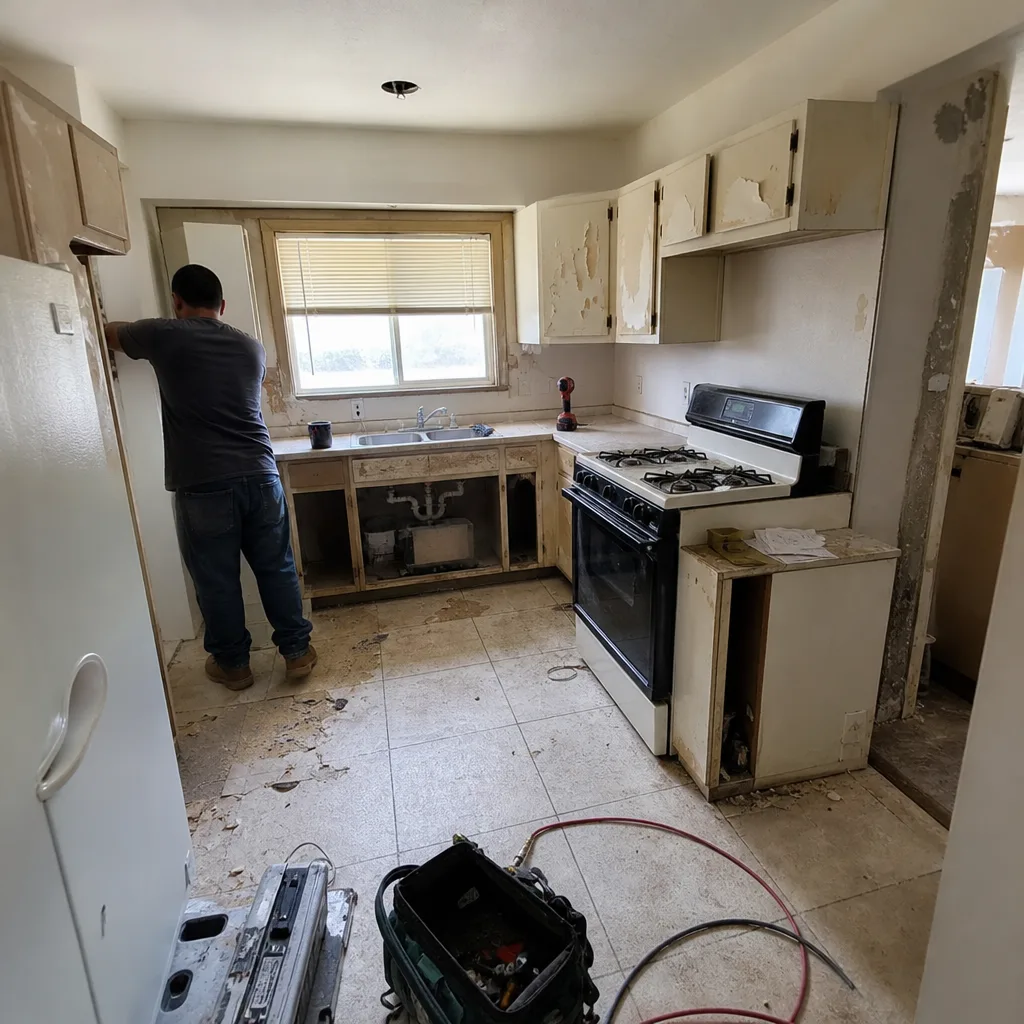 Before
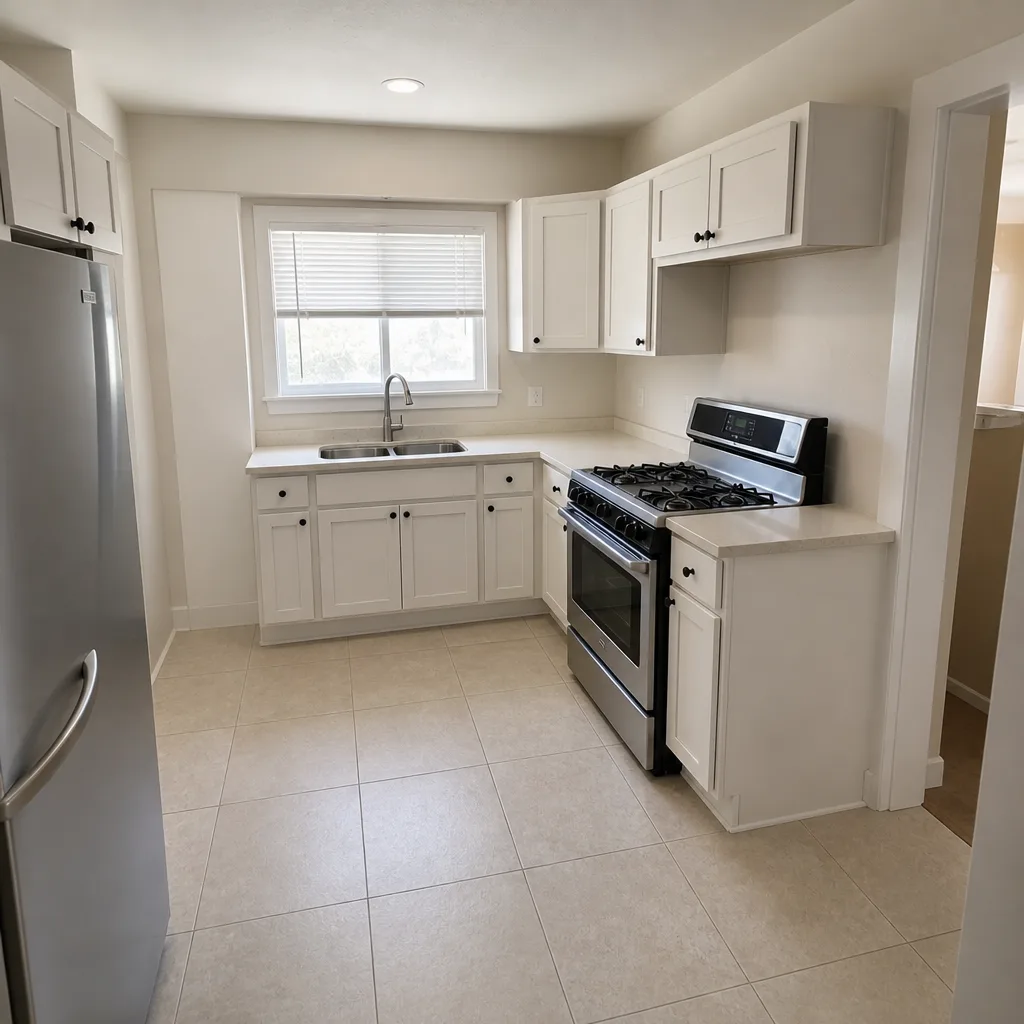 After
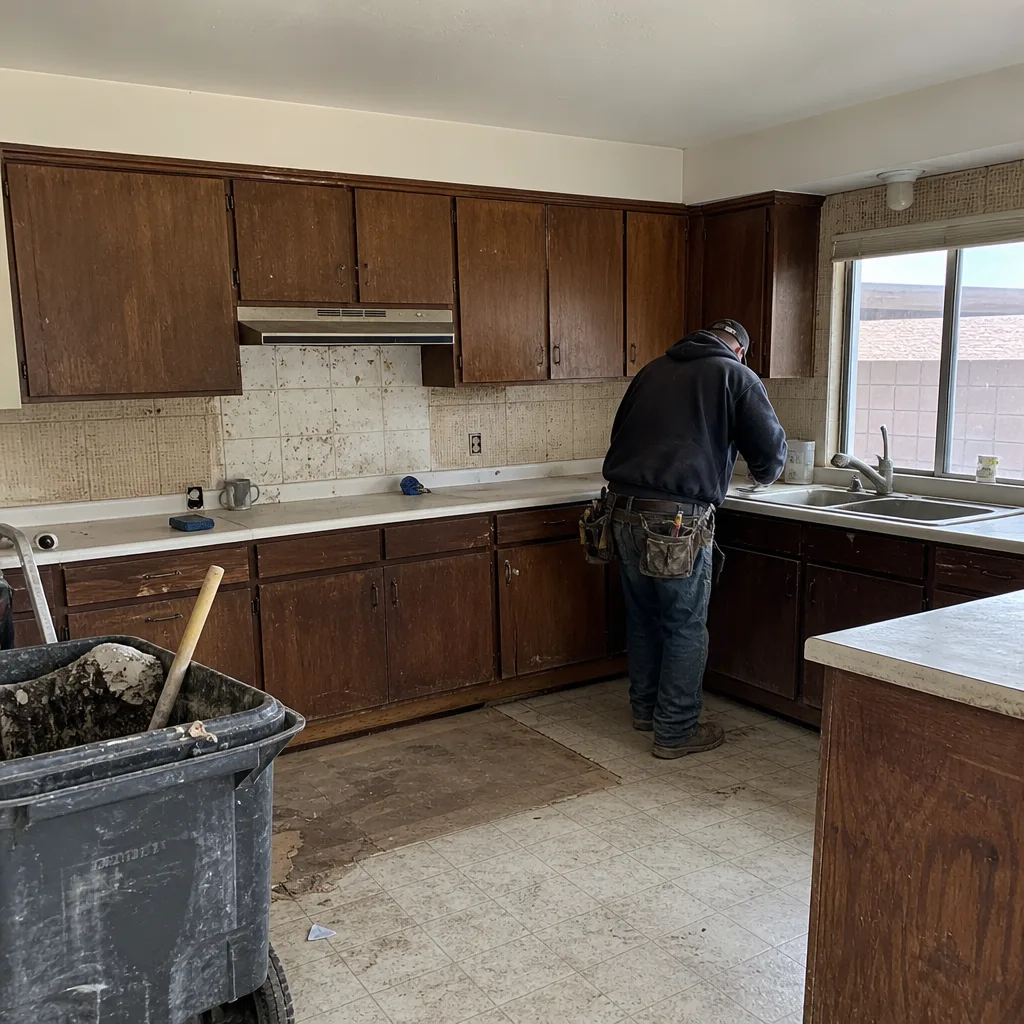 Before
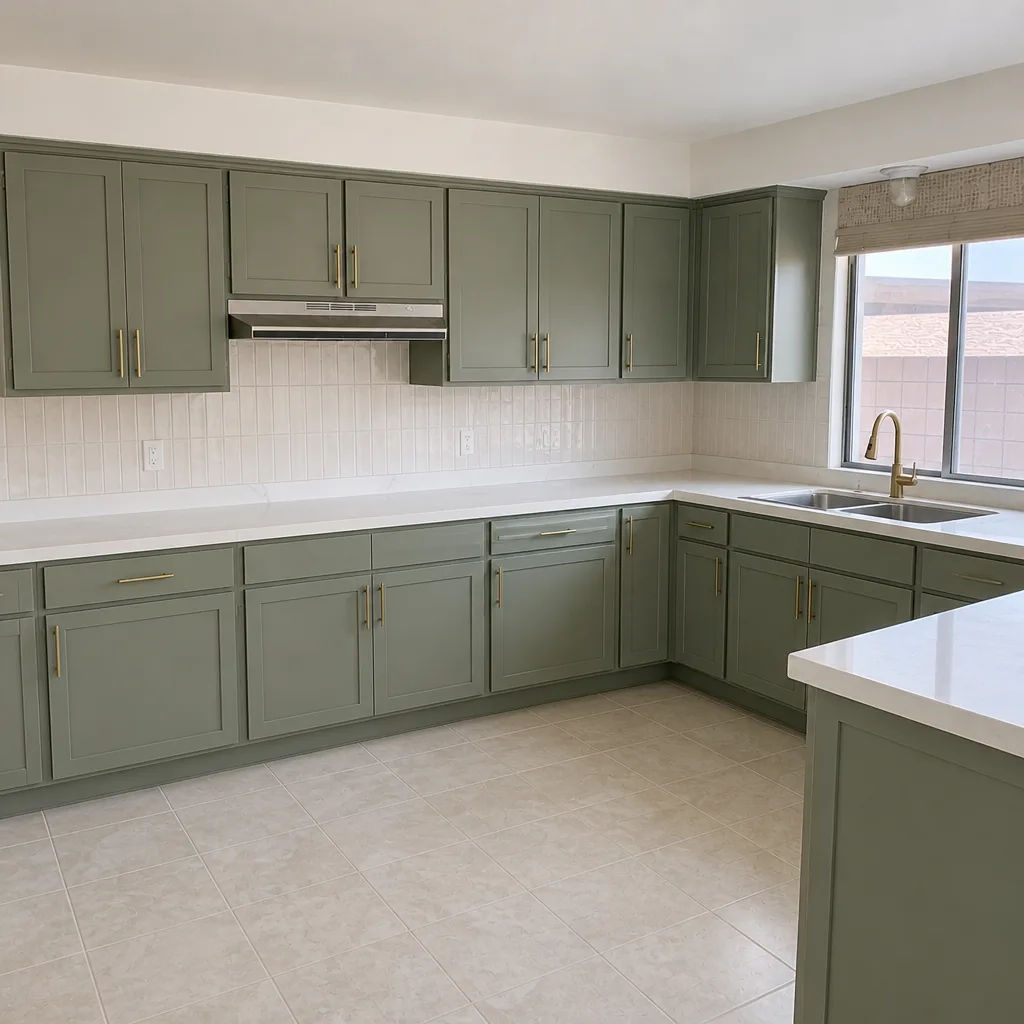 After
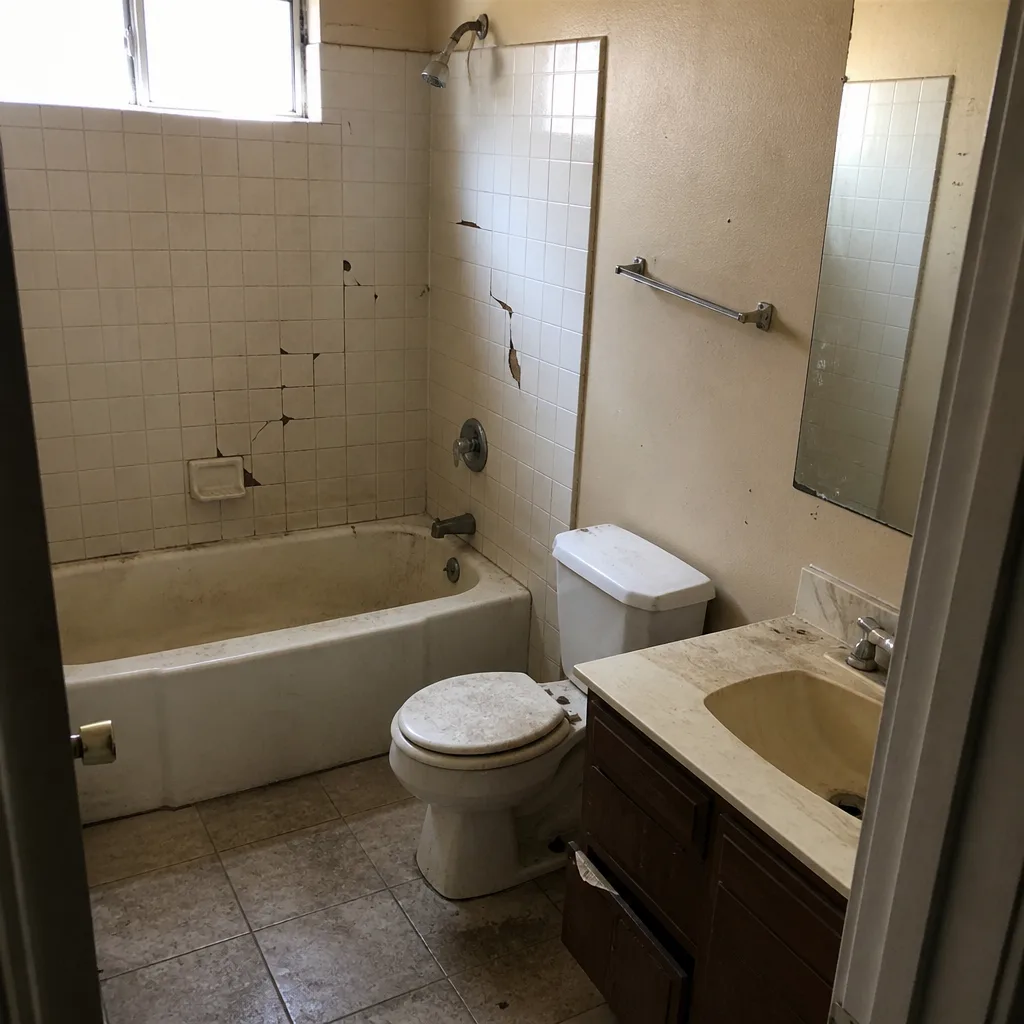 Before
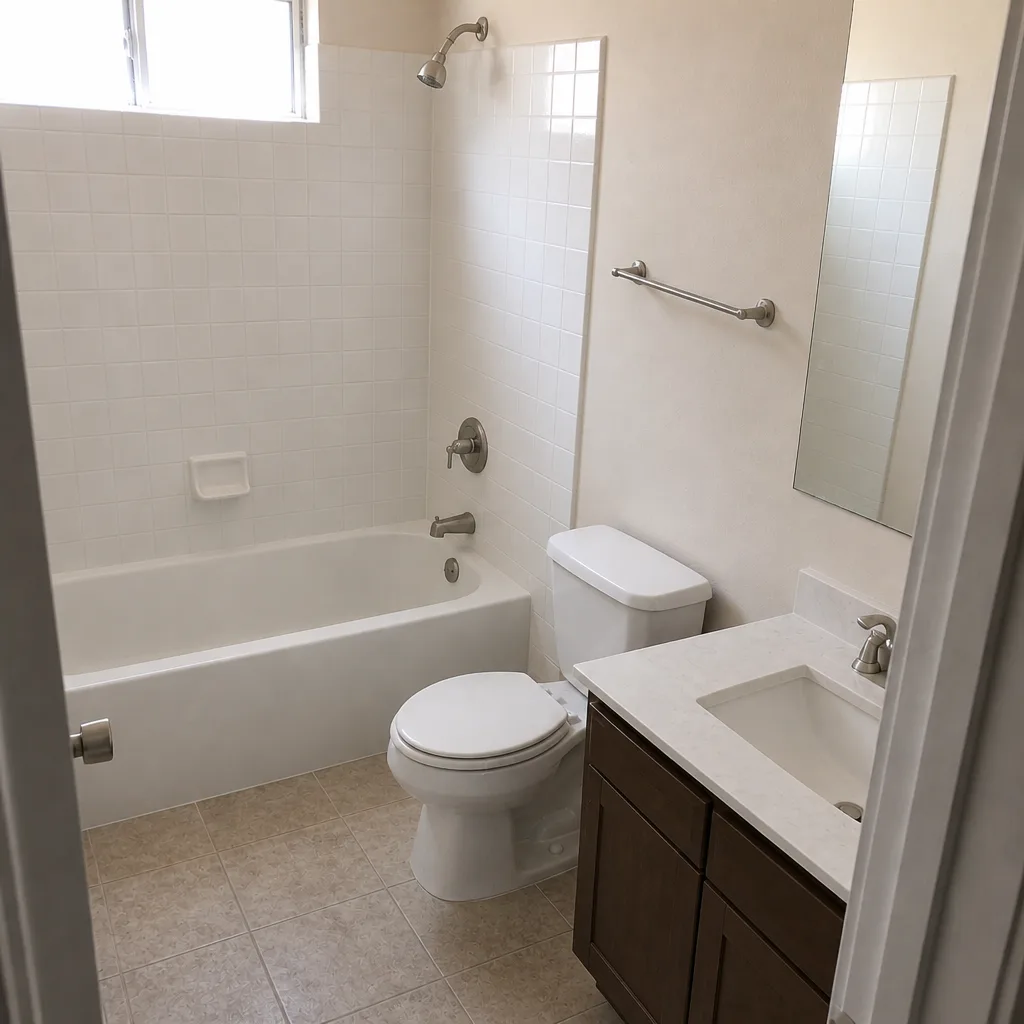 After
When to Call a Professional
Some projects genuinely aren’t DIY territory, and the wrong call here can cost more than the remodel itself. Call a licensed professional when the scope includes moving a wall, opening a plumbing rough-in, replacing a gas line, changing the electrical panel, or touching anything inside a wet wall. Steep-roof exterior work isn’t a homeowner job either. And if a contractor has already given you a verbal price and won’t put it in writing, that’s a call worth making before anything else – the next conversation is where projects get saved or ruined.
Elmstead Remodeling Boulder City offers free estimates in Boulder City. Call (855) 552-7882 to schedule yours, and bring the list of warning signs you’ve already seen. We’d rather answer your questions now than fix someone else’s work later. If you’re starting with the bathroom, our Bathroom Remodeling in Boulder City page walks through what the pre-construction stage looks like when it’s done right.
Frequently Asked Questions
A contractor who offers a verbal price and says the written quote comes later, after work starts. The written price is the baseline for everything else – materials, timeline, permits, warranty – and a contractor who can’t produce it before the work begins isn’t organized enough to build a plan you can hold them to. Call (855) 552-7882 for a free written estimate and see the difference.
Ask for the license number in writing, then look it up on the Nevada State Contractors Board license lookup site. Confirm the status is active, the classification matches the work, and the business name on the license matches the name on your contract. It takes under three minutes and prevents most of the trouble we get called about.
No. A bond covers claims that the contractor violated licensing law or abandoned a project – not workmanship defects. Workmanship is covered by the warranty in your contract, which is why the warranty terms belong in writing before demo starts. If your Boulder City contractor is vague about the difference, that’s worth a second conversation.
Line-item price, materials with brand names (Cambria, Silestone, Kohler, and so on), start and finish dates, permit responsibility, and warranty terms. A single lump sum with “premium” or “quality” specifications isn’t a written estimate – it’s a ballpark in disguise. Call (855) 552-7882 for an example.
A bathroom typically runs a few weeks from demo to finish, and a kitchen runs longer, depending on cabinet lead times and permit review. The exact dates belong in the contract, not the conversation. If your contractor won’t commit to a schedule in writing, that’s a warning sign.
Because some defects don’t show up until month eight or month ten – a shower-pan leak, a cabinet-door sag, a countertop seam that opens after the first summer. A one-year warranty that expires in silence leaves you paying for the fix. A 365-Day Done Right Promise is stamped on every project with a defined process for the call. If you want to see what that looks like on paper, our Kitchen Remodeling in Boulder City page shows the written scope for a typical kitchen. You can also explore our Elmstead Remodeling Boulder City home page for the full picture of how we structure projects from the first call forward.
The Bottom Line

Most remodeling problems start in the conversation, not on the job site. The five things that must be in writing – price, named-brand materials, timeline, permit responsibility, and warranty terms – are the same five things a contractor either commits to now or blurs until it’s too late to walk away. Verify the license, name the brands, and ask what happens in month eight. If you get clear written answers to all of those, you’re working with someone who’ll leave the house in better shape than they found it. If you don’t, you’ve saved yourself a season of chasing a number that moves.
Written by the team at Elmstead Remodeling Boulder City.