Last updated November 17, 2026








Free written scope consultation - allowances, timeline, and change-order rules on paper before a single trade is scheduled
How to Hire a Construction Contractor in Boulder City: A Step-by-Step Guide
Nevada issues separate contractor licenses for more than 40 trade classifications, and a “licensed contractor” who holds a C-2 painting license cannot legally frame a wall addition. Yet nothing on a business card or a yard sign tells you which classification a company actually holds. That gap is where Boulder City homeowners get hurt: the license looks real, the insurance certificate looks real, and then a failed inspection stalls the job while everyone argues about whose scope it was. This guide walks through the verification steps that close that gap, plus the insurance documents, written scope terms, and payment structure that keep a Boulder City remodel on track after the crew leaves.
Quick Answer
To hire a construction contractor in Boulder City, verify the company’s license classification on the Nevada State Contractors Board portal against your specific project scope, request three insurance documents (general liability, workers’ comp, and completed-operations coverage), and insist on a written scope that names brands, models, and square footage rather than generic line items. Then hold a final payment large enough to matter until punch-list sign-off. The license check takes ten minutes and is the step most homeowners skip.
Styles & brands we work with
- Kitchen remodeling
- Bathroom remodeling
- Home additions & ADU
- Roofing
- Windows & doors
- Driveway & pavers
- Fence
Table of Contents
- How to Run a Live License Check on the Nevada State Contractors Board Portal
- What Classification Codes Mean for Your Specific Project
- The Three Insurance Documents to Request Before You Sign
- What a Written Scope of Work Must Name to Be Enforceable
- Red Flags That Signal a Contractor Plans to Manage Your Project Through Day Labor
- How to Structure a Payment Schedule Around Punch-List Sign-Off
- What’s Different About Hiring in Boulder City
- Questions to Ask Before You Hand Over a Deposit
How to Run a Live License Check on the Nevada State Contractors Board Portal
The Nevada State Contractors Board runs a public license lookup that updates in near real time. Any Boulder City homeowner can search a company name or license number and see the classification, status, expiration date, and any disciplinary history. It takes about ten minutes and it is the single most useful thing you can do before a deposit changes hands.
Here is the sequence we walk families through:
- Search by license number, not just company name. Names get reused and slightly altered. The number on the written bid is the one that matters.
- Confirm the status reads “active.” A suspended or expired license can still appear on a printed certificate from last year.
- Check the classification codes against your project. This is the step people skip. A license covering painting does not cover framing.
- Look at the expiration date. If renewal is weeks away, ask what happens if it lapses mid-project.
- Read any disciplinary actions. A single resolved complaint from years ago reads differently than a pattern.
What you’re looking for is a license whose classification genuinely matches the work you’re paying for. When you compare contractors in Boulder City, ask each one to send the license number in writing with the bid. Elmstead Remodeling holds the licensing and insurance to perform general contracting, bathroom remodeling, kitchen remodeling, and whole-home remodeling, and we’re glad to walk you through what each document means before you commit to anything.
What Classification Codes Mean for Your Specific Project
Nevada groups contractor licenses into classifications. The “A” classifications cover general engineering and general building, while the “B” classification covers general building work and a long list of “C” subcategories covers specific trades: C-2 painting, C-3 carpentry, C-14 plumbing, C-16 electrical, and so on. A company can legally hold one, several, or many. What it cannot do is perform work outside its licensed scope.
Why this matters in practice:
- A wall addition or structural change needs a classification that covers framing and structural work, not just finish trades.
- A bathroom or kitchen gut remodel typically pulls in plumbing, electrical, tile, and cabinetry. A general contractor either holds those classifications or subcontracts to licensed subs, and the license record tells you which.
- Roofing, painting, and finish work have their own subcategories. A painter’s license is not a remodeler’s license.
- Inspections follow the licensed scope. If the wrong classification pulls the permit, an inspection failure can halt work while the paperwork gets sorted, which can mean weeks.
When a license classification doesn’t match the job, the permit can be issued to the wrong party, and the homeowner is the one left holding the delay. Ask directly: “Which classification covers the framing on this addition, and who holds it?” A careful contractor answers without hesitation. For the kind of work that falls under our general contracting scope, see our General Contractor in Boulder City page.
The Three Insurance Documents to Request Before You Sign
Every contractor should be able to send you a certificate of insurance within a business day. What most homeowners don’t realize is that three separate documents matter, and only one of them protects you after the crew leaves.
- General liability insurance. Covers property damage or injury that happens during the job. This is the one most people remember to ask for.
- Workers’ compensation. Covers a worker injured on your property. Nevada requires it for most employers. If it’s missing, an injured crew member’s claim can land on your homeowner’s policy.
- Completed-operations coverage. This is the one people miss, and it’s the one that matters most a year after the work is done. If a shower pan fails or a cabinet falls because of installation error, completed-operations coverage is what responds once the crew has packed up. Standard general liability alone often won’t.
When you request all three, ask that your name and property address appear on the certificate as the certificate holder. That way you know the coverage is current and written against your address, not a general one. A contractor who hesitates or sends a one-page summary without completed operations listed is telling you something. For bathroom and kitchen work where water and heavy materials are involved, this documentation matters more than the bid price.
What a Written Scope of Work Must Name to Be Enforceable
The line “install new flooring” is not a scope of work. It’s a sentence that lets anyone fill in the blank later. A scope that holds up in a dispute names the brand, the model, the finish, the quantity, the square footage, and the installation method, room by room.
Compare these two lines and you’ll see the difference immediately:
- Weak: “Install new kitchen cabinets.”
- Enforceable: “Install KraftMaid [door style] cabinets in [finish], 14 linear feet upper and 12 linear feet base, slab-to-ceiling, soft-close hinges, with matching crown molding; remove and dispose of existing cabinets.”
Brand names aren’t marketing fluff; they’re an enforceable standard. When the scope names KraftMaid or Wellborn, the homeowner can call KraftMaid or Wellborn, look up the product, and verify the warranty that comes with it. When it names James Hardie siding, the manufacturer’s finish warranty travels with the house. Vague scopes void all of that. Include:
- Brand, model, finish, and color for every fixture and material.
- Square footage and linear footage for floors, tile, cabinets, and counters.
- What’s being removed and how it’s disposed of.
- Who pulls the permit and pays the fee.
- What’s excluded. If the price doesn’t cover drywall repair behind the tile, write that down.
- Change-order process. Nothing outside the written scope gets done without a new written price you approve in advance.
This is the same standard we hold in our own kitchen and bath work. Every project gets a written price before any work starts, and no estimate grows after the crew arrives. To see how that plays out on the ground, look at our Kitchen Remodeling in Boulder City page.
Red Flags That Signal a Contractor Plans to Manage Your Project Through Day Labor
Some contractors collect deposits and staff your project with pickups at the home improvement store each morning. The signs are usually visible before you sign, if you know what to look for.
- The bid is dramatically below the others. A price 30% lower than three other Boulder City bids usually means untracked labor and untracked risk, not efficiency.
- The contract has no crew section. Ask who will actually be on site, whether they’re employees or subcontractors, and whether each sub is licensed and insured. A contract that doesn’t answer this is a contract that intends to leave it open.
- Payment is front-loaded. A request for 50% or more before materials are ordered is a sign the deposit is funding the last job, not yours.
- The contractor can’t name their subs. If the general contractor can’t tell you who’s doing the electrical, ask why.
- You’re asked to pull the permit yourself. When the homeowner pulls the permit, the contractor has sidestepped accountability for the inspection.
- Cash-only, no written price, no receipt. Every legitimate contractor gives a written price before starting, every single time.
In our experience, the contractors who take the time to write down their own question list for you are the ones who plan to do the work right. Background-checked crews and licensed subcontractors show up in the contract language, not just in the sales pitch.
How to Structure a Payment Schedule Around Punch-List Sign-Off
The last payment is the only leverage you have after the work is done. Structure it so it’s large enough to matter and hold it until punch-list sign-off.
- A small deposit at signing. Enough to cover initial materials or permit fees, not the whole job.
- A payment when rough-in is complete and inspected. Tied to a specific milestone you can verify with your own eyes or with an inspector’s signature.
- A payment at substantial completion. Everything is in place but the punch list remains.
- The final payment at punch-list sign-off. Ten to fifteen percent is a common benchmark. This is what motivates the contractor to come back and fix the crooked cabinet door or the scratched paint.
Write the punch-list process into the contract: how the list gets assembled (usually a walkthrough), how long the contractor has to complete it, and what happens if items are missed. A carpenter’s punch list is not a war with the contractor, it’s a checklist that both sides agree to. Also write down how disputes are handled and what warranty covers what, after the final check clears.
What’s Different About Hiring in Boulder City
Boulder City is one of the oldest planned communities in the country. The historic district around Nevada Way has housing stock that goes back to the 1930s, and much of that construction was built for dam workers. When a contractor opens up a wall in a 1930s bungalow off Wyoming Street, they’re likely to find what a 1990s suburban house never had: knob-and-tube wiring remnants, cast-iron drain lines, and non-standard wall thicknesses that don’t match modern framing.
That matters for how you structure the contract. A bid written against a 1990s floor plan can miss the surprises in a historic home, and the change orders that follow can double the price. Ask the contractor directly: “Have you bid this house with the assumption that the walls are original?” The answer changes your budget in real numbers.
Boulder City also has its own building department and inspection schedule separate from Clark County’s, which means timelines run on Boulder City’s calendar, not the county’s. The dry desert heat affects materials too. Wood flooring and cabinetry acclimate differently here than they do in a coastal climate, and a contractor who stores KraftMaid or Wellborn cabinets on a hot driveway instead of acclimating them indoors will see them warp. Small thing, but it’s the kind of detail that separates a contractor with local experience from one who drove out from Henderson for the day. For families who care about how the house is left during and after the work, the Cedarwell Care Promise standards – drop cloths on every visit, a photo of the clean-up before the crew leaves, a written price before any work starts – are the floor, not a bonus. Learn more on our Bathroom Remodeling in Boulder City page.
Questions to Ask Before You Hand Over a Deposit
Put these in writing and request written answers. The way a contractor responds – thoughtfully, in writing, within a day or two – tells you as much as the answers themselves.
- “What license number will be on the permit, and which classification covers this scope?”
- “Can you send all three insurance certificates, with my address as the certificate holder?”
- “Who will actually be on site, and are they employees or licensed subcontractors?”
- “What’s the written price, line item by line item, and what would trigger a change order?”
- “What’s the punch-list process, and how long does the final payment hold until sign-off?”
- “What happens if an inspection fails – who’s responsible and who pays?”
- “What does your warranty cover, and for how long, on what parts of the job?”
Any contractor who can’t answer these in writing before you sign is telling you how the rest of the project will go. The written answer is your record of what was promised. Elmstead Remodeling answers all seven and stands behind every project with the 365-Day Done Right Promise – if it’s not done right, we make it right. That’s the longest-standing post-project commitment in our service area.
Common Mistakes to Avoid
- Treating the license check as a name-only search. A license that exists is not the same as a license that covers your project. Search the number and read the classification code against your scope, or you’re back where you started.
- Skipping completed-operations coverage. General liability covers the work while it’s happening. Completed-operations coverage covers it if something fails a year later. Homeowners who skip it end up paying out-of-pocket for a shower pan leak or a cabinet fall.
- Accepting “install new flooring” as a scope line. Without brand, model, finish, and square footage, a contractor can substitute any product and argue it was within scope.
- Paying 50% up front on a Boulder City remodel. A deposit that large funds the previous job. A small signing deposit plus milestone payments is the right structure.
- Getting three bids and picking the lowest without reading the documents. In Boulder City, the low bid is usually the one with the fewest written protections. Read the scope and the insurance before you compare prices.
- Letting a contractor pull a homeowner-issued permit. When you’re the one on the permit, you’re the one on the record for the inspection, and the contractor is off the hook.
- Storing new cabinets or wood flooring outdoors. The dry heat in Boulder City warps cabinetry and wood if materials aren’t acclimated indoors. Ask how materials will be stored before the delivery truck arrives.
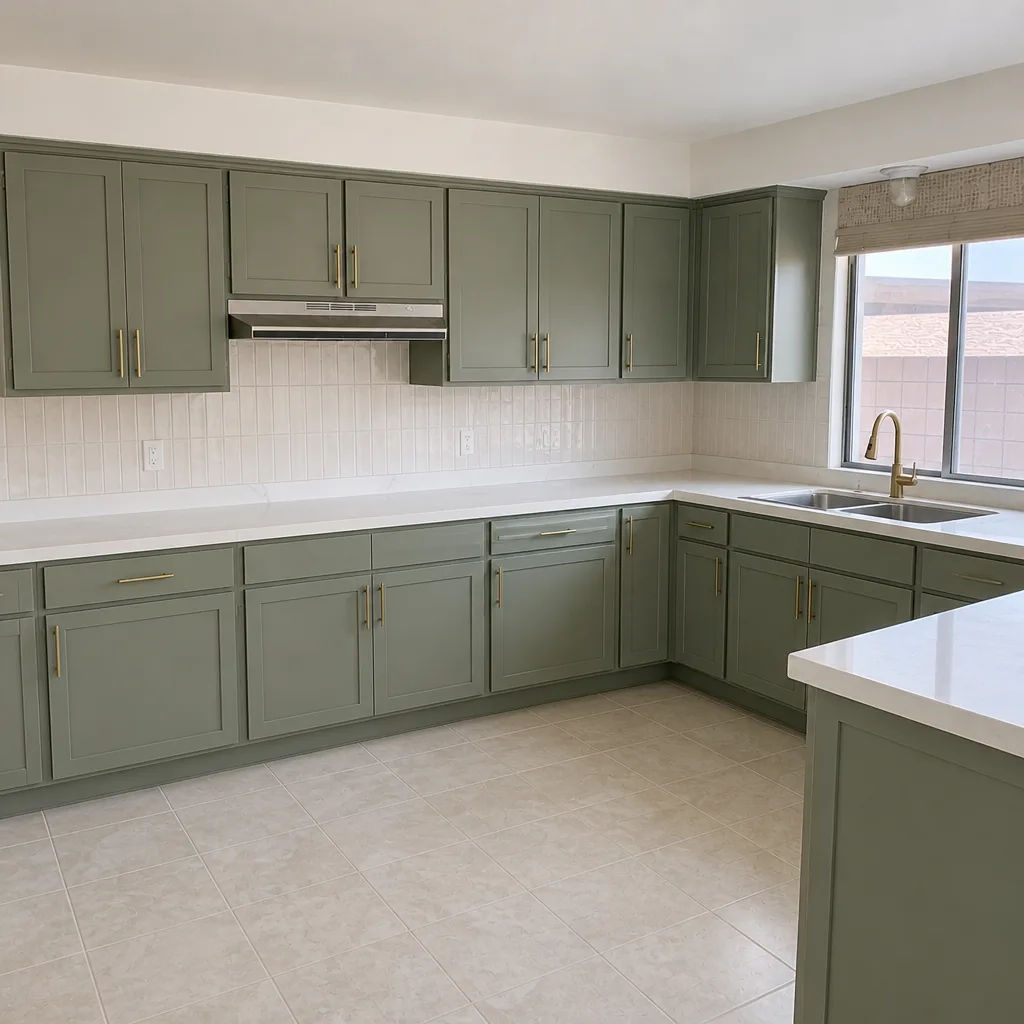
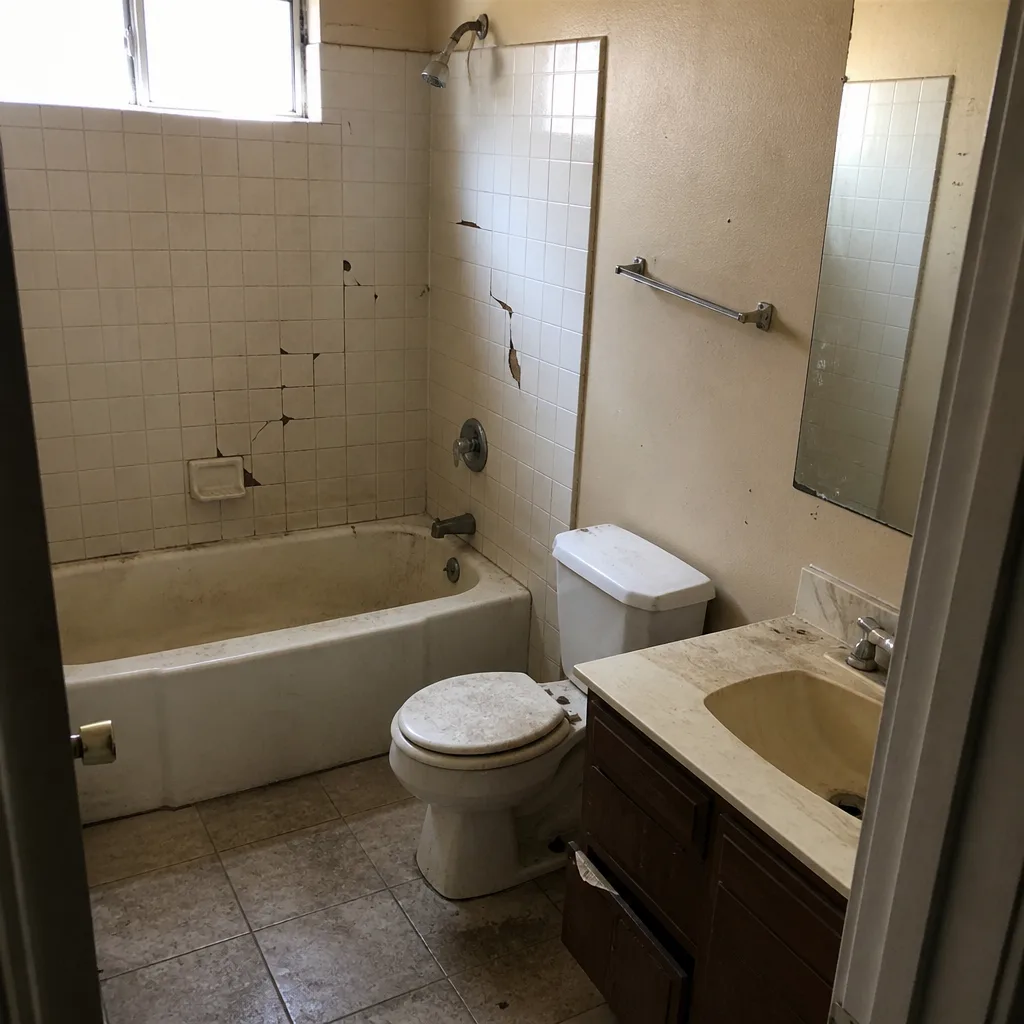
See the difference
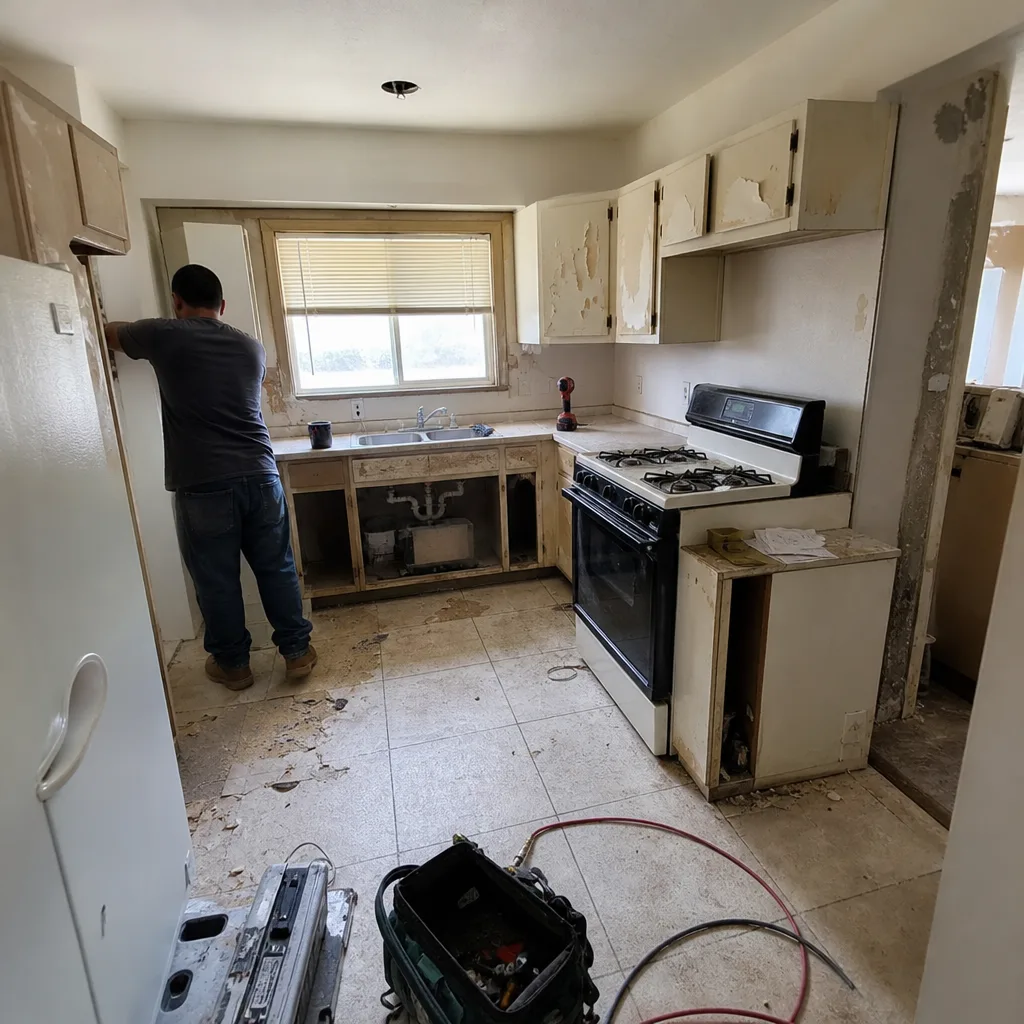 Before
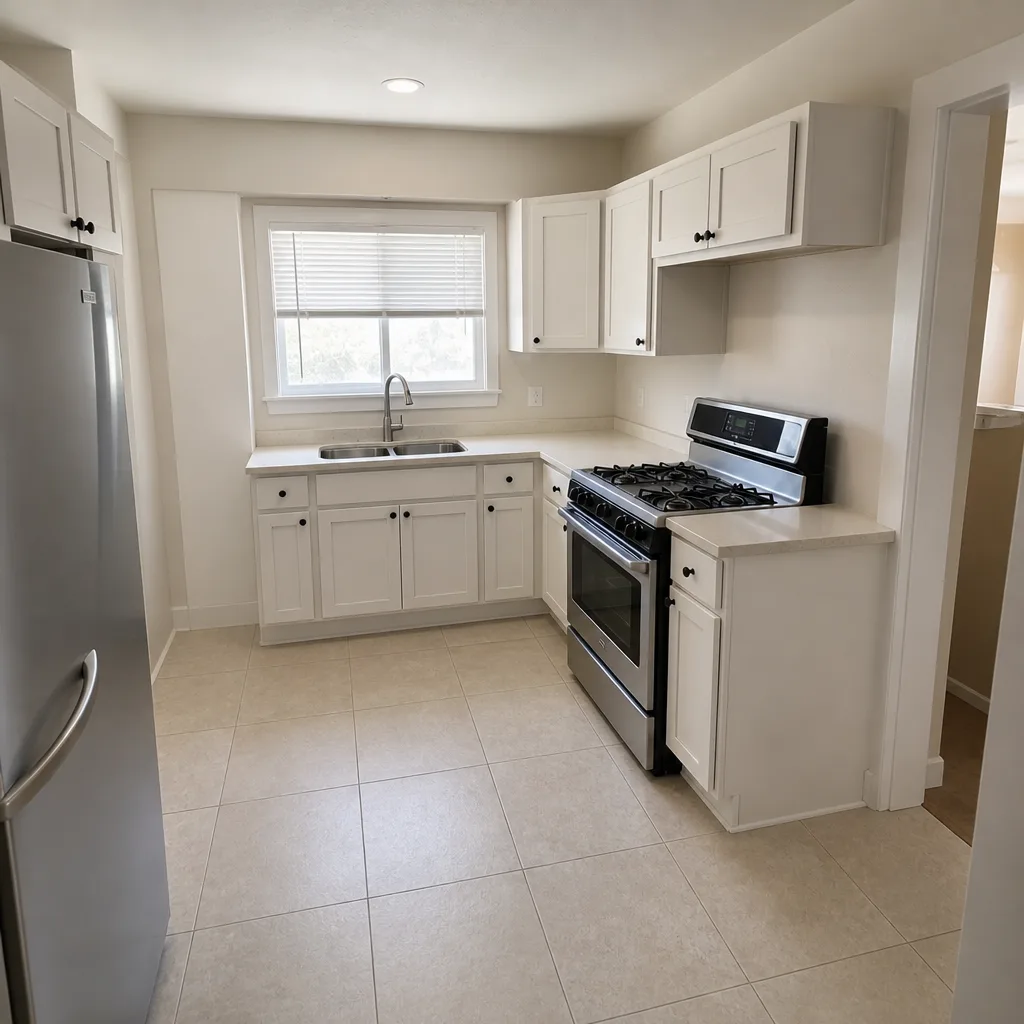 After
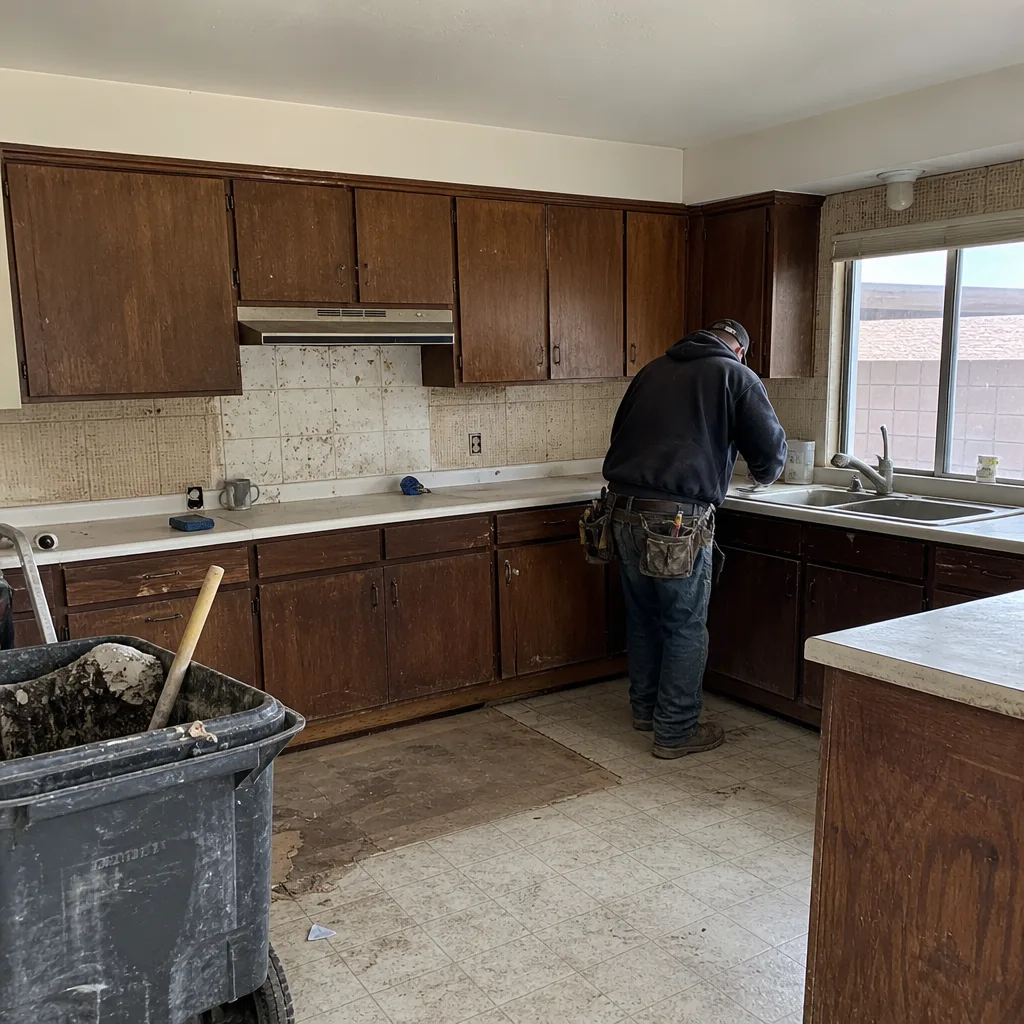 Before
 After
 Before
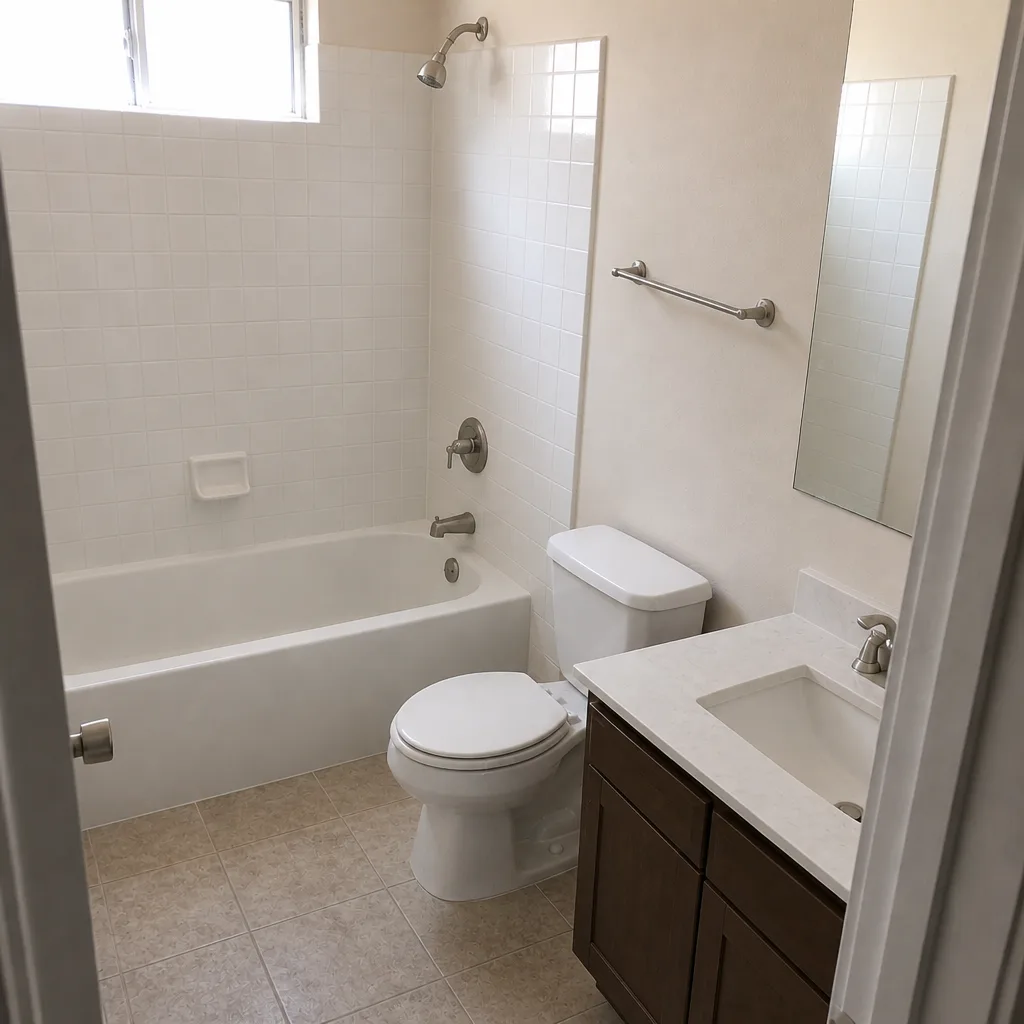 After
When to Call a Professional
Not every project needs a licensed general contractor. Hanging a shelf or painting a bedroom is a homeowner’s call. But once the work touches structure, plumbing, electrical, or a permitted scope in Boulder City, the license and insurance verification we covered above is not optional, it’s the minimum. Reach for a professional when the project includes a wall removal, a bathroom or kitchen gut remodel, a new addition, a roof repair, or anything requiring a Boulder City building permit. Reach for a professional when your insurance company or a future buyer will want documentation the job was done to code. Reach for a professional when the crew is inside the house your children and pets live in, and you want background-checked technicians, drop cloths on the floors, and someone who asks before moving anything. Elmstead Remodeling Boulder City offers free estimates in Boulder City – call (855) 552-7882 to schedule yours.
Frequently Asked Questions

Use the Nevada State Contractors Board’s public license lookup, search by the license number on the written bid, and confirm the classification code matches your specific project scope. The check takes about ten minutes and should be done before any deposit is paid. Call (855) 552-7882 if you want us to walk you through the classification for your project – estimates are free.
General liability covers injury or property damage during the job, while completed-operations coverage responds after the work is done if a component fails due to installation error. Standard policies often name general liability only. Ask your contractor to send all three certificates – general liability, workers’ comp, and completed operations – with your address listed as the certificate holder. Call (855) 552-7882 for a free estimate and we’ll send ours along with the written price.
Commonly ten to fifteen percent of the contract total, held until punch-list sign-off. That’s enough money to matter, so the contractor has a real reason to come back and finish the small items. The deposit at signing should be small enough that it funds materials, not the previous job. Call (855) 552-7882 for a written price before any work starts, with no change orders after the crew arrives.
No, you don’t, and you shouldn’t. The contractor who does the work should pull the permit under their license, because that puts them on the record for the inspection. When a homeowner pulls the permit, the contractor has sidestepped accountability for the code compliance of their own work. Call (855) 552-7882 to schedule a free estimate and we’ll walk through the permitting for your scope.
The historic district around Nevada Way has homes going back to the 1930s, many built for dam workers, and opening walls often reveals knob-and-tube wiring, cast-iron drains, and non-standard framing. Bid documents need to assume original construction rather than 1990s floor plans so change orders don’t double the price. Call (855) 552-7882 for a free estimate written against what’s actually in your walls.
Yes, that’s the work we do best. Every project follows the Cedarwell Care Promise: shoe covers and drop cloths on every visit, quiet tools during nap and school hours where possible, pet-safe product choices where there’s a choice, and a photo of the clean-up before the crew leaves. Call (855) 552-7882 for a free estimate and ask us about pet-safe finishes – estimates are free and there’s no obligation.
The Bottom Line
The step most Boulder City homeowners skip is the one that matters most: matching a contractor’s specific license classification to the specific scope of the project. A name-only license check tells you a company exists; a classification check tells you it can legally do your job. From there, three insurance documents, a written scope that names brands and square footage, a payment schedule anchored to punch-list sign-off, and written answers to a short question list will hold up against the surprises that are common in Boulder City’s historic housing stock. Ten minutes of verification is worth more than a low bid with no documentation behind it. Start with the license lookup, then bring the questions here. Visit Elmstead Remodeling Boulder City home for the full picture of how we work, and call (855) 552-7882 for a free estimate on your Boulder City project.
Written by the team at Elmstead Remodeling Boulder City.