Last updated November 17, 2026








Free written scope consultation - allowances, timeline, and change-order rules on paper before a single trade is scheduled
Seasonal Construction Care for Boulder City: Year-Round Homeowner’s Guide
Boulder City recorded 79 days above 100°F in 2023, and UV index readings in June regularly hit 11 – the level at which unpainted wood, standard exterior caulk, and vinyl window seals degrade measurably within a single season rather than over years. That number changes how you maintain a house here. Coastal and northern homeowners get four roughly equal seasons. Boulder City doesn’t. It has a long, punishing summer that grinds exterior materials down, a short monsoon that floods whatever drainage can’t carry, a mild freeze that catches people off guard in January, and a spring wind window that pushes fine desert dust into every gap it finds. This guide walks through all four phases with the specific inspections and repairs that matter in each, so the work happens in the right month rather than after the damage.
Quick Answer
Boulder City home maintenance should follow four real phases, not four generic calendar quarters: pre-summer (April-May) coating, cooling, and attic ventilation; monsoon prep (June) drainage, thresholds, and foundation grading; post-monsoon fall (October) stucco crack mapping and cooler winterization; and winter-to-spring (December-March) pipe insulation, flatwork joints, door sweeps, and air-sealing. Matching repairs to these phases protects the home far better than a standard quarterly checklist, because each one is timed to the damage actually happening in Boulevard City’s climate.
Styles & brands we work with
- Kitchen remodeling
- Bathroom remodeling
- Home additions & ADU
- Roofing
- Windows & doors
- Driveway & pavers
- Fence
Table of Contents
- Pre-Summer: April and May
- Monsoon Prep: June
- Post-Monsoon and Fall: October
- Winter: December through February
- Spring Wind Season: March
- How Materials Age in Boulder City
- Common Mistakes to Avoid
- Frequently Asked Questions
Pre-Summer: What to Check in April and May
The pre-summer window is the highest-value maintenance period on the Boulder City calendar, and it’s the one most homeowners skip because nothing looks broken yet. By June, the cooling system is running flat out and exterior surfaces are taking full UV. April and May are when you intervene, before the load hits. We’ve seen late-spring failures in Boulder City that would have been caught with a simple May walk-through – stucco checking on the south and west walls, a condenser packed with cottonwood fluff, an attic running 20 degrees hotter than it should.
Work through these steps in order:
- Walk the sun-facing exterior walls and look for the first hairline checks in the stucco. Probe the caulk around window and door frames; if it pulls away or has gone chalky, it has already lost its seal. Elastomeric coating is the right tool here, because it stretches and flexes with thermal movement where standard caulk cracks.
- Change the HVAC filter and have the condenser coil cleaned. A dirty coil on a Boulder City afternoon forces the system to work harder in exactly the heat it can least afford to.
- Check attic ventilation – ridge vents clear, soffit vents unblocked, no insulation pushed against them. Proper ventilation is what keeps the attic and the rooms below it from overheating.
- Inspect the roof’s exposed sealant at flashings while the weather is still mild and the work is easy.
None of these are glamorous. All of them buy you a calmer July.
Monsoon Prep: What to Do in June
Boulder City’s monsoon arrives in roughly the same window as the peak heat – a short, intense rainy stretch where the water comes down faster than the desert ground can absorb it, often after months of dry. That combination is why June drainage work matters. A downspout that handled a gentle rain in March can back up under a real monsoon downpour and send water straight into the foundation soil or a window well.
Before the first heavy storm, take on these three jobs:
- Clear every roof drain and downspout. Pull out leaves, granule buildup, and any nesting material. Run water through and confirm it exits away from the house.
- Check thresholds and door seals. Run a hand along the bottom of exterior doors and feel for daylight. Weatherstripping that has gone flat lets wind-driven rain in at the exact angle a monsoon delivers it.
- Inspect the grading around the foundation. The soil should slope away from the house on every side. Where monsoon erosion has created low spots or a trench against the wall, regrade so water drains away rather than pooling at the slab.
Boulder City’s dry ground also swells and shrinks with each storm cycle. Grading fixes are usually small and cheap when the problem is caught in June. They’re not when the water has found a path into the wall.
Post-Monsoon and Fall: What October Reveals
October is the diagnostic month in Boulder City. The summer’s thermal cycling – hot days, cool nights, hundreds of expansion and contraction cycles – has finished working on the exterior. So has the monsoon. That’s the moment to look closely at what the season did, rather than before or during. In our experience, this is where the real information lives: stucco that looked fine in May shows its first mapped cracks in October, and flashing that held through an average storm may be quietly passing water behind the surface.
Two inspections carry the most weight:
- Stucco crack mapping. Walk the exterior with a notepad and mark every crack, recording its width and direction. Hairline checking is cosmetic. A crack that’s wider than a credit card, runs diagonally, or repeats in the same spot year over year is telling you something about movement behind the surface, and it’s worth a closer look.
- Moisture intrusion behind flashing. Check for water staining, soft wood, or peeling paint below roof and window flashings. If a spot feels damp after a dry week, water is getting in somewhere the surface doesn’t show.
Fall is also evaporative cooler winterization. Drain the cooler, shut off its water supply, and cover it before the first freeze. A cooler left full of water through a December cold snap is a cracked pan and a spring repair.
Winter: December Through February in Boulder City
Boulder City winters are mild enough that most people stop thinking about the house, which is exactly the risk. Nights still dip to freezing, and a freeze event in a desert town is not gentle – it’s a quick overnight drop that catches pipes and flatwork that were never built for hard frost. Winter maintenance here is about the few things the cold can actually reach.
Focus on three areas:
- Insulate pipes in unconditioned spaces. This means the attic, the garage wall where a supply line runs, and any exterior hose bibs or exposed run. Foam pipe insulation is inexpensive and takes an afternoon.
- Check expansion joints in flatwork. Walk the driveway, walkways, and patio and look for gaps that have opened at the joints. A widening joint can signal frost-heave movement, and where the gap has grown, water gets in and refreezes. Re-sealing those joints protects the slab from the freeze-thaw cycle.
- Replace worn door sweeps. A door sweep that has hardened or torn lets cold air and fine dust in all winter. A fresh sweep is a small job that improves both comfort and your heating bill.
These are all tasks a careful homeowner can check. The pipe work is the one to take seriously – a burst supply line in an attic space is an expensive discovery.
Spring Wind Season: March Air-Sealing
March is the Boulder City wind window. Sustained desert wind lifts fine dust and pushes it against every opening in the building envelope. This isn’t a comfort nuisance; over a few seasons, dust that works into a wall cavity or a ceiling assembly can settle into insulation and, over time, collect moisture and degrade the assembly. The fix is not to clean more – it’s to seal the penetrations before the dust has a path.
The highest-value March jobs are the ones that close those paths:
- Air-seal around electrical boxes. On exterior walls and in the attic, seal the perimeter of switch and outlet boxes with a rated sealant. These are among the most common leak points in a house, and March is the time to catch them before the wind season.
- Seal around recessed lights. Old recessed can lights often have a visible gap at the ceiling plane. Use a rated gasket or sealant designed for the fixture, so the seal doesn’t create a heat problem.
- Check exterior penetrations. Dryer vents, hose bibs, and utility entry points all need a proper seal. A small gap here is a direct dust path into the wall cavity.
Air-sealing is also the cheapest efficiency work a homeowner can do, because it keeps the conditioned air where you paid to put it.
How Materials Age in Boulder City’s Climate
Boulder City is hard on exterior finishes in a way that inland or coastal climates simply aren’t, and choosing materials with that in mind changes how often you have to redo the work. The two strongest defenses are elastomeric coatings on stucco, because they flex with the daily thermal swing where standard caulk fails, and fiber cement siding such as James Hardie, which is engineered to hold color and structure through repeated UV exposure and thermal cycling. Both are rated for this climate; both extend the interval between repairs. On the interior side, kitchen and bath surfaces that see heat and moisture hold up better when the materials are chosen for the long haul – which is why we work with cabinets from KraftMaid and Wellborn, and countertops from Cambria and Silestone, where the manufacturer’s warranty travels with the finished job and the homeowner can verify it independently. A seasonal care calendar works best when the underlying materials were chosen for the climate in the first place.
Common Mistakes to Avoid
- Following a generic four-season checklist. A northern-home schedule tells you to winterize for snow and ignore UV. Boulder City needs a schedule built around heat, monsoon, freeze, and wind – in that order.
- Caulking with standard caulk on sun-facing walls. Standard caulk cracks within a single summer on the west and south walls. Elastomeric coating is the material that survives here.
- Skipping the attic ventilation check. A blocked soffit vent doesn’t fail loudly – it just makes the whole house run hotter through the summer. It’s easy to miss in a walk-through and expensive to live with.
- Leaving an evaporative cooler full of water into winter. Boulder City’s overnight freezes crack cooler pans and lines. Drain and cover the cooler in the fall, not the spring.
- Treating a widenening flatwork joint as cosmetic. A joint that’s opening is a sign of movement, and water that gets in with the freeze season becomes spalling the next year.
- Air-sealing after the wind season instead of before. By the time the March wind is blowing, the dust has already found the gaps. Seal in late February, not April.
- Assuming monsoon drainage is someone else’s problem. A downspout that discharges at the foundation will move water straight into the wall. Clear it and confirm it exits away from the house before the first real storm.
See the difference
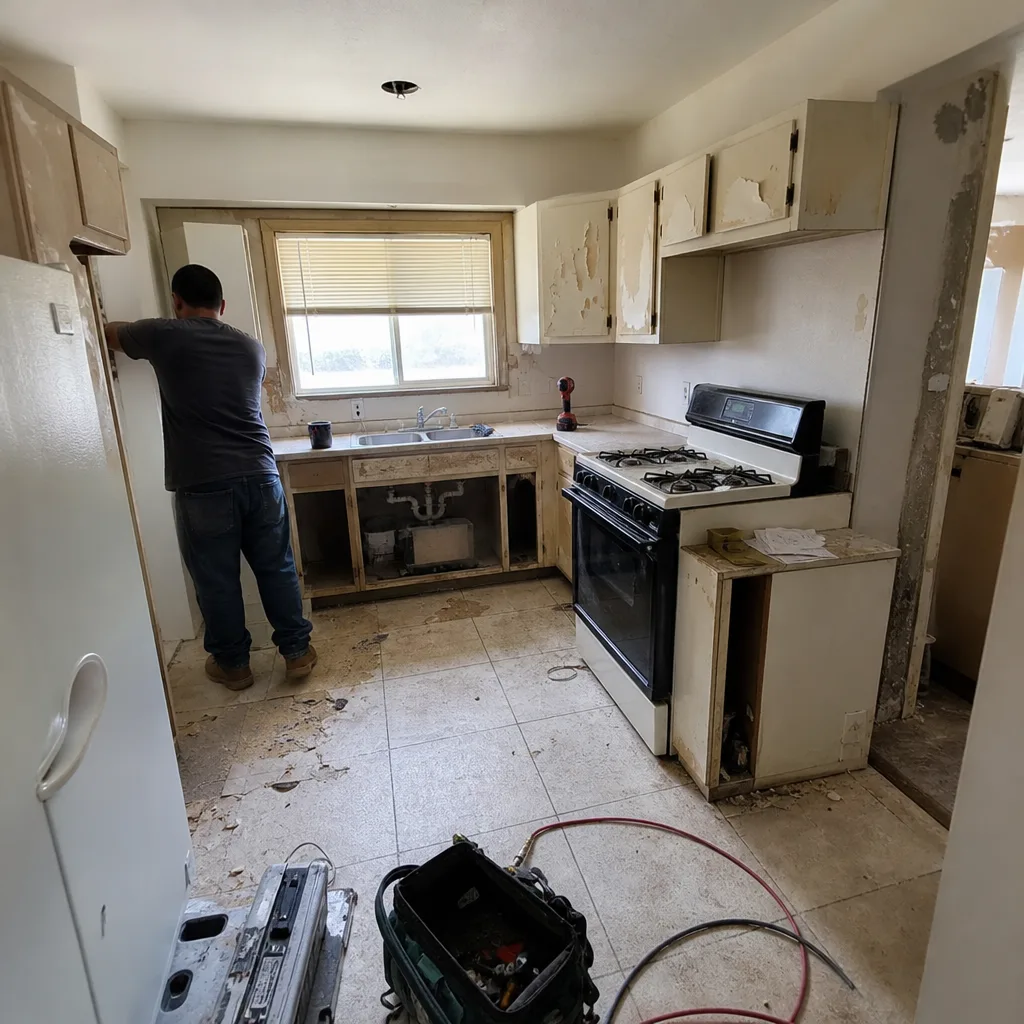 Before
 After
 Before
 After
 Before
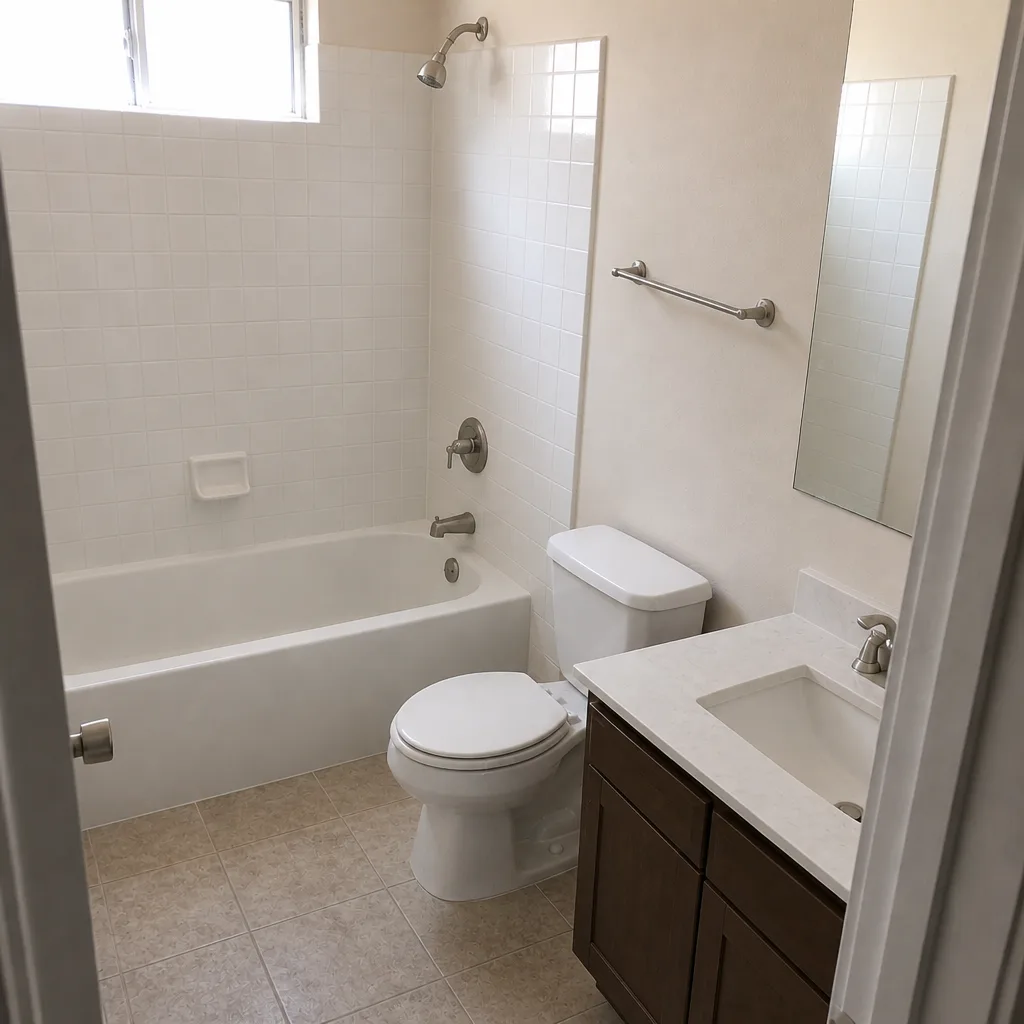 After
When to Call a Professional
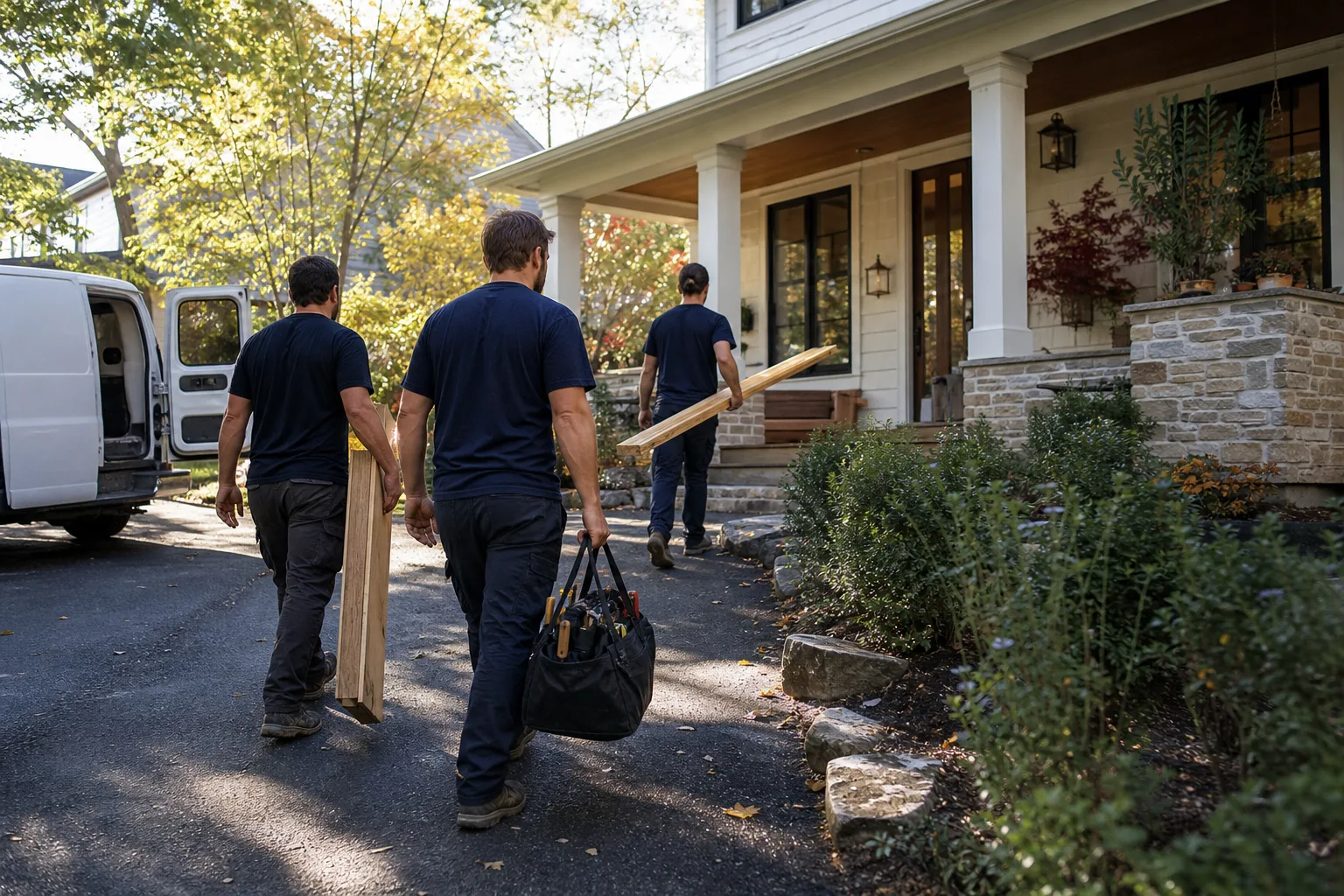
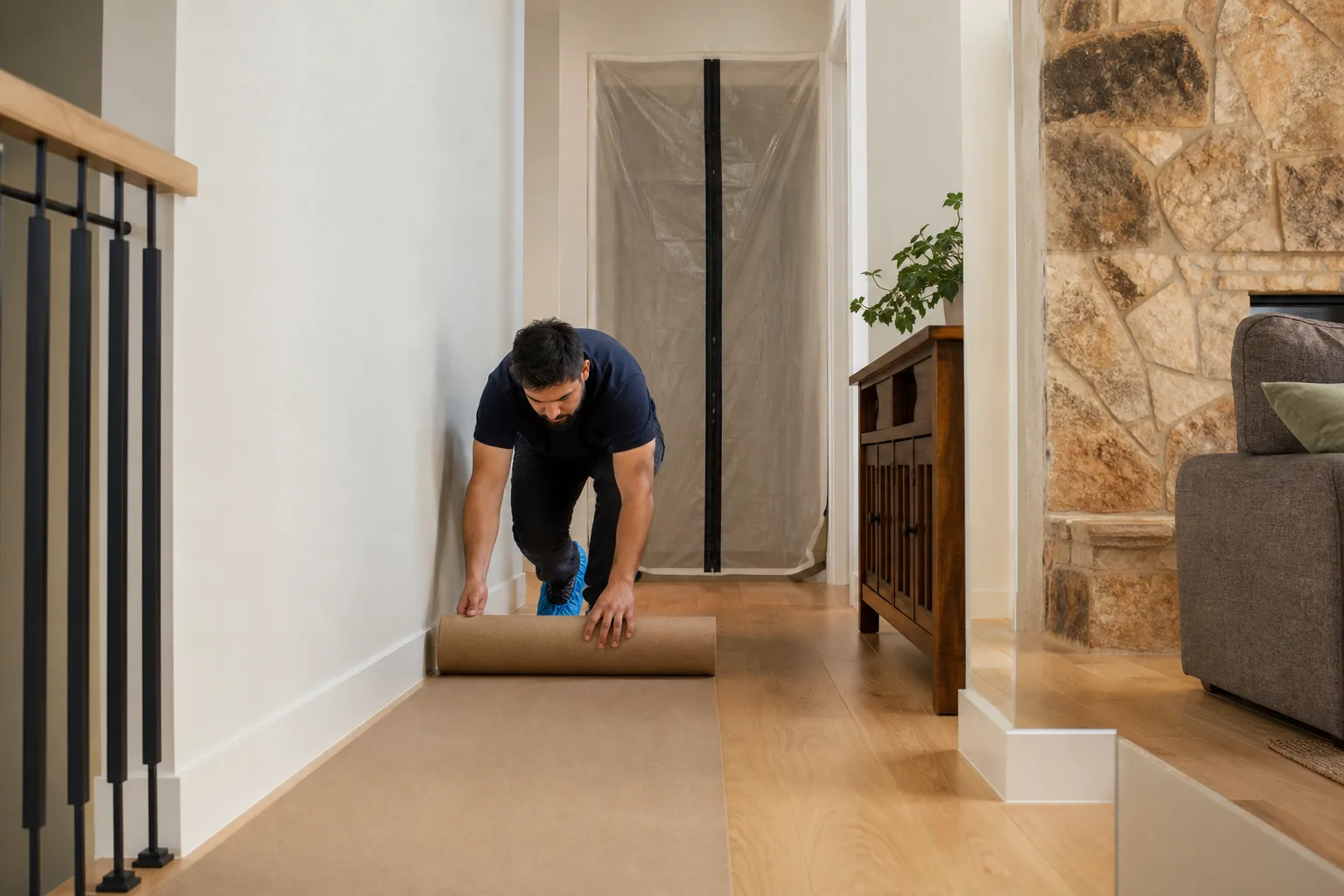
Some of the seasonal work above is worth doing yourself: changing a filter, replacing a door sweep, draining an evaporative cooler, pulling leaves from a downspout. Others involve genuinely risky components where the right call is a trained professional. Anything that means working at height on a roof or around flashing is one – a fall from a roof is the kind of injury that ends a weekend fast. Air-sealing and moisture-intrusion work in an attic or wall assembly is another, because the diagnosis matters as much as the seal. And any crack in the stucco that runs wider than a credit card or repeats in the same location each October is a sign that something behind the surface needs a real look, not another tube of caulk. Elmstead Remodeling Boulder City offers free estimates in Boulder City – call (855) 552-7882. We give a written price before any work starts, put shoe covers and drop cloths down on every visit, and photograph the clean-up before the crew leaves.
Frequently Asked Questions
The best window for stucco, caulking, and flashing work in Boulder City is late April through May, or October, when daytime temperatures are moderate and sealants cure properly rather than skinning over and cracking in the sun. If a crack or leak is active, don’t wait for the ideal month – a leak that’s letting water in during the monsoon is a bigger problem by fall. Call (855) 552-7882 for a free estimate and we’ll tell you whether it can wait for the season or shouldn’t.
Yes, and the reason is dust. Boulder City’s March wind drives fine dust against every gap in the building envelope, and once dust settles into insulation or a wall cavity it’s a moisture trap over time. Sealing around electrical boxes and recessed lights in February closes the path before the season opens it. It’s also the cheapest efficiency work a homeowner can do in Boulder City, so the effort pays back twice.
In October, walk the exterior and map every crack – width, direction, and location – because that’s when the season’s thermal cycling has finished and the evidence is clearest. Hairline checking is cosmetic and routine in Boulder City; a crack wider than a credit card, running diagonally, or repeating in the same spot year after year is worth a professional look. Call (855) 552-7882 for a free estimate if anything looks more than routine.
Drain the water, shut off the supply line, and cover the unit before the first overnight freeze, usually by early November in Boulder City. A cooler left holding water through a December cold snap can crack its pan and lines and turn into a spring repair. If your cooler has been through a few seasons without service, have it checked – a damaged unit costs more to run and less to fix early.
You should check the drainage every June, though the work itself may be small or nonexistent in a given year. Boulder City’s ground swells and shrinks with each wet-dry cycle, so grading can shift from one season to the next, and monsoon rain falls faster than dry soil absorbs it. Clearing downspouts and confirming the soil slopes away from the foundation is a same-day check that prevents the most expensive water damage.
No. Elmstead gives a written price before any work starts, on every project – not an estimate that grows after the crew arrives. That’s part of the Cedarwell Care Promise, along with shoe covers and drop cloths on every visit, quiet tools during family rest hours where possible, and a photo of the clean-up before the crew leaves. Every completed project is also covered by the 365-Day Done Right Promise: if it’s not done right, we make it right. Call (855) 552-7882 for a free estimate.
The Bottom Line

Boulder City’s climate doesn’t give you four equal seasons to prepare for – it gives you four phases, each with a specific window and a specific physical threat. Pre-summer protects against UV and heat on the coating, cooling, and attic ventilation. Monsoon prep protects against water with drainage, thresholds, and grading. October diagnoses what the summer did to the stucco and flashing. Winter protects pipes, flatwork joints, and door seals from the overnight freeze. March closes the air gaps before the wind loads them with dust. Time the work to the phase it addresses, choose materials rated for the heat and dry cycle (fiber cement siding, elastomeric coatings, KraftMaid and Wellborn cabinetry that carries its own warranty), and the house holds up for years rather than seasons. When a job is beyond a weekend’s work – roof flashing, moisture intrusion, stucco that’s showing real movement – call in a professional rather than guess.
If you’re ready to price a repair or a larger remodel, Elmstead Remodeling Boulder City offers free estimates and a written price before any work starts. Call (855) 552-7882 – the phone is answered by a live person 24/7. You can also start at our Elmstead Remodeling Boulder City home, meet our General Contractor in Boulder City service, or explore Bathroom Remodeling in Boulder City and Kitchen Remodeling in Boulder City for larger projects.
Written by the team at Elmstead Remodeling Boulder City.