
Last updated November 17, 2026








Free written scope consultation - allowances, timeline, and change-order rules on paper before a single trade is scheduled
Bathroom Remodeling Maintenance Schedule: What to Do and When
Here’s a number that surprises most homeowners: a well-built shower can fail behind the tile wall within a year of the caulk joint cracking, even though the tile and grout look fine from the outside. Water finds the gaps you can’t see. The joint where your tub meets the tile wall is a control joint, built to flex, and grouting over it because it looks tidier is the most common way water gets behind a tile wall. Most of the failures we’re called to fix in Boulder City weren’t caused by bad materials. They were caused by skipped maintenance. This guide gives you the exact tasks, products, and intervals.
Quick Answer
The short version: reseal grout every 12 to 18 months, recaulk the control joints (tub-to-wall, shower pan corners) every year, clean showerhead and faucet aerators every 3 months in Boulder City’s hard water, and inspect the exhaust fan every 6 months. Everything else is monthly cleaning and an annual look at the glass, drains, and shutoff valves. A bathroom cared for on this schedule keeps its warranty coverage intact and holds its value at resale.
Styles & brands we work with
- Kitchen remodeling
- Bathroom remodeling
- Home additions & ADU
- Roofing
- Windows & doors
- Driveway & pavers
- Fence
Table of Contents
- The Monthly Tasks (15 Minutes)
- Quarterly: Descale Everything Water Touches
- Twice a Year: Grout and Control Joints
- Every Six Months: The Exhaust Fan Inspection
- The Annual Deep Check
- The Products That Won’t Void a Tile Warranty
- How to Log It for Resale
- Common Mistakes to Avoid
The Monthly Tasks (15 Minutes)
Most bathroom upkeep is just wiping down what you already see. Fifteen minutes a month, and you’ll catch the early signs before they turn into repairs. If you remodeled with us through our Bathroom Remodeling in Boulder City service, these are the same habits worth keeping on a fresh build.
- Squeegee glass every shower. A $6 squeegee does more for glass than any chemical. Skip a week and you’ll see the haze start close to the frame.
- Run the fan 20 minutes after the last shower. Not just while you shower. The moisture hangs in the air after you step out.
- Wipe the tub-to-wall caulk. A dry cloth, one pass. Mildew starts in the little fillet of soap scum that collects on the caulk bead.
- Check the drain for hair. Once a month is enough if you have long-haired residents; every two weeks if you have a pet that gets washed in the tub.
- Look at the floor around the toilet base. Any dark halo on grout within 6 inches of the flange warrants a closer look at the wax ring.
Families with young kids and pets tell us this list is where they slip most. It’s also where we lean on the Cedarwell Care Promise once we’re back in for a checkup: shoe covers, drop cloths, and quiet tools during nap hours so a 15-minute maintenance visit never turns into a disruption.
Quarterly: Descale Everything Water Touches
Boulder City’s water runs hard. Calcium and magnesium come through the supply at levels that build visible scale on a showerhead within a few months, and scale is the slow killer of both flow rate and fixture life. Set a reminder every 3 months to descale the parts water passes through. Our technicians have handled this in Boulder City homes long enough to know the desert pattern: the scale problem is worse in spring and summer than it is in winter, so scheduling descaling in April and October lines up with the worst of it.
- Unscrew the showerhead. Half a cup of white vinegar in a zip bag, rubber-banded around the threads so the face of the showerhead sits in the vinegar. Let it sit 4 to 8 hours. Rinse, screw back on, run 30 seconds.
- Soak faucet aerators. Unscrew the aerator at each bathroom sink. Vinegar soak, 30 minutes. Hold a rag over the drain so you don’t lose the little washer down the pipe.
- Descale glass shower doors. A 50/50 mix of vinegar and water on a spray bottle, dwell time 5 minutes, then a damp microfiber cloth. Do not use vinegar on natural stone (travertine, marble, limestone). For those, use a pH-neutral stone cleaner instead.
- Run the tub spout and check flow. Reduced flow here usually means scale in the cartridge or the diverter. Not a job to force.
If your fixtures are Kohler, Moen, or Grohe – the three the crews install most often – descaling on schedule is part of what keeps the finish warranty alive. Manufacturers can tell the difference between a scale-damaged cartridge and a manufacturing defect when you call.
Twice a Year: Grout and Control Joints
Grout is a maintenance surface, not a permanent finish. Sealer wears down. Cement-based grout in a wet area with shampoo spray, soap scum, and Boulder City’s mineral-heavy water will lose its seal faster than the manufacturer’s published timeline suggests. Plan to reseal every 12 to 18 months, and touch up as needed. More importantly, don’t grout over your control joints.
A control joint is the caulk bead where two planes of tile meet, or where tile meets a tub, shower pan, or wall. Movement in your house – seasonal, foundation-related, thermal – is absorbed by that flex. Grout is rigid. When it’s bridged with grout, the flex has to go somewhere, and it goes into the tile or the waterproofing layer behind it.
How we check a control joint
- Look for a hairline gap between the caulk bead and the tub or tile. Any visible separation means the joint needs recaulking.
- Press the caulk with a finger. It should feel springy and stay bonded to both surfaces. If it peels away from either side, it’s failed.
- Check for discoloration at the underside. A dark line of mold starting at the bottom of the bead is often water getting behind it.
How we install a control joint (so it lasts)
The product matters as much as the technique. Use 100% silicone caulk rated for wet areas (not “siliconized acrylic,” which is a lower grade and fails faster). Options worth researching by name: GE Silicone II Kitchen & Bath, Loctite PL Marine, and DAP 100% Silicone. Remove the old bead completely with a plastic scraper – never a metal blade on tile – clean with denatured alcohol, let dry, then lay the new bead with a tooling sponge. A waterproofing system like Schluter’s, installed in the original build, sets the tolerances for how much movement the joint has to take; if your bathroom was built with Schluter-Kerdi, the control joint needs to stay flexible and ungrouted, period.
Do not grout over a control joint because “it looks better.” If a tile setter or handyman suggests this, that suggestion will be why you’re calling a repair crew six months later. Our General Contractor in Boulder City service is often asked to fix this exact mistake.
Every Six Months: The Exhaust Fan Inspection
This is the maintenance step almost no homeowner does, and the one that matters most. An exhaust fan running 1.4 cubic feet per minute below its rated pull is functionally a decoration. Moisture builds in the room, the ceiling absorbs it, and you’ve got your first mold bloom where you don’t see it – inside the fan housing and above the drywall around it.
Where to look
- The fan grille. Pop it off. If you have to pry it hard, the grille is stuck to a layer of greasy dust. Clean it in soapy water and let it dry fully.
- Inside the housing. Use a flashlight. Mold in the fan housing looks like a grey or black film on the fan blades and the plastic interior walls, often concentrated on the side facing the shower. If you see it there, it’s already growing within the machine.
- Around the housing flange at the ceiling. A water stain on the drywall within 4 inches of the grille often means moisture is condensing where the fan meets the ceiling.
- The duct. If you can reach it in the attic, check whether it’s insulated (it should be in a Boulder City attic) and whether it terminates outside rather than into the attic space. Venting into an attic is a code violation in most jurisdictions and a shortcut no legitimately licensed contractor takes.
- The duct flap. The backdraft flap on the exterior vent should swing free. A stuck flap, a bird nest, or a mud dauber’s plug will strangle the airflow even with a perfectly good fan.
If the fan is over 10 years old and rattles, replacing it with a modern Panasonic WhisperGreen or Broan unit that runs at less than 1 sone is usually worth it. A quiet fan runs longer because it doesn’t wake anyone.
The Annual Deep Check
Once a year, set aside an hour. This is the checklist we run when a family calls us for a maintenance visit or right before they list their house for resale. If a bath was built under our Elmstead Remodeling Boulder City home program, most of these items are already documented, but annual verification is still worth doing.
- Shutoff valves. Turn each under-sink valve closed and open once. Valves that haven’t moved in years seize, and that seized valve is what turns a small leak into a whole-house flood.
- Toilet supply line. Stainless steel braid or a flexible connector – if it’s an old rubber hose, replace it. It’s a $12 part.
- Supply lines behind the vanity. Look for any blue-green corrosion at the fitting. Corrosion here is a slow leak you can’t see from above.
- Grout pen test. Run a bead of water on a grout line in the shower and see if it beads or absorbs. Beading means the sealer is holding. Absorption means reseal time.
- Tub overflow gasket. Behind the chrome plate on the overflow, a rubber gasket seals the drain connection. If water is seeping out the overflow during a fill, the gasket is shot.
- Exhaust fan pull test. Hold a single square of toilet paper up to the grille. If it doesn’t stick, the fan isn’t pulling what it should.
- Caulk around the tub and shower pan (every 12 months, not just every 2 years).
None of these are hard, but each one on its own is easy to forget. The annual list is why we suggest logging it in a small notebook or a shared note on your phone – see the “Log It” section below.
The Products That Won’t Void a Tile Warranty
Most tile and fixture warranties have maintenance language buried in the fine print. Use the wrong product and you’ve voided the coverage on that piece of the bathroom, which is a real cost when you’re looking at a Cambria countertop or a Kohler shower trim. Here’s what keeps you safely inside warranty terms:
- Silicone caulk: GE Silicone II Kitchen & Bath, Loctite PL Marine, DAP 100% Silicone. Look for “100% silicone” on the label, not “siliconized.”
- Grout sealer: A penetrating sealer, not a coating. Apply every 12 to 18 months. Brands to research: Aqua Mix Sealers Choice Gold, Miracle Sealants 511 Impregnator.
- Glass descaler: 50/50 vinegar-and-water for ceramic tile, but pH-neutral stone cleaner for natural stone.
- Stone countertops (Cambria, Silestone, Caesarstone): A pH-neutral countertop cleaner per manufacturer instructions; no vinegar, no abrasive scrubs. Maintenance-sealed stone from the factory doesn’t need re-sealing, but the manufacturer-recommended cleaner still matters.
- Showerhead and faucet aerators: Straight white vinegar. Five percent acidity, not “cleaning vinegar” which is stronger and can dull finishes.
When you’re choosing replacement parts, stick to manufacturers whose care instructions are published and specific: Kohler, Moen, and Grohe all publish product-specific care guides, and the finish warranty is much easier to defend with a paper trail.
How to Log It for Resale
A home inspector and a buyer’s agent both ask the same question when they see a remodeled bath: when was it done, and what’s been maintained? A simple maintenance log answers both.
- Start a small notebook or a shared note labeled “Bathroom – [month/year].” Keep it in the vanity drawer.
- Log each task by date and product used. One line: “4/12 – recaulked tub/tile control joint with GE Silicone II.”
- Keep receipts for replacement parts – showerhead, supply lines, fan. Photograph them and add to the same note.
- Note any manufacturer warranty registrations. Kohler and Moen product warranties are typically tied to date of install, and having a record helps.
- Include the original project paperwork from any remodel. If the bath was built by Elmstead Remodeling Boulder City, the 365-Day Done Right Promise is stamped on the project and follows the home, not just the first owner.
That log is what turns “we think the bath was remodeled a few years ago” into “here’s the maintenance history, here’s the product list, here are the warranty registrations.” Boulder City buyers are picking up on this – desert homes have a real moisture story to tell, and a documented bath says the whole house was cared for.
Common Mistakes to Avoid
- Grouting over the control joint. The single mistake we see most. Rigid grout in a flex joint turns movement into cracked tile or water behind the wall. Leave the caulk.
- Using “siliconized acrylic” on a tub-to-wall joint. It’s cheaper, and it fails in under a year. Read the label.
- Using vinegar on natural stone. Etches marble and travertine permanently. Use a pH-neutral stone cleaner.
- Skipping descaling in Boulder City’s hard water. Scale builds within a season here. A showerhead that “started fine” at install can run 30% lower in a year.
- Never inspecting the exhaust fan housing. Mold inside the fan is where every ceiling mold call starts. Pop the grille off twice a year and look.
- Ignoring the toilet supply line. A rubber hose under 5 years old is still the wrong answer. Stainless braid, replaced every 5-7 years.
- No maintenance log. A buyer sees an immaculate bath with no history and wonders what was hidden. A log with dates removes that doubt.
See the difference
 Before
 After
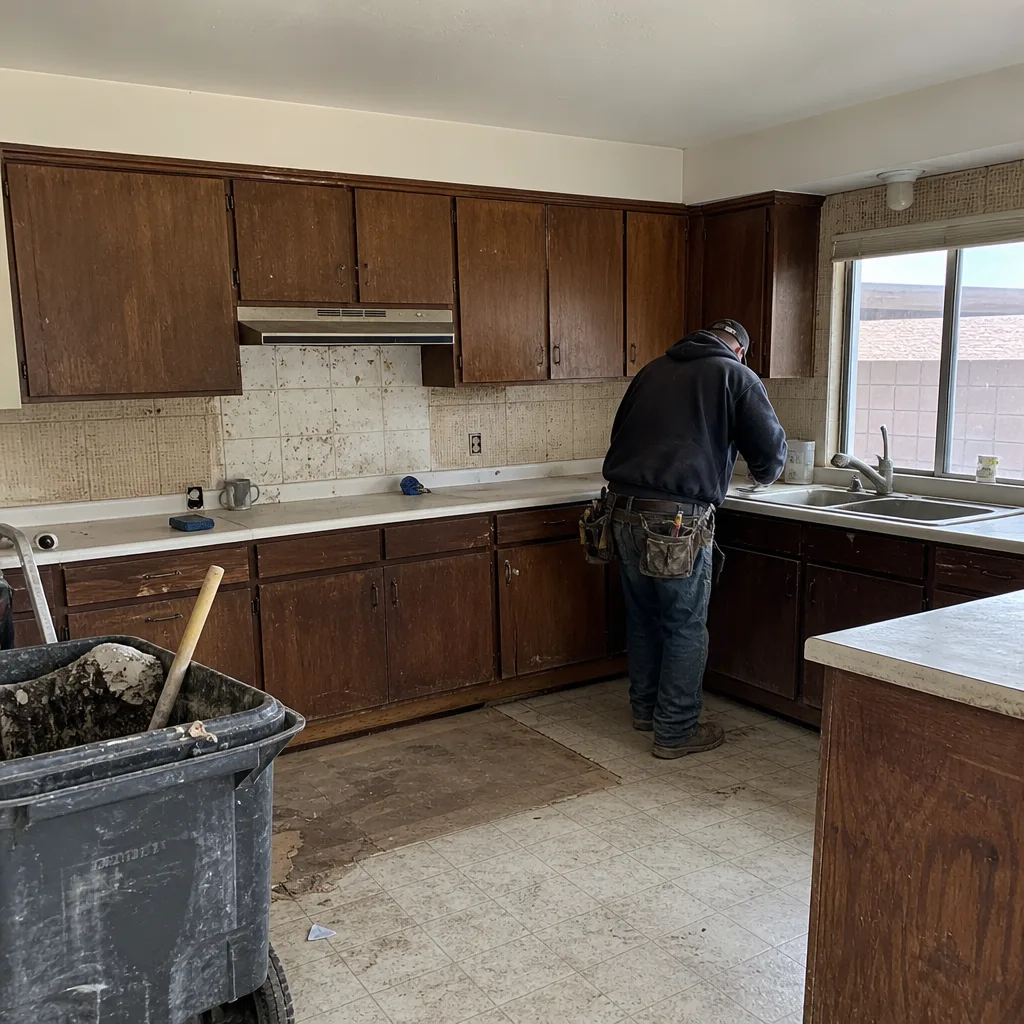 Before
 After
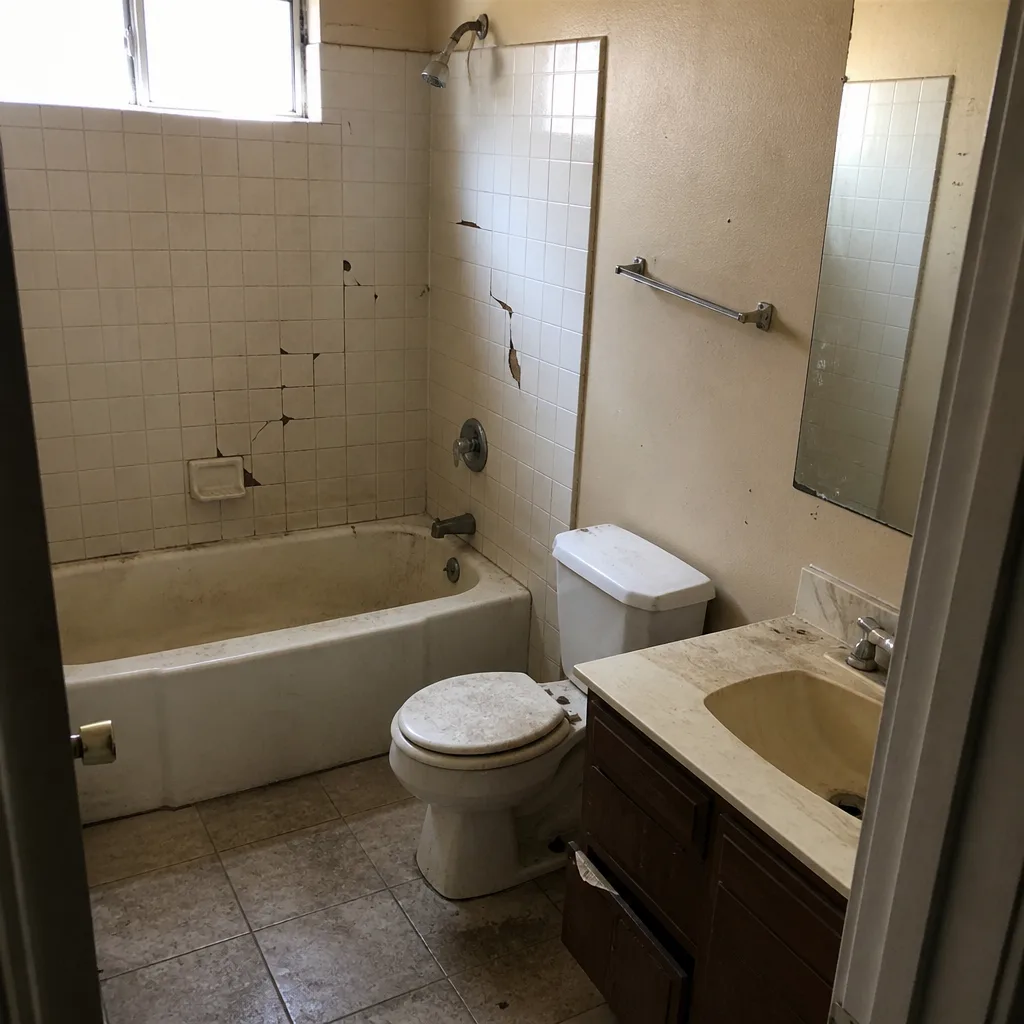 Before
 After
When to Call a Professional
Most of this page is genuinely DIY-friendly, and we back the homeowner doing it on schedule. But a few specific situations call for a trained professional: water stains on the shower ceiling, mold growth that reaches beyond the fan grille, a tile backer that feels soft or spongy underfoot, or a control joint that keeps failing within 6 months of every recaulk. Cracked tile on a shower floor or wall – even a single crack – usually means movement below the surface, and that’s not something a homeowner can fix with caulk. A caulk failure that pulls away with visible water behind it, a shutoff valve that won’t close, and any electrical work on the exhaust fan all belong on our side of the line. Elmstead Remodeling Boulder City offers free estimates in Boulder City – call (855) 552-7882 for a specific look at what’s going on.
Frequently Asked Questions

Every 12 to 18 months for ceramic tile in a wet area, and more frequently for floors that see heavier traffic. In Boulder City’s hard water, the sealer breaks down faster than the manufacturer’s published timeline. Test by running water on a grout line – if it beads, you’re fine, if it absorbs, reseal. Call (855) 552-7882 for an exact quote on having it done, or for guidance from a crew that’s worked in that water for years.
No. That joint is a control joint, designed to flex with the movement of the tub and the wall. Grouting over it removes the flex, and the movement transfers to the tile or the waterproofing layer behind the wall. It’s the single most common cause of water intrusion we’re called to fix. If the grout line looks uneven, the answer is a better caulk bead, not a grout bead.
100% silicone labeled “kitchen and bath” or “wet area.” The three worth researching by name are GE Silicone II Kitchen & Bath, Loctite PL Marine, and DAP 100% Silicone. Do not use “siliconized acrylic” – it’s a lower grade that fails within a year in a wet joint. The tube should say “100% silicone,” not “siliconized.”
Boulder City’s water runs hard – roughly double the mineral content of typical municipal supplies – so scale builds within weeks on a showerhead’s rubber nozzles and inside the cartridge. Descale every 3 months with a vinegar bag soak. If you’re installing a new fixture, consider a Moen or Grohe showerhead with rubber nozzles – easier to clean and a bit more scale-tolerant.
Two tests. First, hold a square of toilet paper to the grille with the fan running – if it doesn’t stick, the fan isn’t pulling what it should. Second, pop the grille off and shine a flashlight into the housing – mould appears as a grey or black film on the blades and interior walls. If you see it inside the fan, it’s already reached the machine. Call (855) 552-7882 for a diagnostic visit.
Yes, especially for desert homes. Buyers and inspectors here know moisture is the primary risk in a bathroom, and a documented maintenance log – dates, products, receipts – removes doubt about how the home was cared for. It’s the same principle as a well-kept car with service records. Free estimates on any bathroom work if you want a professional once-over before listing; call (855) 552-7882.
The Bottom Line
A remodeled bathroom lasts as long as its maintenance allows, and the four tasks that determine that lifespan are the four most homeowners skip: resealing grout every 12 to 18 months, recaulking control joints every year, descaling showerheads and aerators every 3 months (sooner in Boulder City’s hard water), and inspecting the exhaust fan housing twice a year. Everything else is monthly cleaning and an annual deep check with a written log. We’ve seen bathrooms pass through a decade of ownership with only these habits and look close to new. We’ve also seen bathrooms fail within three years because the bead was grouted over. The schedule is the difference.
If you’d like us to build or tend a bathroom on the Cedarwell Care Promise standard – written price before any work starts, shoe covers and drop cloths on every visit, a photo of the clean-up before we leave, and the 365-Day Done Right Promise on every project – our Kitchen Remodeling in Boulder City and bathroom teams take calls around the clock. Whether you’re ready for a full remodel, a maintenance visit, or a second opinion on a failing joint, call (855) 552-7882 for a free estimate. A live person answers, every time.
Written by the team at Elmstead Remodeling Boulder City.