Last updated November 17, 2026






Free written scope consultation - allowances, timeline, and change-order rules on paper before a single trade is scheduled
DIY vs Professional Construction: The Boulder City Homeowner’s Decision Guide
Nevada lets a homeowner pull their own building permits and act as their own general contractor. That single fact sends a lot of Boulder City homeowners into a project believing the law has cleared them for anything. It hasn’t. The moment an inspector finds that a homeowner-pulled permit was actually executed by an unlicensed worker, the project stops, the work can be ordered torn out, and the homeowner carries full liability for whatever happens next. This guide draws the line where the city and the state actually draw it, project by project, so you can decide what to take on yourself and what to hand to a licensed professional before you spend a dollar.
Quick Answer
Some projects in Boulder City are genuinely good DIY candidates and others are legally off-limits or financially reckless to self-perform. Interior painting, cabinet hardware, non-structural shelving, and landscape hardscape under 30 inches are fine to handle yourself. Electrical panels, gas lines, structural or load-bearing changes, and anything that involves a concealed shower pan or waterproofing membrane belong with a licensed contractor who pulls the permit, carries insurance, and stands behind the work in writing.
Styles & brands we work with
- Kitchen remodeling
- Bathroom remodeling
- Home additions & ADU
- Roofing
- Windows & doors
- Driveway & pavers
- Fence
Table of Contents
- Where Boulder City Draws the Permit Line
- The Trades Nevada Requires a Licensed Contractor For
- DIY Projects That Work Well in Boulder City’s Climate
- The Hidden Cost of DIY Waterproofing in a Desert Home
- How to Calculate the True DIY vs. Contractor Cost
- What a Written Warranty Covers That DIY Can’t
- Common Mistakes to Avoid
- When to Call a Professional
Where Boulder City Draws the Permit Line
The permit system in Boulder City is not a formality designed to slow you down; it is the record that ties a specific scope of work to a specific licensed party. When you pull a permit as a homeowner, you are telling the city that you, personally, will perform or directly supervise the work. That’s the part most people miss. The permit doesn’t just authorize construction on your property. It assigns responsibility for the work to a named party, and if you’re the named party, the accountability stays with you through inspection and beyond.
Nevada’s homeowner exemption exists so that people can improve the home they actually live in. It was not written to let a homeowner front for an unlicensed crew. If an inspector finds that work under a homeowner permit wasn’t performed by the homeowner or under their direct supervision, the consequences are specific: a stop-work order, a possible requirement to remove and redo the work to code, and a paper trail that shows the homeowner authorized unpermitted or unlicensed activity. That trail matters at resale, during an insurance claim, and if a neighbor’s property is affected.
Here’s the practical rule for a Boulder City homeowner. If the work touches the structure, the electrical service, the gas system, or anything that will be sealed behind a wall, assume it needs a licensed contractor and a permit. If the work is cosmetic, removable, and won’t be inspected because it doesn’t have to be, you can reasonably consider doing it yourself. Our General Contractor in Boulder City page walks through what a permitted scope looks like on a typical project, which helps you see where your own project lands.
The Trades Nevada Requires a Licensed Contractor For
Four categories in Nevada require a licensed contractor no matter who pulls the permit. These aren’t suggestions. They’re the line between a project you can self-perform and one that can void insurance, fail inspection, or put people at risk.
- Electrical panels and service work. Replacing a panel, adding a subpanel, upgrading service amperage, or running new circuits from the panel is licensed work. A panel is not a place for trial and error. The failure mode is fire inside a wall cavity, and it can sit dormant for years.
- Gas lines. Any new gas line, relocation, or connection to an appliance needs a licensed contractor and a pressure test witnessed by the inspecting authority. A gas leak doesn’t announce itself; it accumulates.
- Structural modifications. Removing a wall, cutting a beam, adding a header, or changing how load travels through the house is structural work. This is the category where “we checked and it looked fine” is not a defense.
- Load-bearing work of any kind. If a member carries weight from above, its removal or alteration requires engineering and a licensed contractor. This includes posts, beams, headers, and floor joists.
Two of those categories, electrical and gas, are genuinely dangerous components. We’re careful here on purpose: we don’t publish step-by-step instructions for panel work or gas line connections, because a homeowner following a web guide can create a hazard that stays hidden until it doesn’t. If your project touches either one, the answer is a licensed professional, not a weekend. Our team has up to 21 years of experience across these trades, and the reason we’re this cautious is precisely because we’ve seen what goes wrong.
DIY Projects That Work Well in Boulder City’s Climate
There’s real satisfaction in handling part of a project yourself, and Boulder City’s climate makes several categories easier than they’d be in a wetter place. Low humidity means paint cures predictably, and dry air means trim and shelving don’t swell and shift the way they do near the coast. Here’s where DIY genuinely makes sense.
- Interior painting. Prepping and painting a bedroom or living area is well within reach for most homeowners. Low humidity helps the paint dry evenly, though it also means you’ll want to work in shorter stretches because the paint skins faster than you expect.
- Cabinet hardware. Swapping pulls and knobs is a low-risk upgrade with visible payoff. Measure twice; a misplaced hole in a cabinet door is small but permanent.
- Non-structural shelving. Closet systems, garage shelving, and floating shelves into studs are fine to self-install. Just confirm you’re anchoring to studs and not drywall alone.
- Landscape hardscape under 30 inches. Low garden walls, paver paths, and planters below that height typically don’t trigger the same structural review as taller retaining walls. Check with the city before you build anything that holds back soil.
Notice what these have in common: none of them hide inside a wall, none of them carry load, and none of them will be sealed behind a membrane. If your project starts to check any of those boxes, treat it as professional work. Our Kitchen Remodeling in Boulder City guide shows how a permitted kitchen scope differs from a cosmetic refresh, which is a useful comparison for drawing your own line.
The Hidden Cost of DIY Waterproofing in a Desert Home
This is the section we wish more homeowners read before they tackle a bathroom themselves. In a desert climate, a shower pan installed incorrectly can stay invisible for around 18 months before the first sign of trouble appears. Low humidity pulls moisture out of the air, so the room feels dry even when water is quietly working its way under the tile and into the subfloor. We’ve seen this pattern repeatedly in Boulder City bathrooms: a homeowner builds a shower over a poor slope or a skipped pre-slope, and for a year and a half everything looks normal. Then the grout darkens, or a soft spot shows up near the curb, or a musty smell appears in an adjacent closet.
By then the repair is not a tile repair. It’s a subfloor repair, sometimes a framing repair, and always a membrane and pan redo. The original tile is gone, the cost is multiples of a professional installation, and the homeowner is filing an insurance claim that may be denied because the work wasn’t permitted or wasn’t done by a licensed contractor.
The reason waterproofing is treated as skilled, permitted work is the sequence. A correct shower pan involves a sloped pre-pan, a liner or bonded membrane lapped correctly at the curb and corners, a flood test, then the setting bed and tile. Each step hides the one before it. You can’t check the membrane after the tile goes on without destroying the shower. That’s why this belongs with the licensed pros: a waterproofing failure in Boulder City doesn’t announce itself, and by the time it does, the bill has grown past what a contractor would have charged. Our Bathroom Remodeling in Boulder City page details what a properly permitted pan and membrane installation involves.
How to Calculate the True DIY vs. Contractor Cost
Most homeowners compare DIY material cost against a contractor’s bid and conclude DIY is cheaper. That comparison is incomplete, and it’s usually wrong by a wide margin once you factor in three things: your time, your error risk, and what the finished work is worth at resale.
Here’s the calculation we suggest you run honestly:
- Add up materials at retail. This is your baseline DIY cost. Include consumables like blades, sandpaper, fasteners, and the extra tile you’ll buy because you broke the first batch.
- Value your time at a realistic hourly rate. Not your wage. Use what you’d pay someone else to do it, or what your weekend is actually worth to you. Multiply by the realistic hours, then add 30% because you’ll underestimate.
- Add a contingency for error. For a painting project, maybe 10%. For a tile or waterproofing project, budget the full cost of a redo, because that’s the outcome a meaningful share of the time.
- Compare to a written installed price. A contractor’s bid includes materials, labor, permit, disposal, and warranty. If your DIY number is within 20 – 30% of the installed price, the risk isn’t worth the savings.
On a typical Boulder City bathroom, a professional scope with a written price lands in a range that varies by finish level and square footage, and you should always ask for that number in writing before work starts. That’s exactly what we do: a written price before any work starts, every time, on every project. If a bid arrives as a verbal range, treat that as a signal. Our Elmstead Remodeling Boulder City home page explains how our pricing and materials work, from KraftMaid and Wellborn cabinets to Cambria, Silestone, and Caesarstone countertops.
What a Written Warranty Covers That DIY Can’t
When a licensed contractor finishes work, you receive a written warranty that travels with the project. That document does something a DIY project cannot: it creates an accountable party for defects in workmanship for a defined period after completion. In our case, the 365-Day Done Right Promise means if it’s not done right, we make it right, for a full year after the work is finished. That commitment is stamped on every project.
Why this matters specifically in Nevada: when you sell a home, disclosure requirements obligate you to describe known defects and any unpermitted work. An unpermitted DIY project isn’t necessarily a deal-breaker, but it becomes a negotiation point that buyers use to reduce price, and an insurance adjuster uses to deny a claim. A permitted, warranted project gives you a paper record to show. It also gives the next owner something to trust.
There’s a second layer: manufacturer warranties. Cabinets from KraftMaid and Wellborn, countertops from Cambria and Silestone, fixtures from Kohler, Moen, and Grohe, and exterior products from James Hardie all carry their own warranties, but only if the installation meets the manufacturer’s requirements. A DIY install that doesn’t follow the spec can void the warranty on the product itself. A licensed contractor installs to spec so the product warranty remains valid. That’s a form of protection you can’t replicate on your own.
Common Mistakes to Avoid
- Hiring an unlicensed worker under your own permit. As the opening hook says, this is where projects get stopped and torn out. The permit has to match who actually performs the work.
- Assuming desert humidity will save you on a shower pan. Low humidity hides leaks for around 18 months, so the error is more expensive by the time it surfaces, not less.
- Skipping the flood test on a new shower pan. A 24-hour flood test before setting tile is the only cheap way to catch a membrane failure. Skipping it is how a small install becomes a floor replacement.
- Removing a wall because “it doesn’t look load-bearing.” In Boulder City homes built across several decades, wall construction varies. What looks cosmetic can carry load. Get it verified.
- Cutting corners on paint prep in dry air. Boulder City’s low humidity makes paint skin fast; poor prep on patched drywall telegraphs through the finish. Sand thoroughly and prime.
- Putting off permit research until after the work is done. Check the scope against the permit line before you buy materials, not after installation.
- Accepting a verbal bid that grows after the crew arrives. Ask for the written price up front. A contractor who won’t put a price in writing before work starts isn’t one to trust with your home.
When to Call a Professional
Call a licensed professional when your project touches a load-bearing element, the electrical panel, gas lines, or anything that will be sealed behind a waterproof membrane. Call when the scope requires a permit and you don’t want the responsibility of direct supervision on your name. Call when resale disclosure matters to you and you want a warranty in hand. And call when the project is big enough that a mistake means tearing out finished work to fix it. Elmstead Remodeling Boulder City offers free estimates in Boulder City. We give you a written price before any work starts, we pull permits and pass inspections, and we answer the phone with a live person around the clock. Call (855) 552-7882 to schedule yours.
See the difference
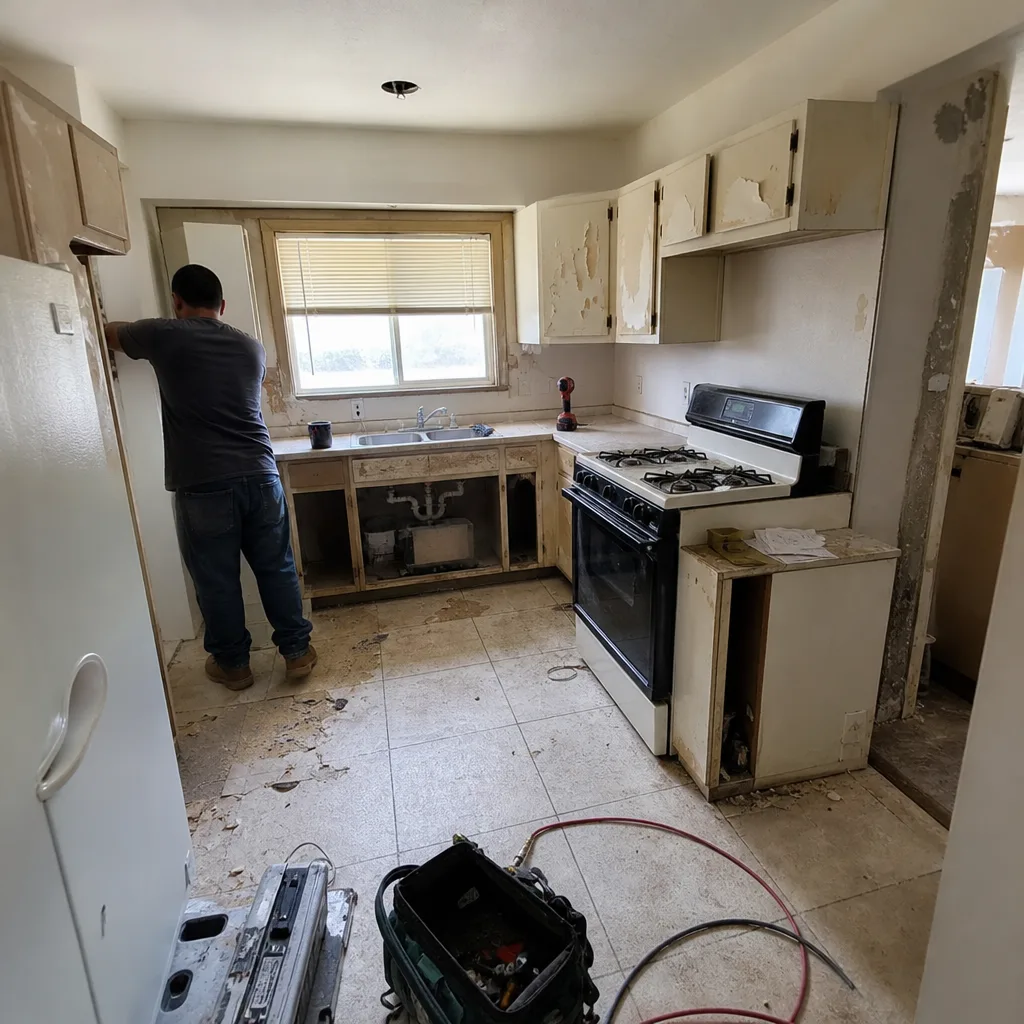 Before
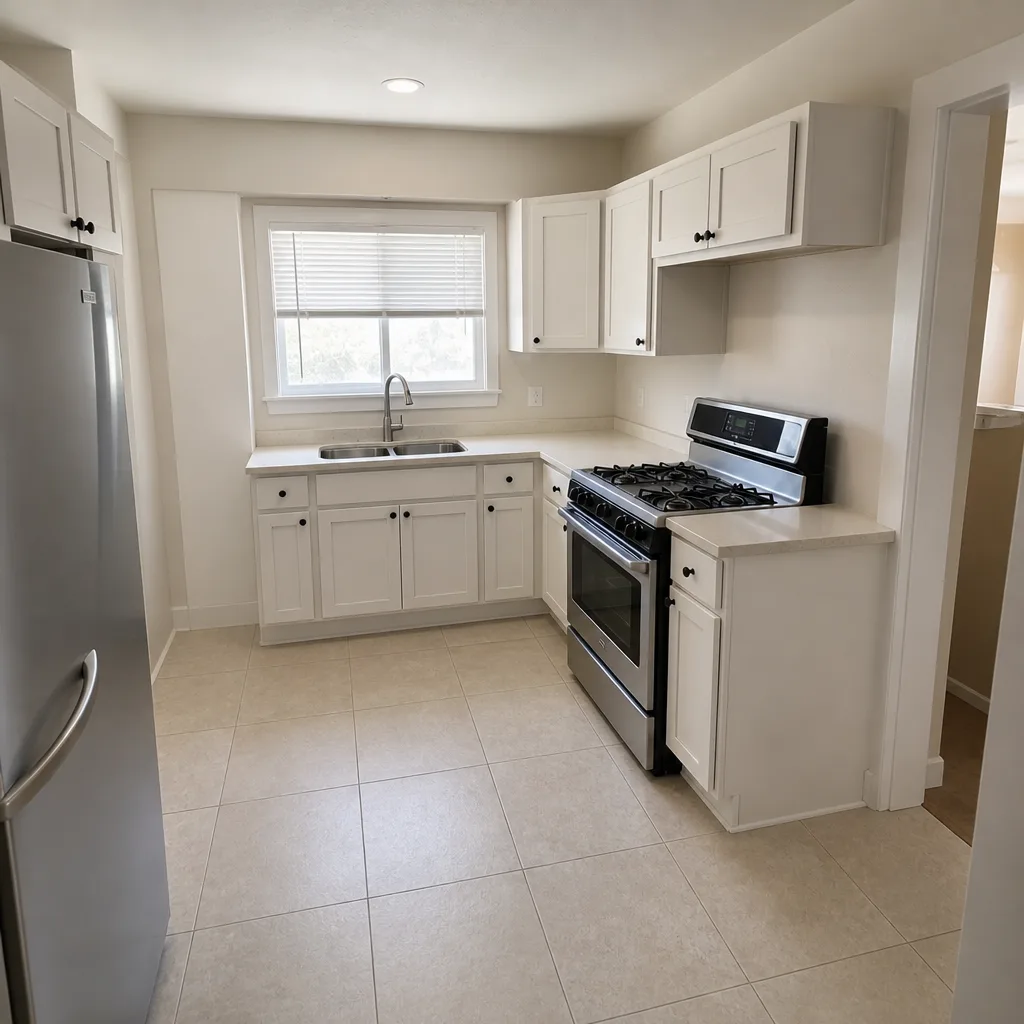 After
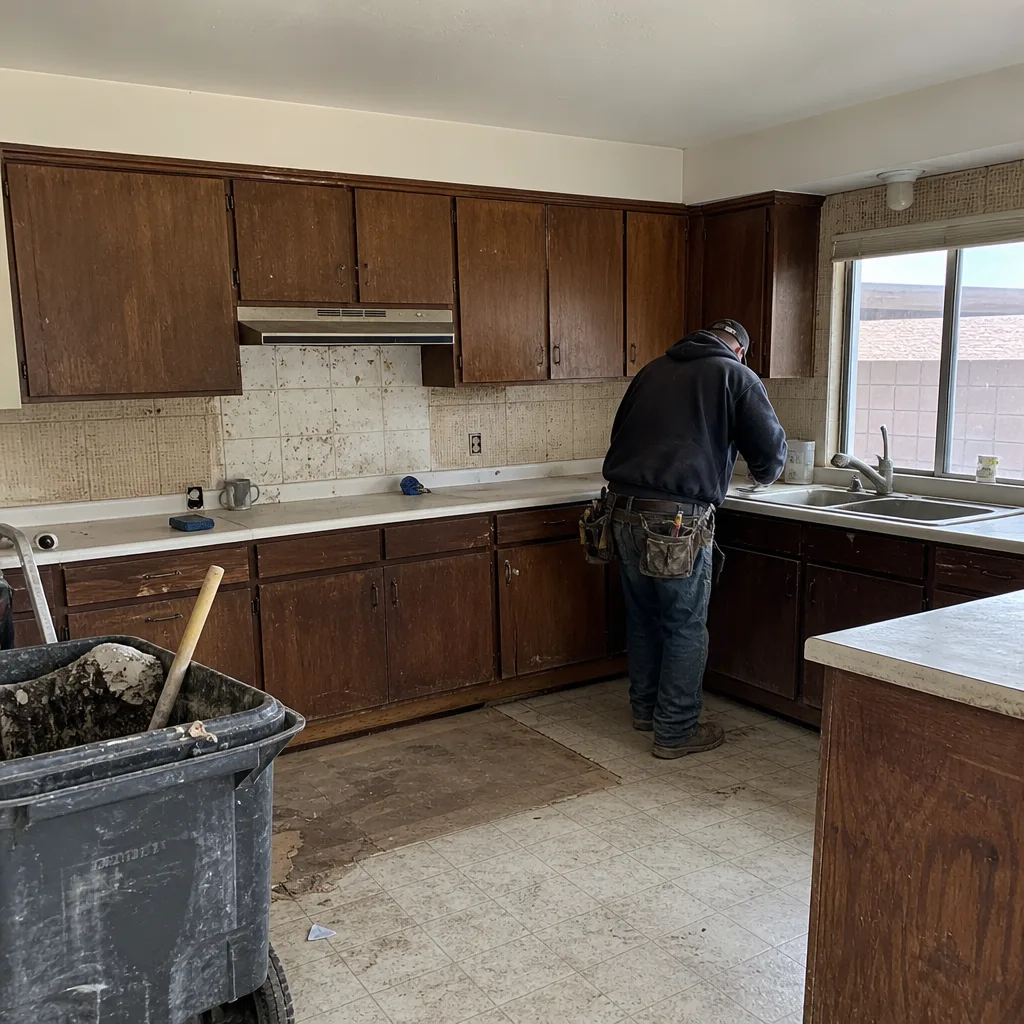 Before
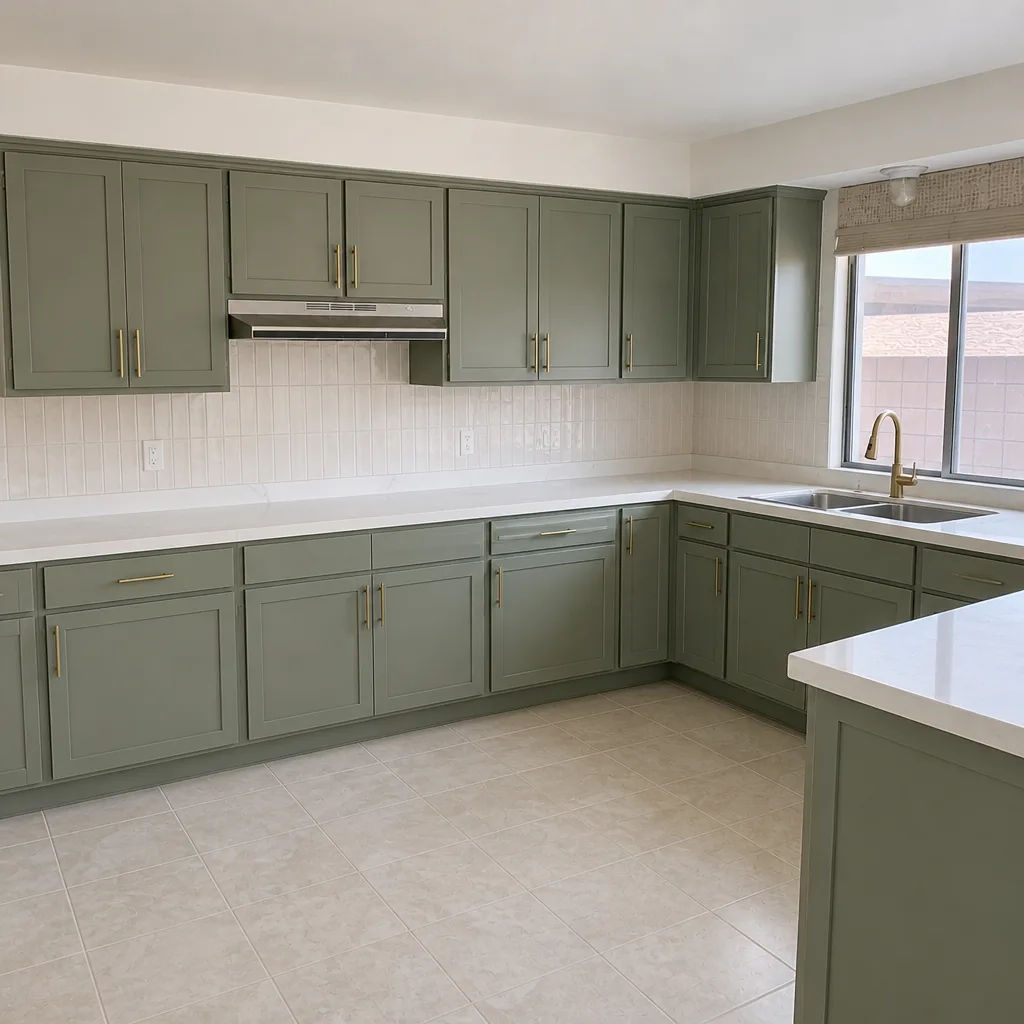 After
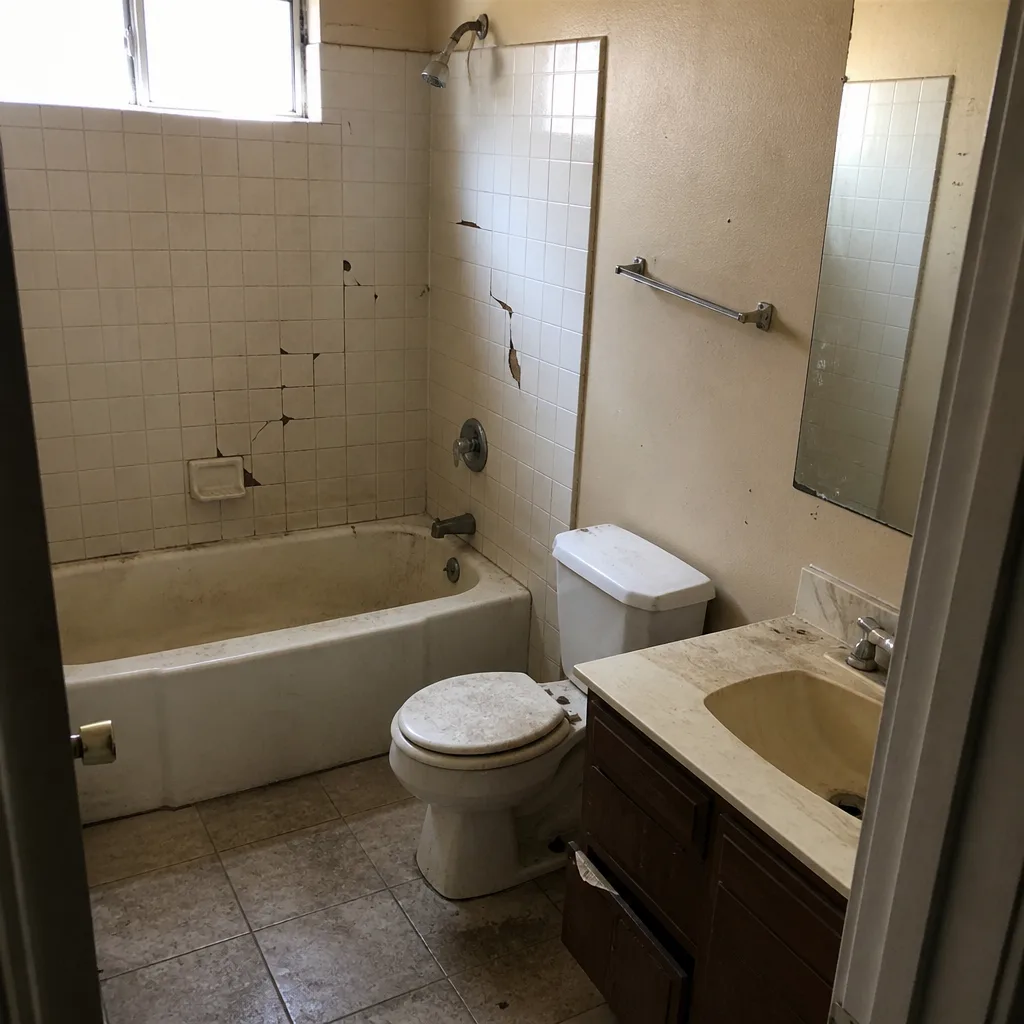 Before
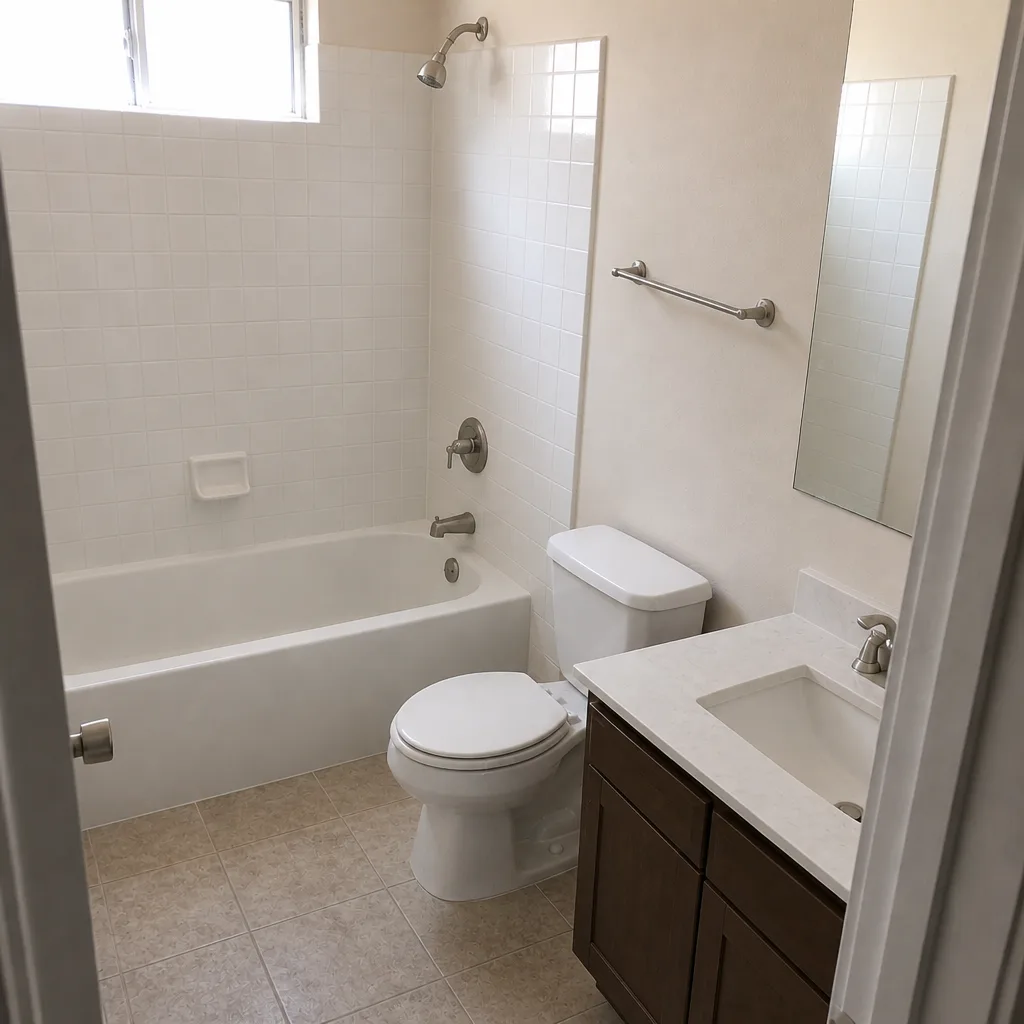 After
Frequently Asked Questions

Yes. Nevada allows homeowners to pull permits and act as their own general contractor on their own residence, and Boulder City honors that exemption. The catch is that the permit authorizes you to perform or directly supervise the work. If an inspector finds an unlicensed worker performed it under your permit, the project stops and you carry the liability.
Electrical panel and service work, gas line work, structural modifications, and load-bearing changes require a licensed contractor every time. Those four categories don’t get the homeowner exemption, and each one has a clear safety or structural reason: fire, gas, and load. Everything else can sometimes be owner-performed, but those four cannot. Call (855) 552-7882 if you’re unsure where your project falls.
The upfront price is higher, but the true comparison is closer than it looks once you add your time, error contingency, and risk of a redo. A licensed bathroom scope with a written price starts with the same materials at contractor cost and includes permit, disposal, and warranty. If your DIY estimate lands within 20 – 30% of the installed price, the risk isn’t worth it. Call for an exact quote; estimates are free.
Because low humidity hides the failure. In Boulder City’s dry air, water under the tile often doesn’t surface for 18 months, by which point the subfloor and sometimes the framing are affected. The repair becomes a floor and framing fix on top of a membrane redo, not a tile repair. A licensed installation with a proper flood test prevents the scenario before tile goes down.
Yes. Nevada disclosure requirements obligate you to describe known defects and unpermitted work when selling. A permitted, warranted project gives you documentation an unpermitted DIY job can’t provide, and it gives a buyer something to trust. The 365-Day Done Right Promise backs that record in writing.
Yes. Permitted scopes are pulled under our name, and the work is inspected and signed off by the city before we consider the project finished. That’s part of the no-hassle upfront pricing: the permit is in the written price before work starts, not added after the crew arrives. Call (855) 552-7882 for a free estimate.
The Bottom Line
The DIY-versus-hire decision in Boulder City isn’t really about skill. It’s about four licensed trades that stay licensed no matter who pulls the permit, and about hidden mistakes in a desert climate that take 18 months to announce themselves. Handle the cosmetic work yourself: interior painting, cabinet hardware, non-structural shelving, low landscape hardscape. Bring in a licensed contractor for anything that touches structure, electrical, gas, or a waterproof membrane, and ask for the written price and warranty before work starts. When you’re ready to price the part you shouldn’t do alone, call (855) 552-7882. Estimates are free, and a live person answers the phone.
Written by the team at Elmstead Remodeling Boulder City.