Last updated November 17, 2026








Free written scope consultation - allowances, timeline, and change-order rules on paper before a single trade is scheduled
Construction Emergency Preparedness Guide for Boulder City Homes
Boulder City sits inside a flash-flood-mapped corridor along the Colorado River basin, and the storm drain infrastructure that runs beneath its streets was engineered for a rainfall model that no longer matches what the region gets. Events the old maps called 100-year storms now arrive on something closer to a 25-year rhythm. That shift matters most to homeowners, because a house that hasn’t been mapped for water intrusion gets its response plan written in the middle of the crisis, at 2 a.m., with a flashlight. This guide gives you that map ahead of time: every shut-off, every phone number, every first-30-minute step, and the paper folder that lets an emergency contractor fix the problem right on the first visit.
Quick Answer
Construction emergency preparedness for a Boulder City home means mapping and labeling every water, gas, and electrical shut-off before you need them, keeping a written contact list for city utilities, NV Energy, and after-hours licensed trades, and storing permits, warranty cards, and material spec sheets in one physical folder. Homes that do this recover faster and spend less, because the first responder (often you) can stop the damage in minutes instead of waiting on a valve nobody can find.
Styles & brands we work with
- Kitchen remodeling
- Bathroom remodeling
- Home additions & ADU
- Roofing
- Windows & doors
- Driveway & pavers
- Fence
Table of Contents
- How do you locate and label every shut-off in a Boulder City home?
- Who do you call during a construction emergency in Boulder City?
- What should you do in the first 30 minutes of a water-intrusion event?
- Is that post-monsoon roof stain a one-time event or an ongoing failure?
- What documents should live in your emergency folder?
- Why does monsoon season hit Boulder City homes harder than the forecast suggests?
- What happens to a Boulder City home during a summer power surge?
- Why do unused guest bathrooms cause the worst water damage?
How do you locate and label every shut-off in a Boulder City home?
The single most useful hour you’ll spend on your house this year is the one where you walk the property and tag every shut-off with a laminated label and a one-line note about what it controls. In our experience, the number one reason a small leak becomes a five-figure repair is that nobody in the household knows where the main valve is. Here’s how to build that map.
- Main water shut-off. Look first at the meter box near the curb, then at the point where the supply line enters the house (often a garage wall or utility closet). In Boulder City, curb stops sit in a concrete or metal meter box at the property line, and the valve usually needs a specialized key or a long-handled wrench. Photograph the valve, then label the box lid with a bright tag so it’s findable in the dark.
- Individual fixture valves. Every toilet, sink, and washing machine supply should have an angle stop behind or beneath it. Turn each one closed and open once a year so it doesn’t seize. If a valve won’t budge, that’s a plumbing call, not a “leave it” call.
- Gas meter valve. The gas meter has a quarter-turn shut-off. Know where it is and how to turn it, but only close it in a confirmed gas smell or a directive from the utility. Once closed, only the utility should reopen it.
- Electrical main and sub-panels. Label every breaker in plain language (“guest bath outlets,” “garage freezer,” “primary suite HVAC”). A sub-panel in a detached garage or casita needs its own label sheet taped inside the door.
- Water heater and irrigation. The water heater has its own cold-inlet valve; the irrigation system has a backflow assembly near the main line. Tag both.
Walk the map with everyone old enough to hold a flashlight. Tape a one-page diagram inside the pantry door. Then take a photo of that diagram and text it to yourself so it lives on your phone.
Who do you call during a construction emergency in Boulder City?
Build a short contact list, print it, and stick it inside the same pantry door as the shut-off diagram. During a real emergency you will not want to be searching your phone with wet hands. Your list should have three tiers.
- City utilities. Boulder City runs its own electric, water, and wastewater utilities. Save the city utilities emergency number for water main breaks, sewer backups into the home, and downed lines. Not every Nevada municipality operates this way, which is a detail worth knowing before you need it.
- NV Energy fault line. For outages and downed power lines outside the city utility footprint, the NV Energy fault reporting line is the right call. Never approach a downed line, even if it looks dead.
- After-hours licensed trades. Line up an after-hours plumber and electrician before you need them. Ask two questions when you call: do they serve Boulder City after hours, and do they pull permits for repair work? A plumber who won’t pull a permit for a slab leak or a re-pipe is a plumber who will leave you with an unpermitted repair that complicates a future sale.
For structural work that follows a water event, we keep a written price in front of the homeowner before any repair starts. That’s how the General Contractor in Boulder City side of our work runs on every job. An emergency is when you most need that clarity, not least.
What should you do in the first 30 minutes of a water-intrusion event?
The first 30 minutes of a water event decide whether you’re looking at drywall repair or a full rebuild. The sequence below is the one we walk homeowners through when a monsoon or a burst supply line sends water into a Boulder City home.
- Stop the source. Close the fixture valve, then the main if the fixture valve doesn’t stop it. If water is coming through a ceiling, shut the main first, then move to step two. Safety note: do not stand on a wet floor near an electrical panel or outlet. If water is anywhere near wiring, treat the area as live and call for help before entering.
- Kill power to the wet zone. Only if it’s dry where you’re standing and the panel itself is dry. If you can’t reach the panel safely, evacuate the room and call.
- Photograph everything before you touch it. Wide shots of the room, close shots of the water line on the drywall, the wet flooring, and the damaged belongings. Shoot video with a slow pan. Insurance adjusters work from documentation, and the adjuster won’t arrive for hours or days.
- Extract standing water. Wet-vac and towels are fine. Do not start pulling drywall, baseboard, or flooring yourself. You can change what the adjuster sees and what a contractor can assess. Leave the demolition to the pros.
- Get air moving. Fans and open windows help. A dehumidifier helps more. If the home has any visible mold growth or a musty smell that returns within 24 hours, that’s a pro call for moisture mapping.
- Do not sign anything from a door-knocking water-mitigation crew before you’ve called your insurance company and verified the company’s license.
Write down the time the water started and the time it stopped. Adjusters care about that window, and so does your claim.
Is that post-monsoon roof stain a one-time event or an ongoing failure?
After a monsoon cell rolls through Boulder City, a lot of homeowners find a brown water ring on a ceiling or a streak on a fascia board and call us to ask whether it’s a problem. Sometimes it is, sometimes it isn’t, and the difference shows up over the next two storms, not in the days right after the first one.
Here’s how to tell the two apart.
- One-time event indicators: a single small stain, no continuing spread, and a storm history that included wind-driven rain coming sideways against a wall or under a soffit. Wind-driven water can push past a perfectly good window or vent and never return.
- Ongoing failure indicators: the stain grows after the very next moderate rain, or a second storm two weeks later produces a second stain beside the first. A stain that reappears when rain is vertical, not sideways, is almost always a flashing failure – a kick-out, a step flashing gap, or a nail that’s worked its way through a shingle.
- Age signals: on asphalt shingles past their 18th year, or on any roof with visible granule loss, the roof is due for replacement and a flashing fix will only buy you one season.
Mark the stain with painter’s tape and write the date on the tape. If it’s crept outside the tape within two storms, it’s a flashing failure. Our crews install GAF and CertainTeed systems on the exteriors side of every full replacement, and both come with manufacturer warranties a homeowner can verify by name. On a Boulder City roof, sun exposure and monsoon-driven wind both shorten the life of any flashing detail, so the fix matters more than the patch.
What documents should live in your emergency folder?
An emergency contractor can only fix the problem right on the first visit if they know what’s behind the wall they’re opening. Keep one physical folder – a real one, not a cloud folder – in the same place as the shut-off diagram. It should hold the following.
- Permit cards and inspection records for every remodel, addition, or major repair. Boulder City has its own building department and its own inspection history, so a permit card from a job done eight years ago can tell an electrician exactly which panel feeds the new sub-panel in the garage.
- Warranty paperwork for appliances, water heaters, HVAC equipment, and roofing. Manufacturer warranty support depends on the homeowner being able to name the product and the installation date.
- Material spec sheets for cabinets, countertops, fixtures, and surfaces. If a name-brand cabinet or stone counter gets damaged in an emergency, a spec sheet means the replacement matches the original on the first order.
- The written price document from every prior project. If coverage or a warranty claim comes up after a water event, this is the paper that establishes what was there before.
- Your contractor’s current contact information, including a phone number answered by a live person at all hours. That last part matters – voicemail during a crisis is a lost hour.
The folder doesn’t need to be fancy. It needs to survive a flooded cabinet. Keep it in a sealed bag.
Why does monsoon season hit Boulder City homes harder than the forecast suggests?
Monsoon rainfall in Boulder City is not falling on a city whose drainage was oversized for the conditions. The road-side drainage, the retention basins, and the storm drains were designed against a historical rainfall record. That record is no longer the measure. A rapid cell can drop more water in forty minutes than those systems anticipate, and the resulting sheet flow takes the shortest path to low ground – which is often the guest casita slab, the garage, or the low corner of a finished basement.
Two things change that calculus for homeowners who plan ahead.
- Grading and swale maintenance. The swale along the side of a Boulder City lot is doing real work for you. If it’s been filled with rock mulch, a shed, or a stray storage container, water is going somewhere else: your foundation. Clear it every spring before monsoon season.
- Surface water path awareness. Walk your lot during a light rain. Watch where water goes. If it’s pooling next to the house, that’s an afternoon of grading and a load of topsoil away from a much bigger problem.
A remodel is the honest moment to fix a grading problem, because the crew is already opening the ground and reworking the exterior details. If you’re adding an addition or a covered patio, that’s the moment to specify a positive-drainage slope away from the foundation and a proper weep detail at the base of hard-sided exterior walls. Our Elmstead Remodeling Boulder City home page covers the full range of exterior and interior project types with that drainage and water-management thinking built in.
What happens to a Boulder City home during a summer power surge?
Summer heat means HVAC equipment in Boulder City runs longer and at higher current than at any other time of year. When the grid does a fault-and-reclose event during a heat spike, the resulting surge can take out a compressor, a variable-speed blower, an appliance control board, or an older garage door opener in a single cycle. The homeowner usually finds out about it the next morning, when the AC won’t start.
What to check, once the immediate danger passes.
- Reset, don’t re-energize blindly. A tripped breaker or a tripped GFCI can be reset. Call a licensed electrician if breakers trip repeatedly, if there’s a burning smell, or if a panel is warm to the touch.
- Whole-home surge protection. A professionally installed surge protective device at the main panel protects everything downstream. Ask your electrician about it during the same visit as any other panel work.
- HVAC service contract. Schedule pre-summer HVAC service before the heat event, not after. Compressor replacements are more expensive in the middle of June than in the middle of April.
Safety note: electrical panels and wiring are genuinely dangerous. We don’t suggest DIY work on either. Call a licensed electrician for anything past a breaker reset.
Why do unused guest bathrooms cause the worst water damage?
The worst water damage we see in Boulder City homes doesn’t happen in the master bath. It happens in a guest bathroom nobody uses, in the casita, or in the powder room behind the laundry. A supply line under a rarely used sink fails slowly, and the drip runs under a cabinet, behind a wall, into the subfloor, and sometimes into the ceiling of the room below. Nobody notices for a week.
The pattern is predictable enough to plan around.
- Exercise the valves. Turn the angle stops on and off once a quarter. The same goes for toilet supply lines and the washing machine hoses. Braided stainless steel is more durable than the older rubber hoses and worth the upgrade.
- Do a bathroom walk-through. Once a month, walk every bathroom in the house and press a paper towel against the base of the toilet and the cabinet floor. If it comes away damp, you’ve caught it early.
- Know your sub-floor. In a home with plumbing on the second floor, a slow leak is a ceiling problem in the room below. A water alarm under the vanity is a small, cheap addition that can save a full ceiling replacement.
If a Boulder City guest bath is due for an update anyway, a planned remodel is the moment to move the shut-off valve to an accessible location and specify a water-resistant backer board behind the tile. It’s the kind of detail the Bathroom Remodeling in Boulder City work we do is built around, and it matters most in bathrooms that sit unused for months at a time.
Common Mistakes to Avoid
- Not labeling the main shut-off. The valve in the dark meter box at the curb belongs in your memory and on a laminated tag on the lid, taped to the pantry door, in a photo on your phone, and in the contact list. Four locations, one valve.
- Leaving the guest casita unattended. In Boulder City, casitas, pool cabanas, and detached garages frequently sit outside the main house’s water and electrical awareness. Walk them once a month.
- Signing with a door-knocking water-mitigation crew. After a monsoon, out-of-town crews knock. Verify a Nevada contractor license before signing anything, and call your insurance company first.
- Pulling drywall yourself. It changes what the adjuster can assess, and in older homes it can expose materials that need a trained eye. Document, extract water, and stop there.
- Ignoring a roof stain that repeats. One stain after one wind-driven storm is fine. A stain that grows after a second storm is a flashing failure and will repeat every season until it’s fixed.
- Skipping permit paperwork. Permit cards, warranty cards, and material spec sheets kept in a sealed folder make an emergency contractor’s job measurably faster. That speed is worth real money.
- Doing electrical or gas shut-off work on your own. Panels, wiring, and gas lines are genuinely dangerous. Turn the gas valve only in a confirmed emergency, and call a licensed pro for anything past a breaker reset.
See the difference
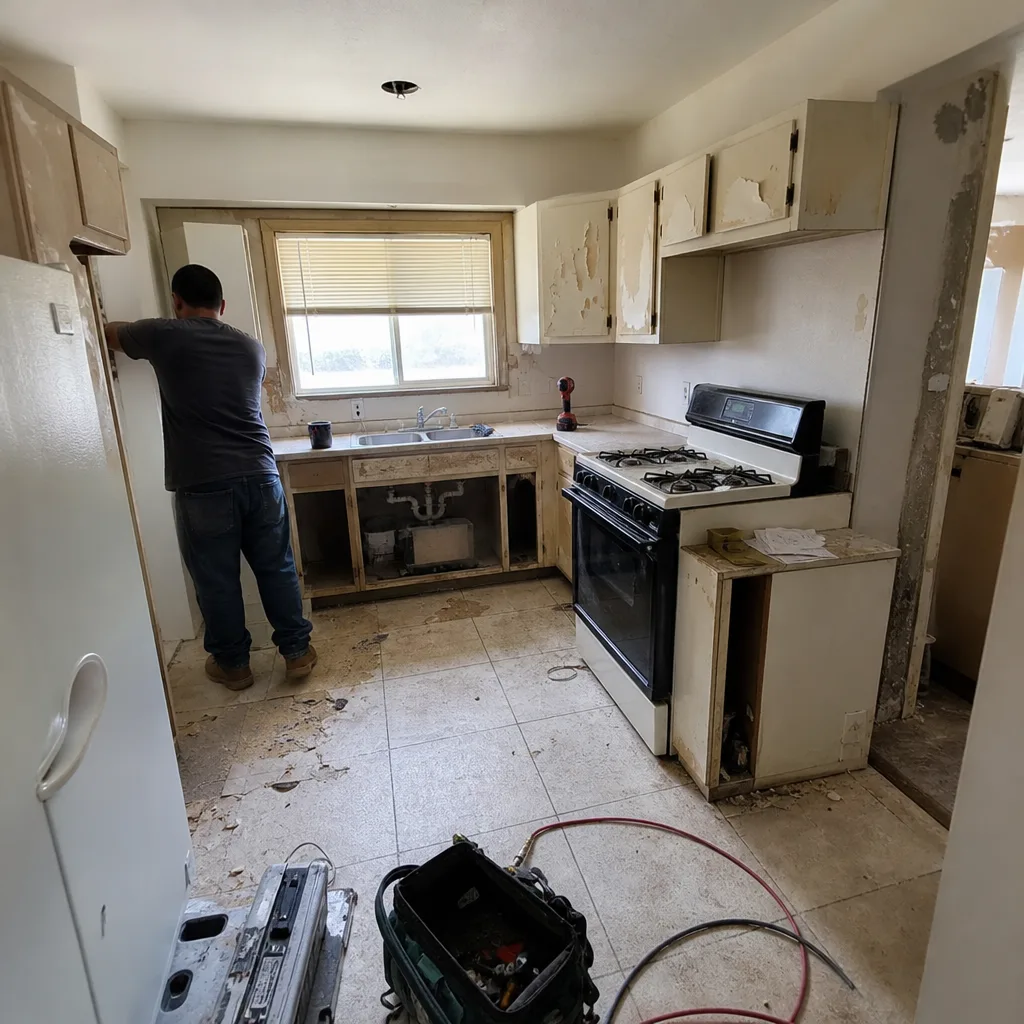 Before
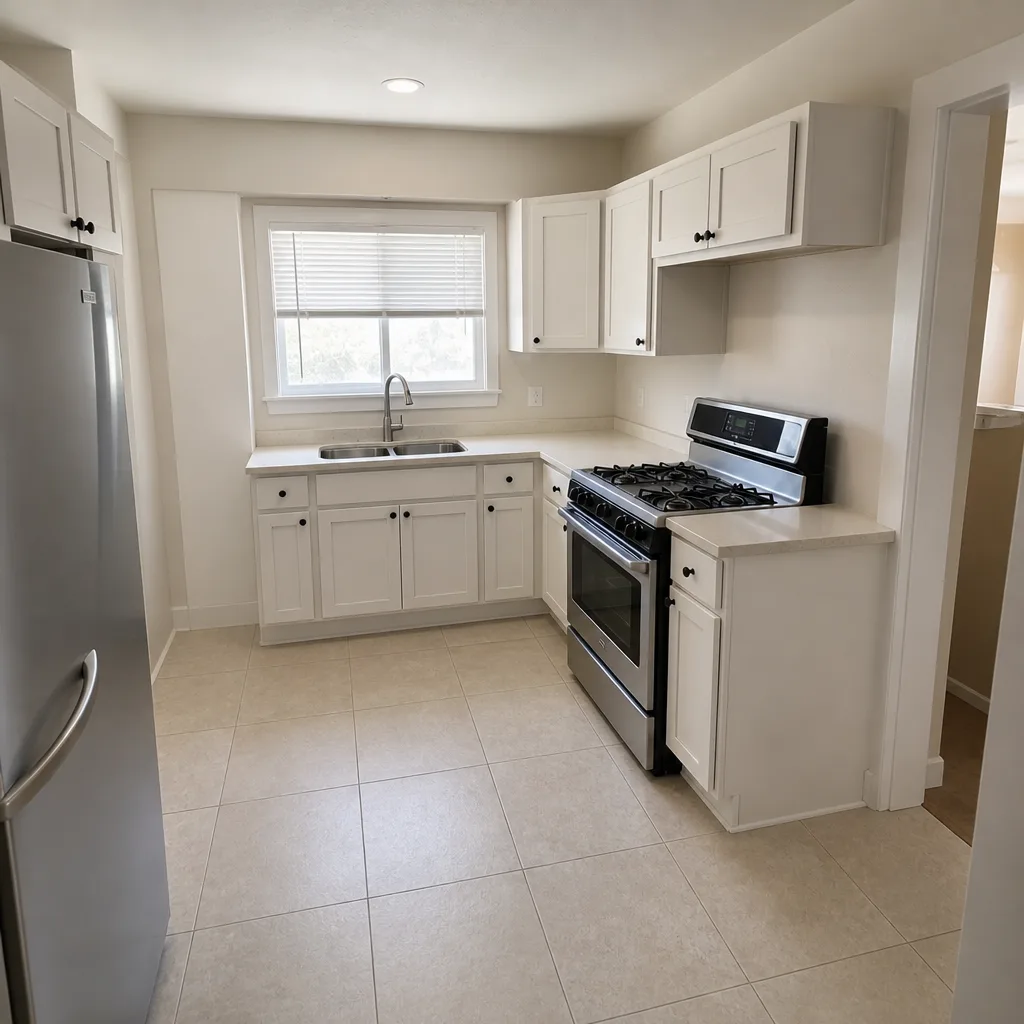 After
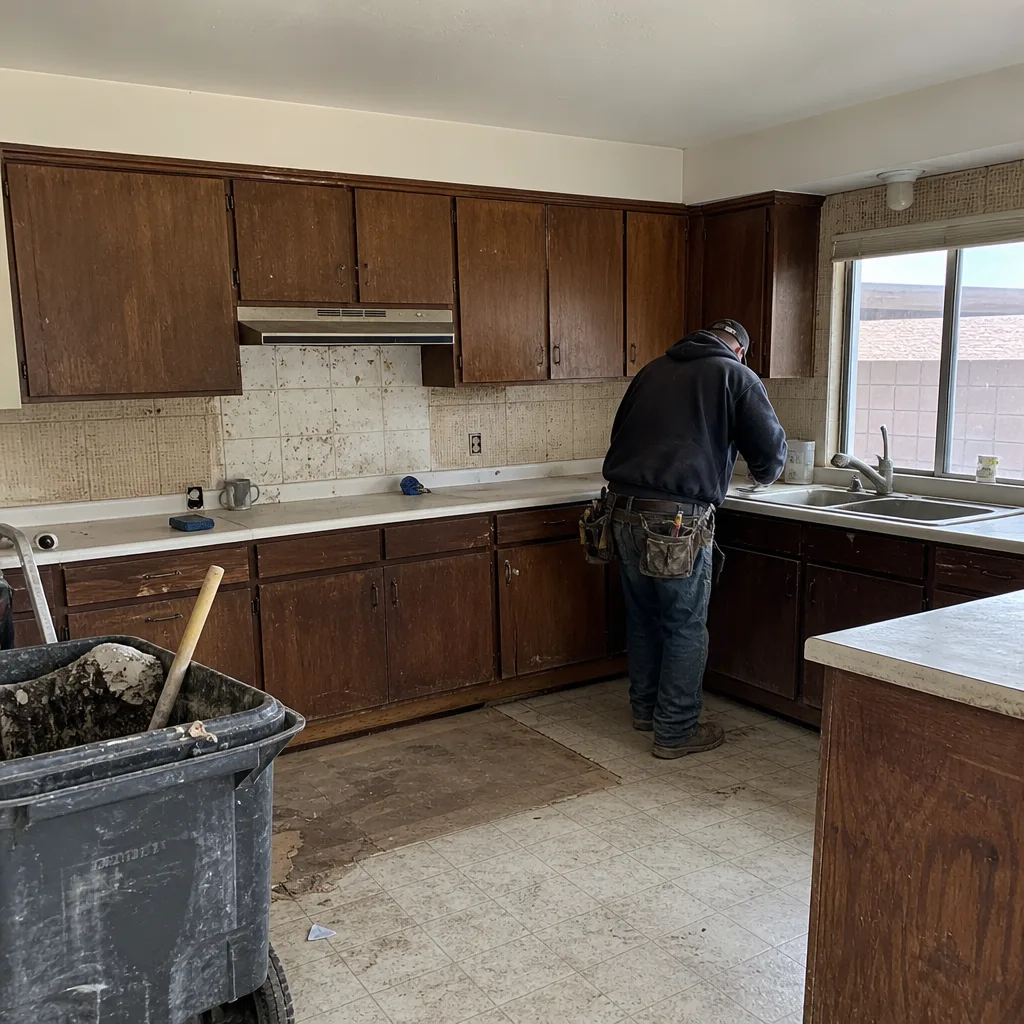 Before
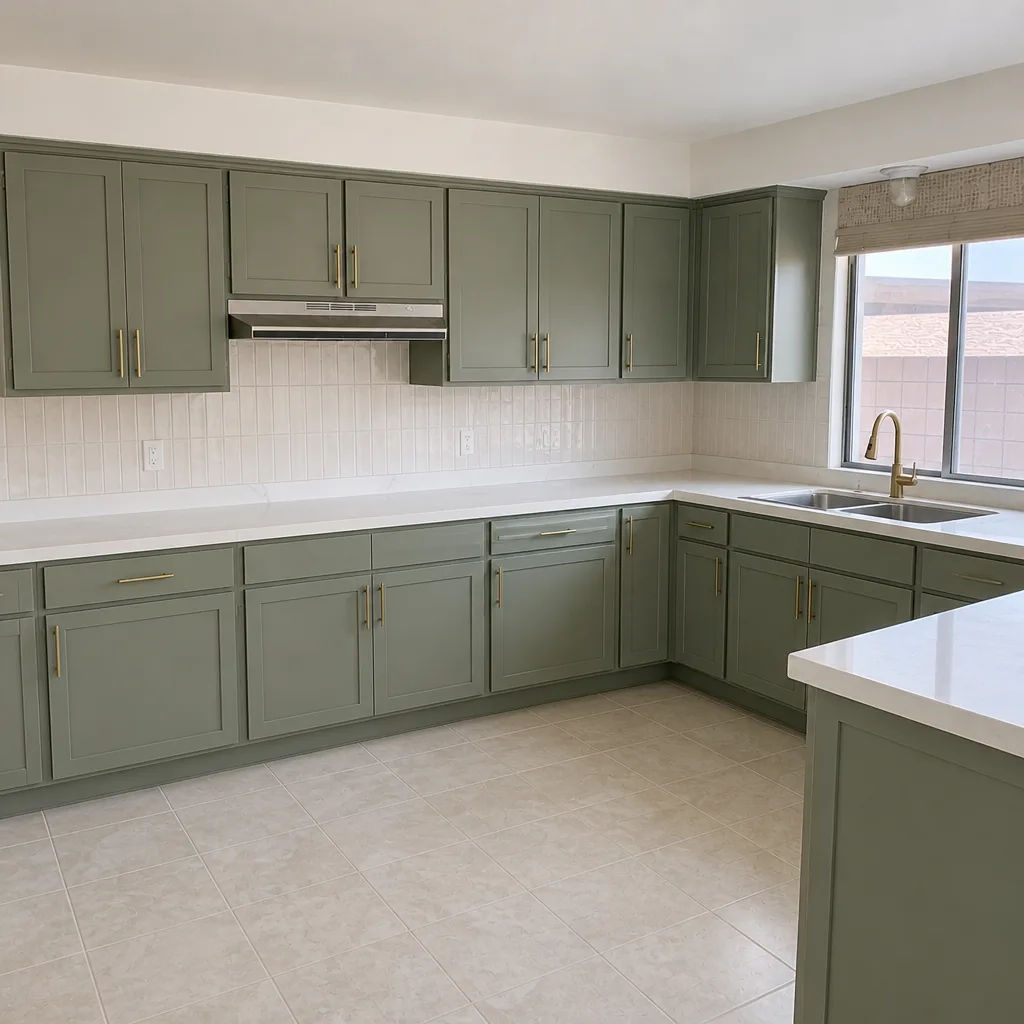 After
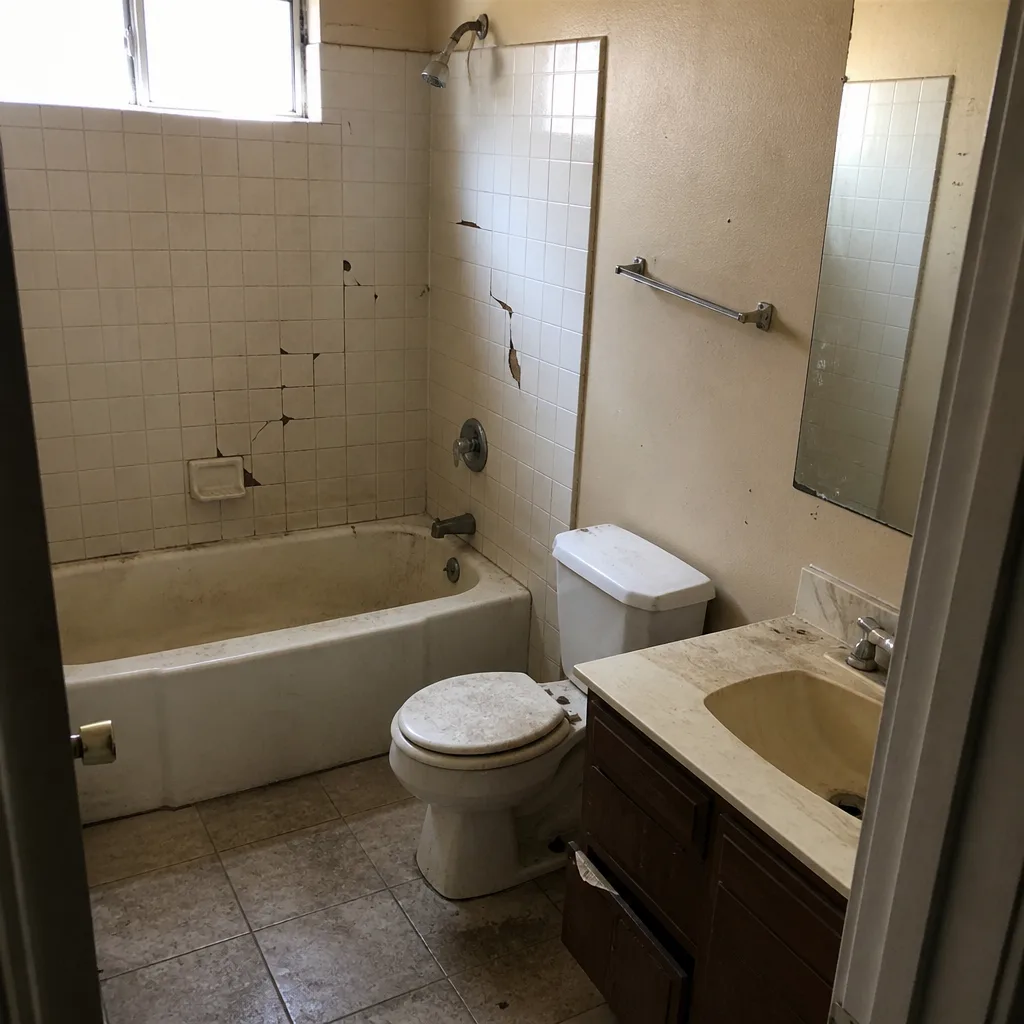 Before
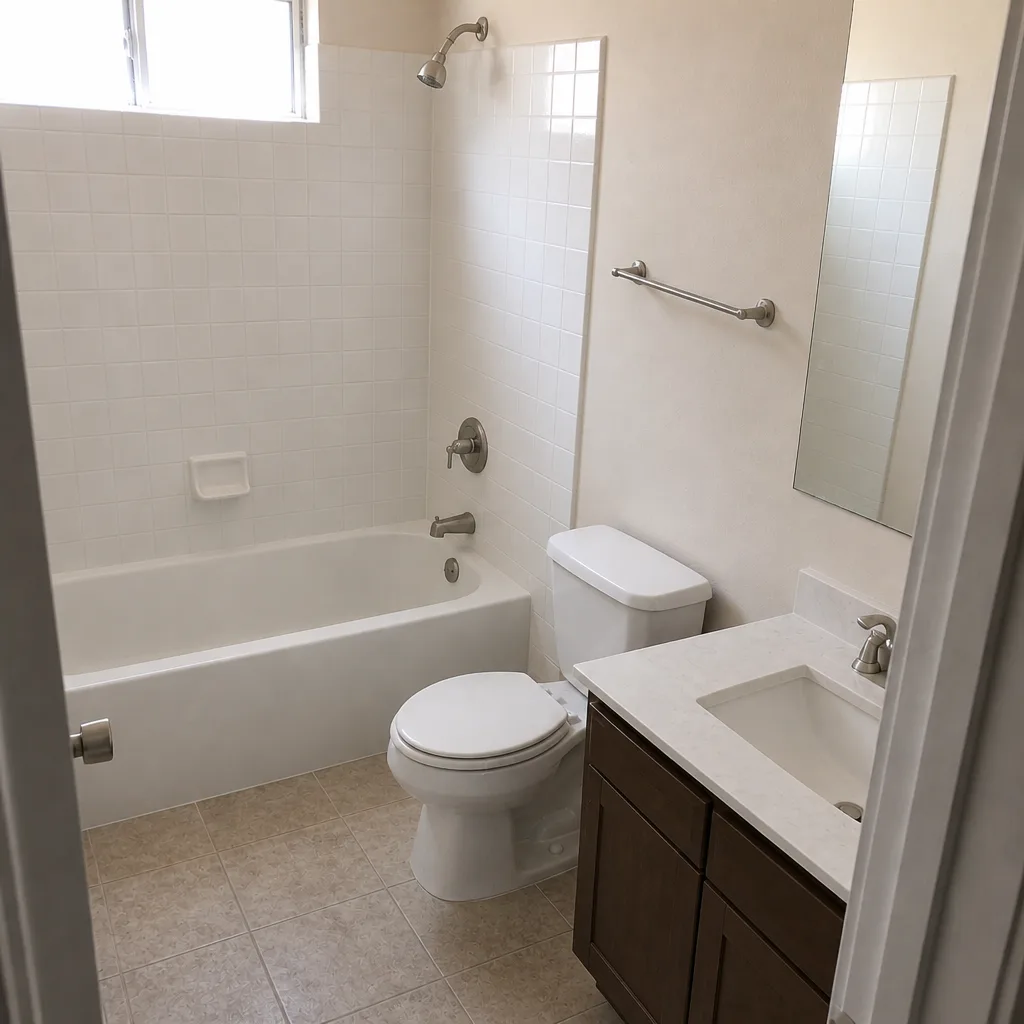 After
When to Call a Professional
Call a licensed professional the moment the damage involves anything beyond a wet towel and a shop vac. That includes: water that reaches wiring or the electrical panel; any gas smell; any ceiling that’s sagging under water; a water heater that’s leaking from the tank itself; a slab leak; repeated breaker trips after a power event; a roof stain that reappears; visible mold growth; and any structural repair after a water event. Slow leaks behind guest-bath cabinetry and behind the laundry warrant a pro visit because they’re often broader than they look. Elmstead Remodeling Boulder City offers free estimates in Boulder City – call (855) 552-7882. We give you a written price before any work starts, and every project is covered by the 365-Day Done Right Promise.
Frequently Asked Questions

Look first at the meter box at the curb near the property line, then at the point where the supply line enters the house – typically a garage wall, utility closet, or exterior hose bib area. In Boulder City, the curb stop sits inside a concrete or metal meter box and often needs a specialized key or a long wrench to turn. Photograph the valve, tag the box lid, and tape a diagram inside the pantry door. If you can’t find it in 10 minutes, call a licensed plumber to walk the system with you.
Stop the water at the fixture valve, then the main if needed, and get power off to the wet area only if it’s safe to reach the panel. Photograph everything before you move it, extract standing water with a wet-vac, get air moving, and stop there. Don’t pull drywall or flooring. Call your insurance company and a licensed contractor. For an exact scope and price, call (855) 552-7882 – estimates are free.
No. A single stain after a wind-driven storm can be a one-time event from sideways rain pushing past a window or vent. Mark the stain with painter’s tape, write the date on the tape, and watch it through the next moderate rain. A stain that grows after a second storm – especially during vertical rain – is an ongoing flashing failure and will repeat every season. Call a licensed roofer for an inspection if the stain spreads. Call (855) 552-7882 for a free estimate if the repair turns into a full roof or exterior scope.
Usually yes, if the repair involves structural framing, electrical, plumbing, or mechanical work. Small drywall and finish repairs may be exempt, but the line isn’t always obvious. A licensed contractor will know the Boulder City permit threshold for your specific repair and will pull the permit for you. Written price first, permit pulled, and inspection passed is the sequence to insist on. Call (855) 552-7882 for a free estimate on a permitted repair scope.
It depends on the source. Sudden and accidental water damage from a burst pipe or a failed appliance is generally covered; gradual seepage and repeated flooding are often excluded. Photograph everything before you move it, keep receipts for any emergency extraction, and call your adjuster before you sign anything with a mitigation crew. A licensed contractor can give you a written repair scope the adjuster can work from. For that written scope, call (855) 552-7882 – estimates are free.
Small drywall and finish repairs usually run a few hundred dollars to roughly $1,500, while a repair that reaches subfloor, framing, or cabinetry frequently runs $2,500 to $8,000 or more depending on scope. Extraction and drying is typically billed separately from reconstruction. Because the range is wide, get a written scope before any work starts. Call (855) 552-7882 for a free estimate; we hand you the written price before any work begins.
The Bottom Line
Emergency preparedness for a Boulder City home comes down to a handful of concrete things you do on a calm afternoon: tag every shut-off, print the contact list, mark the roof stain with tape and a date, and keep one sealed folder for permits, warranties, and spec sheets. Do those four things and a monsoon cell, a summer surge, or a slow leak in the guest bath becomes an inconvenience rather than a rebuild. When a repair does cross into licensed trade work, call a contractor who answers the phone with a live person, gives the written price before any work starts, and stands behind the finished result. That’s the standard we build our work around. For a plan, a written price, or an estimate on any of the repair scopes covered in this guide, call Elmstead Remodeling Boulder City at (855) 552-7882.
Written by the team at Elmstead Remodeling Boulder City.