Last updated November 17, 2026








Free written scope consultation - allowances, timeline, and change-order rules on paper before a single trade is scheduled
Construction Warning Signs: A Boulder City Homeowner’s Reference Guide
A diagonal crack running from the corner of a window at roughly 45 degrees is one of the most common things homeowners paint over in Boulder City – and one of the clearest early signals of differential foundation settlement in expansive desert soil. That single repair costs $4,000 if you catch it early and can run toward $40,000 if you let the soil keep working for a few more monsoon cycles. The good news is that most warning signs in a desert home are readable long before they turn expensive, if you know what each one is actually telling you. This guide walks you through the structural, waterproofing, floor, framing, and roof signals we look for in Boulder City homes, and how to tell a stabilized problem from an active one.
Quick Answer
In Boulder City, the construction warning signs that matter most are diagonal stair-step cracks in stucco, white efflorescence on block walls, floors that flex beyond L/360 for tile, doors that bind only in the hottest or coldest weeks, and ceiling stains that appear during monsoon season. Each points to a specific desert cause – expansive clay soil, UV-driven sealant failure, or HVAC condensate – and the pattern tells you whether the problem is still active or already settled.
Styles & brands we work with
- Kitchen remodeling
- Bathroom remodeling
- Home additions & ADU
- Roofing
- Windows & doors
- Driveway & pavers
- Fence
Table of Contents
- How to read stucco and wall cracks in Boulder City
- How do you tell if a crack is active or stabilized?
- What white deposits on block walls tell you about moisture
- Floor and ceiling deflection: what’s normal, what’s not
- Why doors and windows bind seasonally in Boulder City
- Reading roof and attic warning signs after a monsoon
- Common mistakes to avoid
- When to call a professional
How to read stucco and wall cracks in Boulder City
Stucco is the dominant wall finish in Boulder City, and it cracks. That’s normal. What isn’t normal is the shape and location of the crack. The pattern tells you which system is moving underneath it.
Every stucco wall expands and contracts through a temperature swing that runs from roughly 25°F on a January morning to 110°F in July. Over a few decades, that cycling works hairline cracks into the finish coat. Those cracks are usually random, short, and under an eighth of an inch. They’re a paint-and-seal problem, not a structural one.
Structural cracks look different. Here’s how we read them:
- Diagonal stair-step cracks at corners of windows and doors – usually differential settlement. Expansive clay soil under part of the foundation is swelling and shrinking while the rest holds steady, and the wall cracks at the weakest point, which is the corner of an opening.
- Horizontal cracks in a block wall, running along a mortar joint – often a retaining or site wall issue where water has been pooling behind the block. Active.
- Vertical cracks down the middle of a long wall – usually a control joint or a thermal crack. Frequently cosmetic. Check that the control joint isn’t filled with paint or sealant; if it’s blocked, the wall cracks somewhere else.
- Cracks wider than a quarter inch, or any crack with visible displacement on either side – always worth a professional look, whatever the orientation.
Boulder City sits on soil that behaves differently than Las Vegas Valley clay a few miles away; the caliche and decomposed granite mix under many Historic District lots is more stable, but the fill pads under newer builds in the surrounding subdivisions move more than homeowners expect. A crack that’s a real problem in one neighborhood may be cosmetic a mile away. That’s why the pattern matters more than the width alone. If the crack concerns you, our General Contractor in Boulder City team can look at it and tell you plainly what you’re dealing with.
How do you tell if a crack is active or stabilized?
You date the crack. A pencil mark, a photo, and a calendar will tell you more in sixty days than any inspection – because you’re measuring movement, not guessing at it.
Here’s the method we recommend to every Boulder City homeowner:
- Take a dated photo of the crack with a ruler or a coin taped next to it for scale. Note the date.
- Draw a pencil line across the crack at the widest point – perpendicular to it – so any further movement breaks the line.
- Repeat every 30 days through at least one full seasonal swing, ideally from summer into winter. Desert soils move most in response to soil moisture, not temperature, so watch it through a wet season and a dry one.
- Log the width in tenths of an inch each time. A crack that grows by an eighth of an inch or more across the monitored season is active and should be looked at now.
- Check interior corners in the same room. An active stucco crack usually has a companion drywall crack at the ceiling or the interior corner on the same wall line. If the inside is cracking too, the movement isn’t just in the finish coat.
What you do with the result changes everything. A stabilized crack – one that hasn’t moved in six months – is a finish repair. An active crack needs the cause addressed before any finish goes back on, or it’ll reopen in a year. Nobody fixes a symptom well without finding the source, and that’s the whole point of dating the crack first.
What white deposits on block walls tell you about moisture
Efflorescence is the white, chalky or powdery deposit that shows up on concrete block, brick, and sometimes stucco. It’s salt that’s been carried to the surface by water moving through the masonry and then evaporated. The deposit itself is harmless. What it tells you is that water is traveling through that wall – and in a dry desert climate, water shouldn’t be.
Where you see it in Boulder City matters:
- Efflorescence on the lower courses of a block wall near a planter or irrigation line – almost always from irrigation overspray or a broken drip line. Usually fixable by moving the water source.
- Efflorescence on a retaining wall’s face – water pooling behind the wall because the drainage isn’t working. Over time, the built-up hydrostatic pressure pushes the wall while the salts keep appearing. Worth a look.
- Efflorescence inside a garage on the block wall – often a slab moisture issue or a roof leak running down the inside of a wall cavity.
- Efflorescence on stucco, especially with a soft or chalky texture – the stucco isn’t shedding water as designed. UV and dust degrade the finish coat in Boulder City faster than in wetter climates, and resealing or repainting is part of routine maintenance.
If you see efflorescence, don’t seal over it. Sealing traps the salts and moisture inside, and the pressure will find a different exit – usually a crack. Find the water path first, correct it, let the wall dry, then seal. In our experience with Boulder City homes, a hose bib left dripping against the wall for a summer accounts for more efflorescence than most people would guess.
Floor and ceiling deflection: what’s normal, what’s not
Floors flex. It’s a fact of wood-framed construction. The question is how much, and the answer has a number attached to it. Structural engineers use a “deflection ratio” – the amount the floor sags relative to its span – and different finishes tolerate different amounts.
- L/360 – the floor can sag 1 inch over a 30-foot span. This is the standard minimum for tile and most stiff finishes. Tile is brittle, and if the floor moves more than this under normal loads, the tile cracks. If you’ve got hairline cracks in a tile floor near the middle of a room, the floor is likely flexing past this threshold.
- L/240 – the floor can sag 1 inch over a 20-foot span. This is the minimum for hardwood, carpet, and other more forgiving finishes. It’s more flexible than tile tolerates, but a floor exceeding L/240 feels bouncy underfoot and is worth checking.
To read the floor yourself: walk slowly across the middle of the room and watch a glass of water on a table, or a level on the floor. A noticeable ripple or a level that swings more than a quarter bubble in a six-foot span is your cue to look underneath. In Boulder City, the two culprits we see most are undersized joists from an older build that’s since had a heavy tile floor added above, and termite or moisture damage to a joist that’s lost section at a bearing point.
Ceilings have their own deflection signals. A ceiling that sags visibly between joists – especially after a summer where the attic got to 150°F – is often a sign of a joist that’s warped or a drywall sheet that was never properly screwed. It’s usually cosmetic, but a sagging ceiling directly beneath a bathroom is worth investigating before the next monsoon finds the seam.
Why doors and windows bind seasonally in Boulder City
A door that sticks in July and frees up by October is telling you something about the wood, the framing, or the threshold – not just the humidity, because Boulder City doesn’t have much to offer there. Interior relative humidity through the summer runs around 20-30%, far too dry to swell a door by itself.
The usual causes, in rough order of likelihood:
- A framing issue moving with the season – if the header above a door has settled or the wall is on active soil, the opening racks slightly. The door binds not from swelling but from the frame getting slightly out of square.
- A threshold that has moved – on exterior doors, the threshold plate settles with the slab or the stoop, and the door drags on it as the slab rises and falls through the summer heat.
- Painting over the edges of the door without sealing the end grain – the door absorbs and releases ambient moisture unevenly, and it warps. Paint on the top and bottom edges prevents that.
- A hinge that’s loose – one stripped screw in a top hinge will shift the door’s swing. This one is a five-minute fix, not a structural symptom.
If the binding door is on the same wall as an active stucco crack or a window corner crack, treat it as part of the same story. A wall that’s moving can make one door bind, a window stick, and a corner crack all at once. If the door binds alone, look at the door. If three openings on the same wall all bind, look at the wall. We’ve seen more than one Boulder City home where a homeowner replaced two doors before anybody checked the slab.
Reading roof and attic warning signs after a monsoon
Boulder City’s monsoon season, roughly July through September, is the annual test of every roof. Ceiling stains that appear then disappear are the most misread warning sign we see. The stain matters less than the pattern – and the timing – because two very different problems make very similar brown rings.
Monsoon roof leaks usually show up as a stain that’s crisp-edged, appears within a day or two of a heavy downpour, and is directly below a known roof feature on the east or south slope where wind-driven rain lands hardest. If you go into the attic during the storm and see water on a rafter or a truss chord, it’s the roof, no question.
HVAC condensate leaks show up as a slower, softer stain – often warmer to the touch, often near the air handler closet or below the evaporator coil drain line. They grow through the summer regardless of rain and appear almost every day once the AC runs hard. Condensate line clogs and failed secondary drain pans are common here because the dry air makes the primary drain line crust up with mineral scale faster than a homeowner expects.
How to tell them apart – a three-step approach:
- Watch the stain through a dry week. If it grows larger during dry weather with the AC running, it’s almost certainly condensate.
- Check the attic above the stain after a heavy rain. Water on the sheathing or a dark drip trail on a rafter confirms the roof. Dry wood after a heavy rain suggests HVAC.
- Look at the AC drain line. If the primary drain is clogged or the pan has standing water, that’s your answer before you call a roofer.
Whatever the cause, don’t paint over the stain before identifying it. You’ll lose the outline that would have told the next technician exactly where the water was coming from. For roofing, we recommend GAF products because the manufacturer’s warranty is verifiable and travels with the house.
Common mistakes to avoid
- Painting over a diagonal crack without dating it first. Once the crack is painted, you’ve lost the evidence of where the movement is and whether it’s active. Photograph and pencil-line the crack before any cosmetic work goes on it.
- Sealing efflorescence instead of chasing the moisture source. Sealing traps the salt inside the wall, and the pressure finds a weaker exit – usually a new crack. Find the water first, then seal once the wall has dried.
- Blaming a sticking door on humidity in July. Boulder City’s summer air is dry, so a door that binds in summer is almost always a framing, threshold, or hinge issue. If you replace the door and it sticks again next summer, you’ve only treated the symptom.
- Assuming a bouncy tile floor is just an old floor. Tile flexes for a reason – usually a subfloor that wasn’t built to the L/360 standard. If you tile over it again, the new tile cracks too. Fix the floor first.
- Ignoring a ceiling stain because it stopped growing. A stain that appears during monsoon and stops when the rain stops is still a roof leak. It’ll come back every year until the source is fixed, and the sheathing under it will degrade the whole time.
- Trying to fix structural cracks yourself with a stucco patch and paint. If the underlying movement isn’t addressed, the patch fails and you’ve spent the money anyway. Get a professional read on the cause before any finish work.
- Skipping the drip line check every spring. A slow drip from a hose bib or irrigation line against a block wall causes more moisture damage in Boulder City than homeowners believe. Walk the perimeter every spring and check the spigots, the drip lines, and the base of every wall.
When to call a professional
Call a professional when the crack grows past an eighth of an inch in a monitored season, when a diagonal crack is wider than a quarter inch or has visible displacement, when two or more openings on the same wall bind at once, when a floor feels noticeably bouncy underfoot, or when an attic leak appears during a dry week. Those are the cases where the cause needs to be identified before any finish repair, because the finish is only as good as the structure underneath it. Elmstead Remodeling Boulder City offers free estimates in Boulder City – call (855) 552-7882. If a stucco or structural repair grows into a larger project, our Bathroom Remodeling in Boulder City and Kitchen Remodeling in Boulder City teams can walk the same signs on the inside of your house and give you a written price before any work starts.
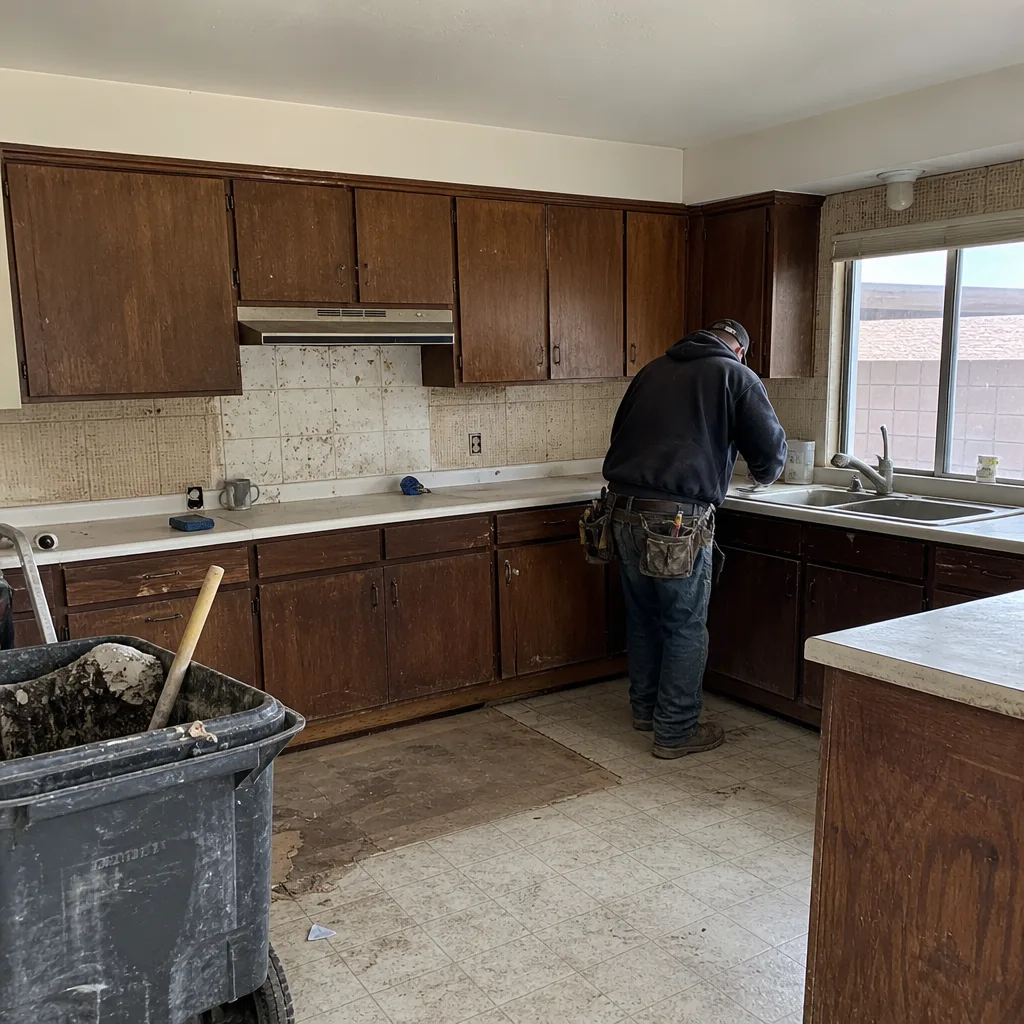
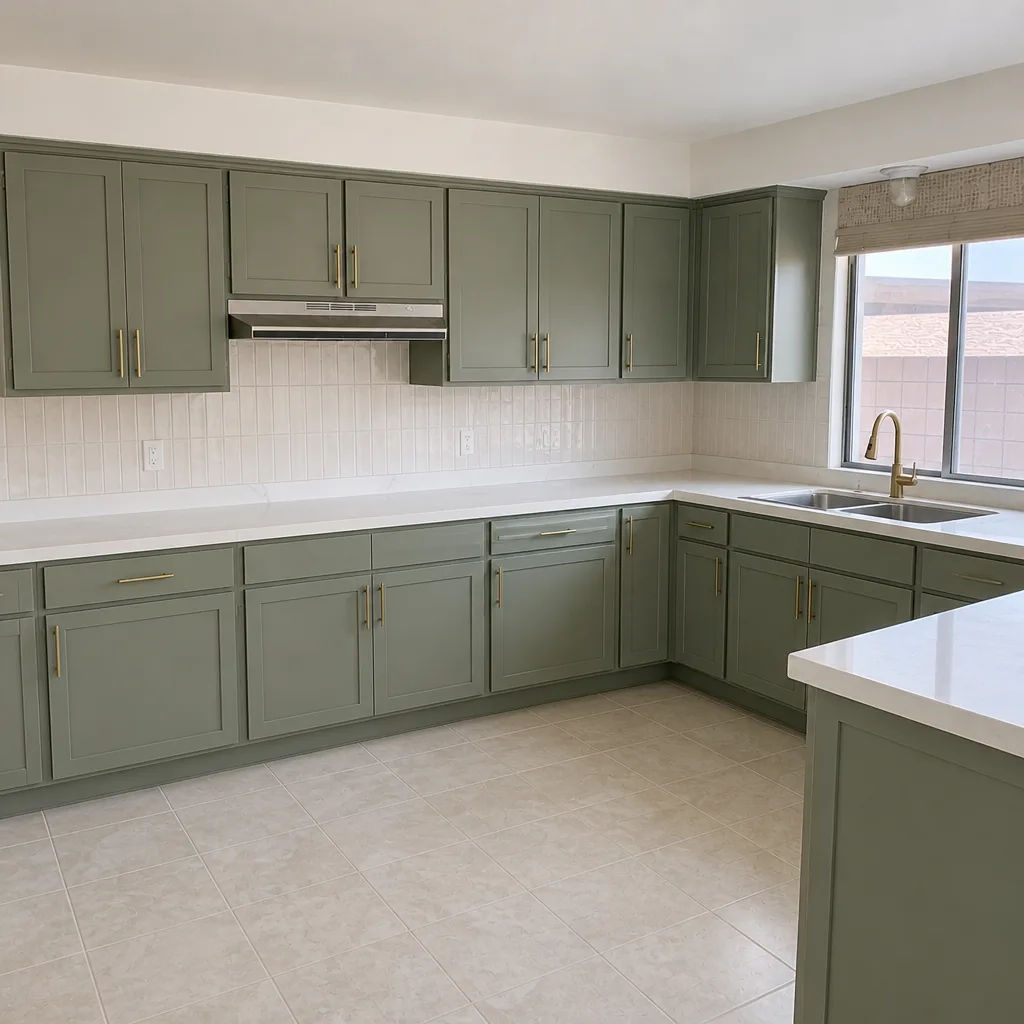
See the difference
 Before
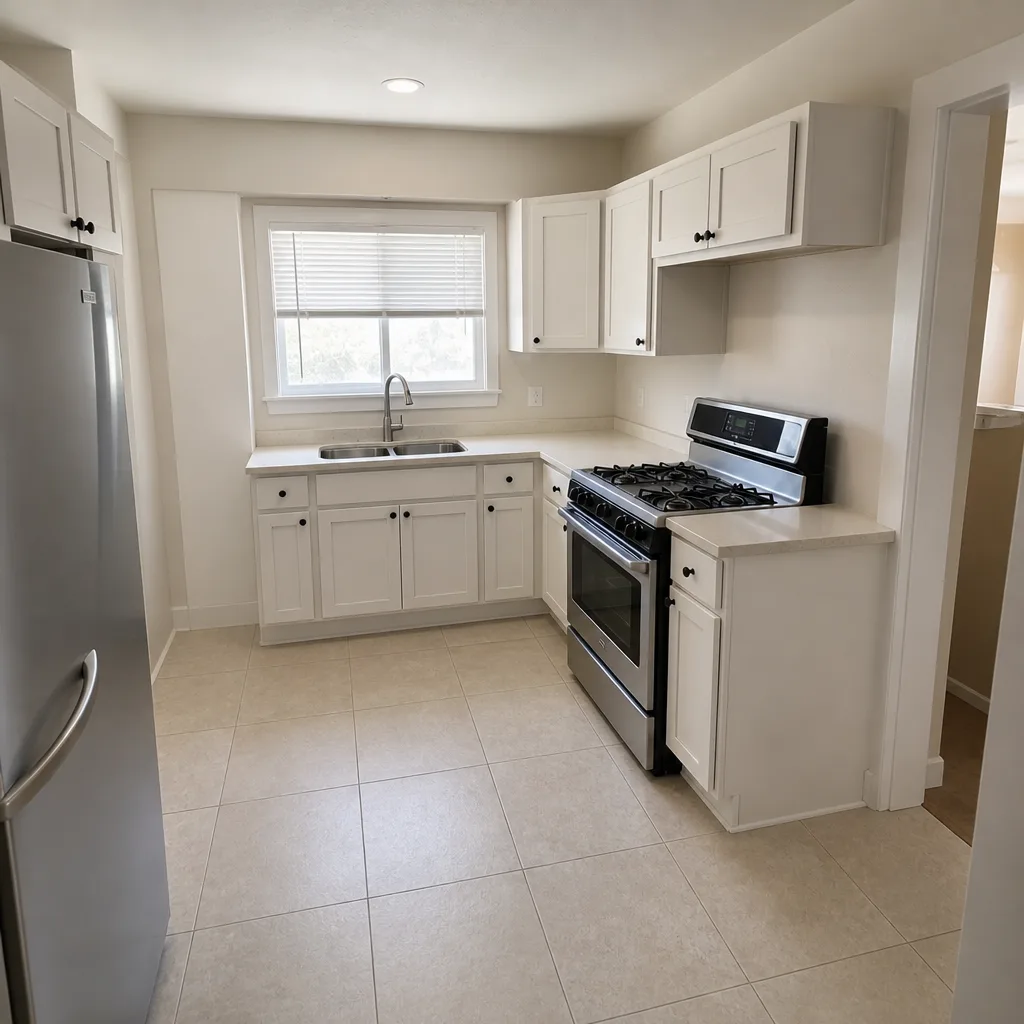 After
 Before
 After
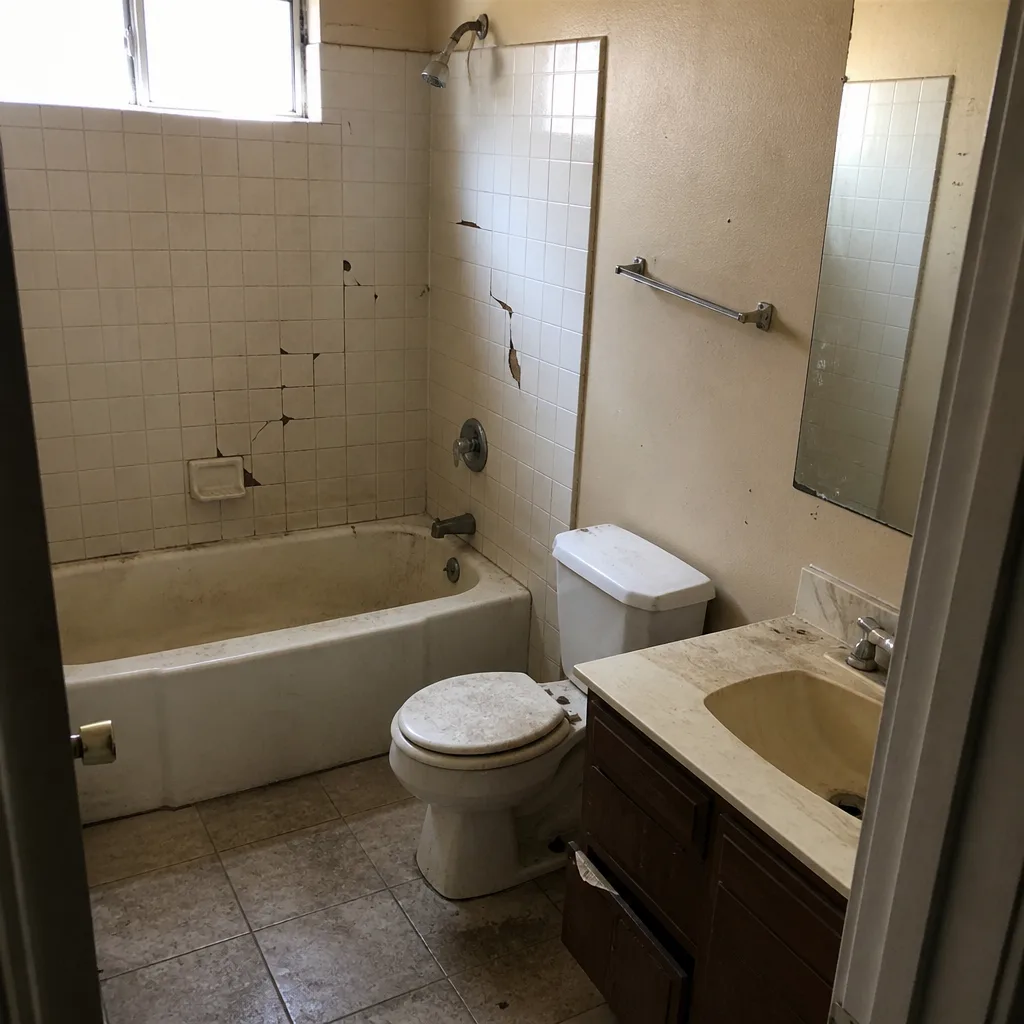 Before
 After
Frequently Asked Questions

A stucco crack is likely structural if it’s diagonal, runs from the corner of a window or door at roughly 45 degrees, is wider than a quarter inch, or has visible displacement on either side. Cosmetic cracks are typically random, short, and hairline. The most reliable test is to date it with a pencil line and a monthly photo over one seasonal swing – a crack that grows by an eighth of an inch or more in a monitored season is active and needs a professional look. Call (855) 552-7882 for a free estimate if you want a second set of eyes on it.
White deposits – efflorescence – are mineral salts carried to the surface by water moving through the masonry and evaporating. In Boulder City, the most common sources are irrigation overspray against the wall, a leaking hose bib, or a retaining wall whose drainage has failed. Don’t seal over it; find the water path first, fix it, let the wall dry, then seal.
A tile floor that flexes noticeably underfoot is usually exceeding the L/360 deflection standard, which is the minimum most stiff finishes tolerate. If you tile over a floor like that, the new tile will crack too. It’s worth checking the joists underneath and getting a professional read on why the floor flexes. Call (855) 552-7882 to schedule a free estimate on the repair.
A monsoon-driven roof leak usually shows as a crisp-edged ceiling stain within a day or two of heavy wind-driven rain, most often on the east or south slope. A stain that grows during a dry week with the AC running is almost always HVAC condensate, not the roof. If the two look alike in your house, check the attic and the AC drain line before calling a roofer.
Repair is usually the right call – but only after the cause of the movement is identified. Patching the crack without addressing what’s moving underneath means the patch fails within a season or two. The fix is to stabilize the cause first (foundation, drainage, or soil moisture), then repair the stucco. Our Elmstead Remodeling Boulder City home page walks through the projects we handle. For a written price before any work starts, call (855) 552-7882.
Permit requirements depend on the scope. A cosmetic stucco patch typically doesn’t require a permit. A repair that touches the foundation, a load-bearing wall, or framing usually does. We pull the permits and stand behind the inspections on every job we take. Call (855) 552-7882 and we can talk through what your specific repair needs.
The Bottom Line
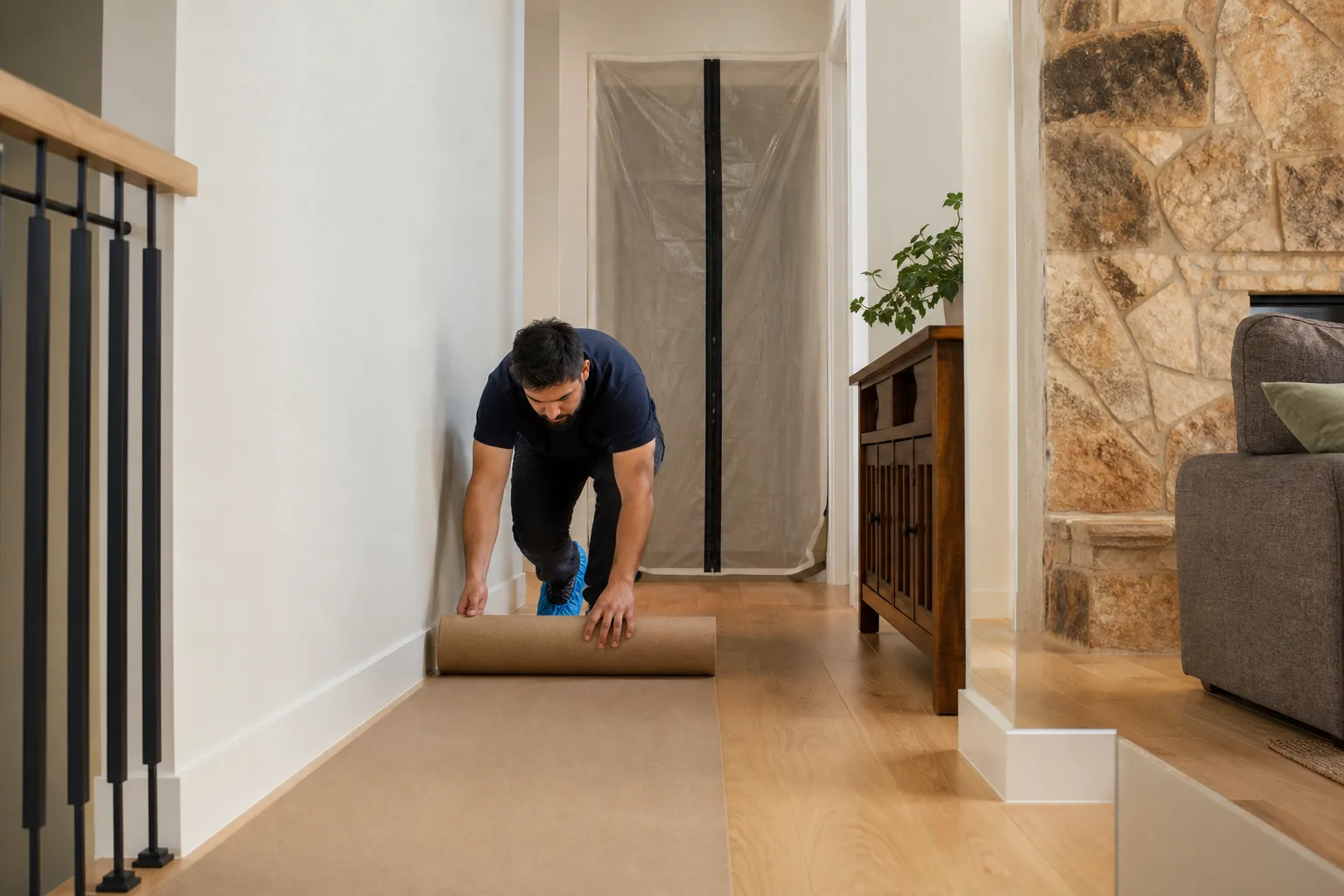
Boulder City’s desert climate doesn’t hide construction problems – it exposes them in specific patterns: diagonal cracks at window corners from expansive soil, efflorescence from irrigation water against block walls, bouncy tile floors from inadequate deflection, doors that bind with the seasons from framing movement, and ceiling stains that tell you whether you’re looking at a roof leak or a condensate line. Read the pattern, date the crack, watch it through a full seasonal swing, and fix the cause before the finish. Every project we take on runs on a written price before any work starts, background-checked technicians, drop cloths and shoe covers on every visit, and the 365-Day Done Right Promise – if it’s not done right, we make it right. If something on your house is telling you a story you can’t read, talk to a General Contractor in Boulder City who reads it every day.
Ready for a free estimate? Call (855) 552-7882 and talk to a live person any time – not a voicemail box, not a bot.
Written by the team at Elmstead Remodeling Boulder City.